The Tokamak Approach
The most-studied path: a toroidal magnetic bottle with a driven plasma current.
- Maturity
- Highest
- Challenge
- Disruptions, D–T neutrons
The tokamak is the most experimentally mature confinement concept, with the largest performance database, exemplified by public devices such as JET and the ITER project. Its strengths are that database and its high confinement; its challenges are disruptions, steady-state current drive, and the neutron load of D–T operation.
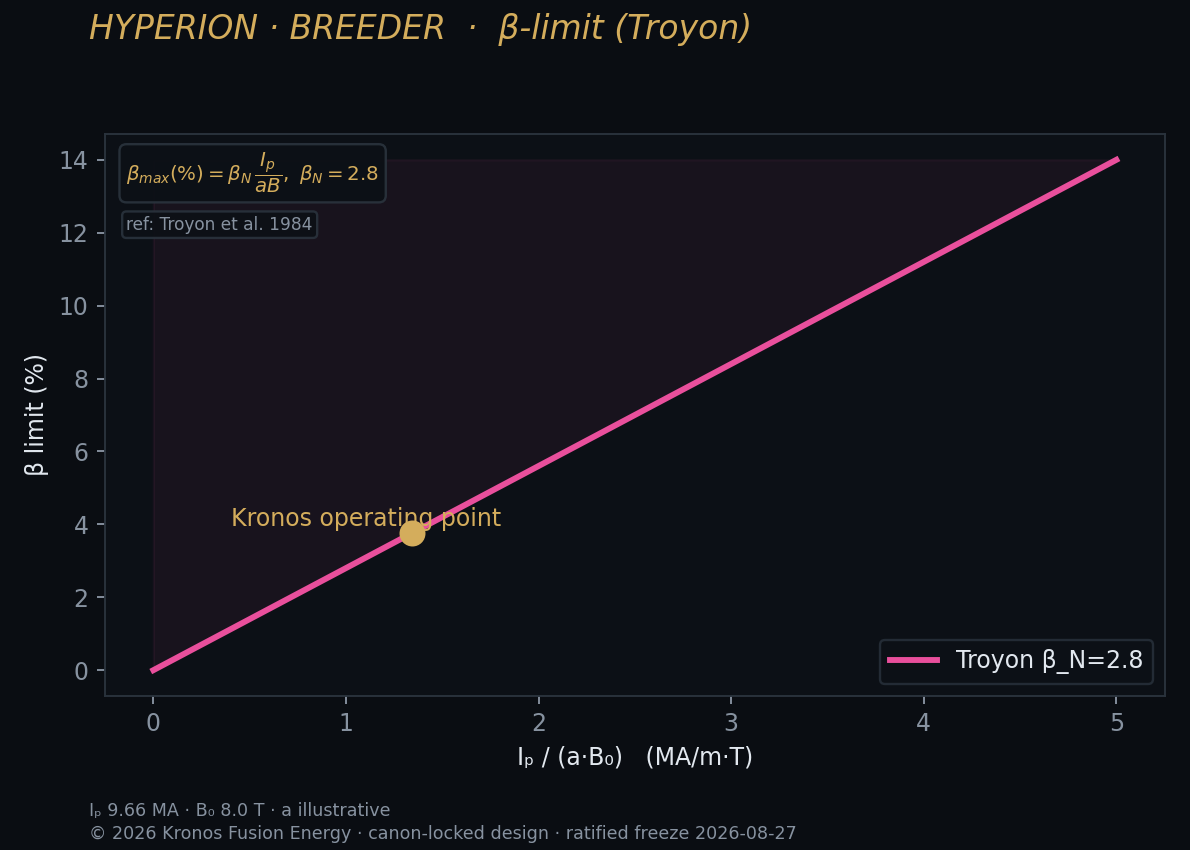
Kronos's breeder is a compact spherical tokamak — it draws on this mature science while running at low aspect ratio for high beta.
Common questions
A toroidal magnetic bottle where a plasma current helps confine the plasma — the most developed fusion concept. Kronos's breeder is a compact, spherical tokamak at Q = 3.076.
The plasma current can disrupt, dumping energy and forces suddenly. Kronos manages that in the breeder and sidesteps it entirely in the linear burner, which has no plasma current.