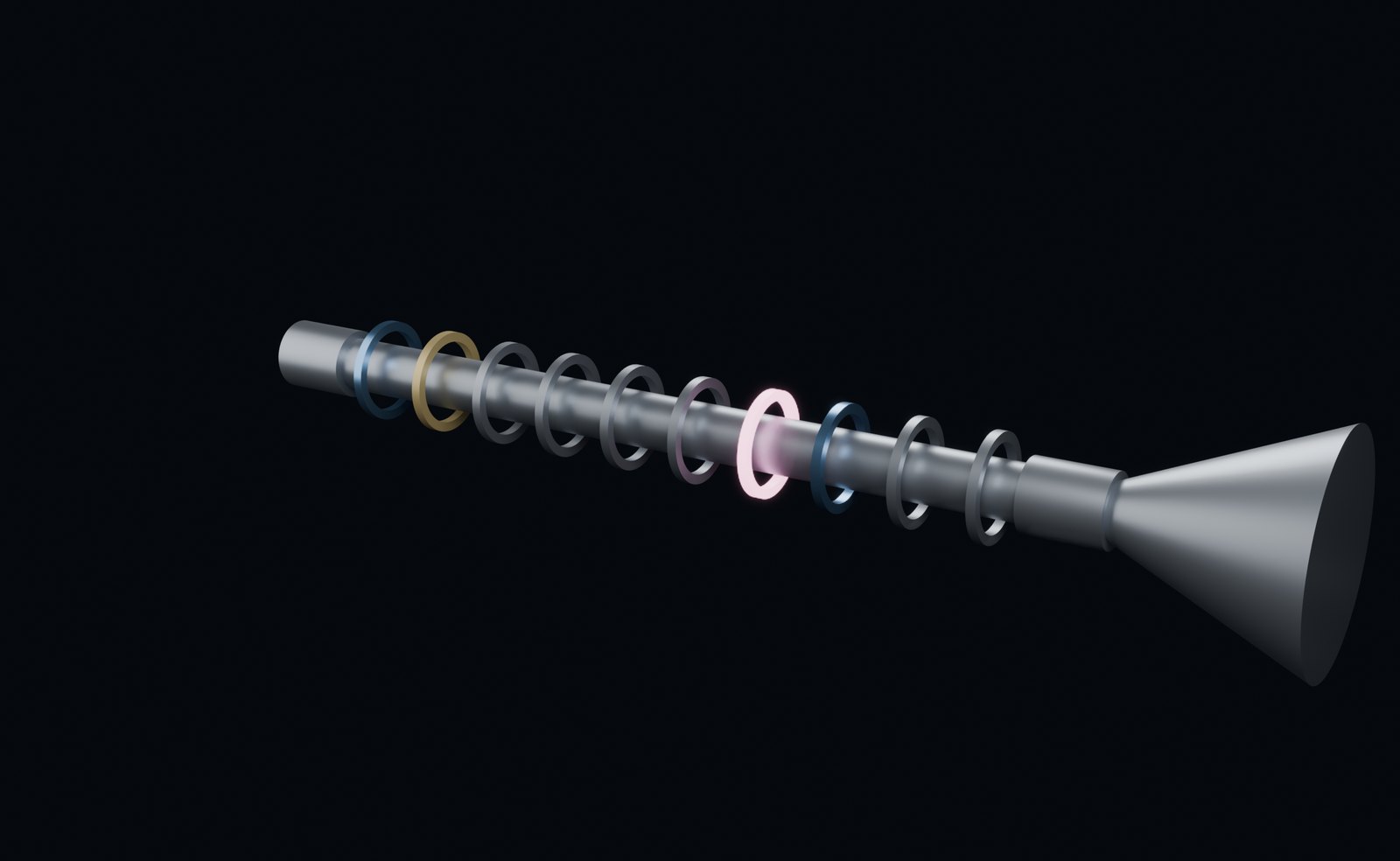
The Burner Design Point
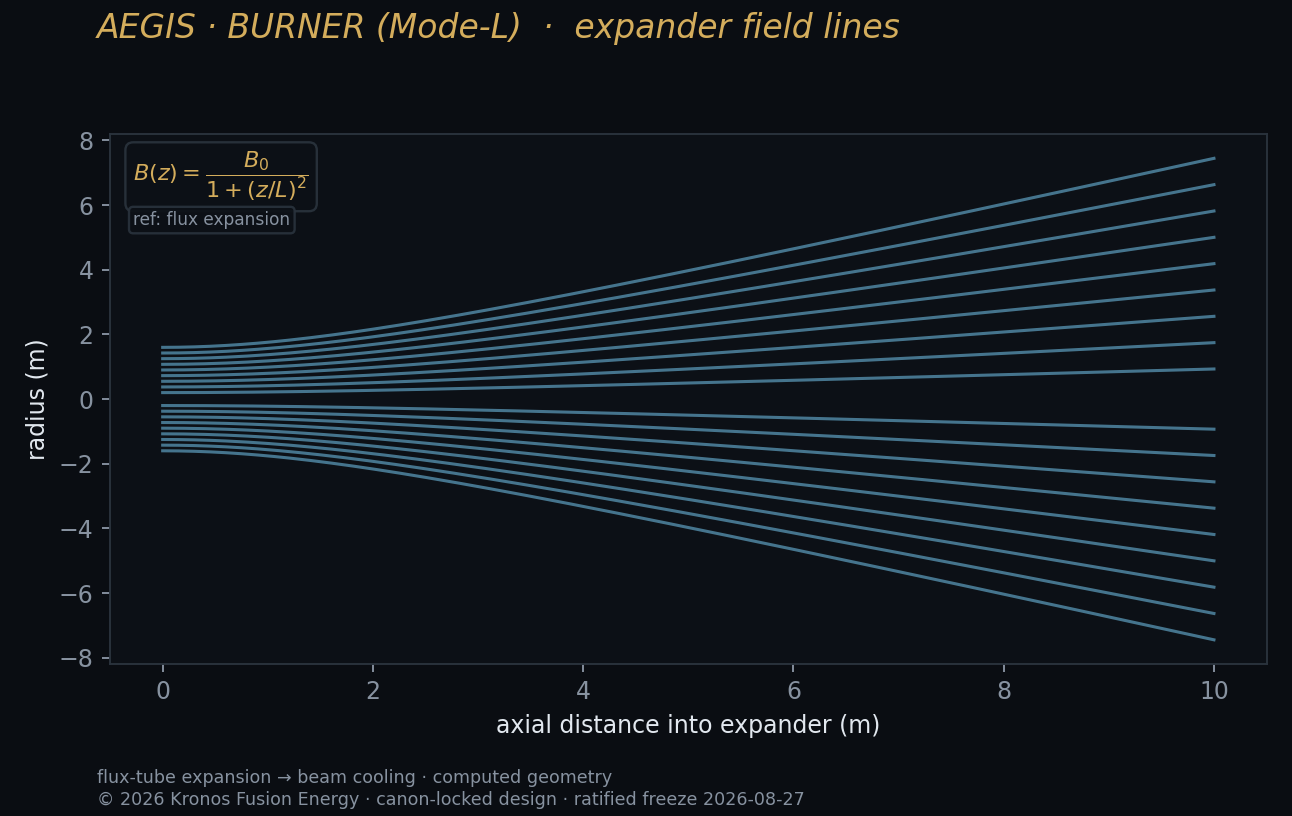
The full D–³He burner operating point, across all three product housings.
- Q_E
- 1.31
- Neutron fraction
- 5.44%
- Temperature
- 90 keV
- Plug field
- 26.49 T
- Requirement
- n_p/n_c 16
- Deposit
- DOI 10.5281/zenodo.21746479
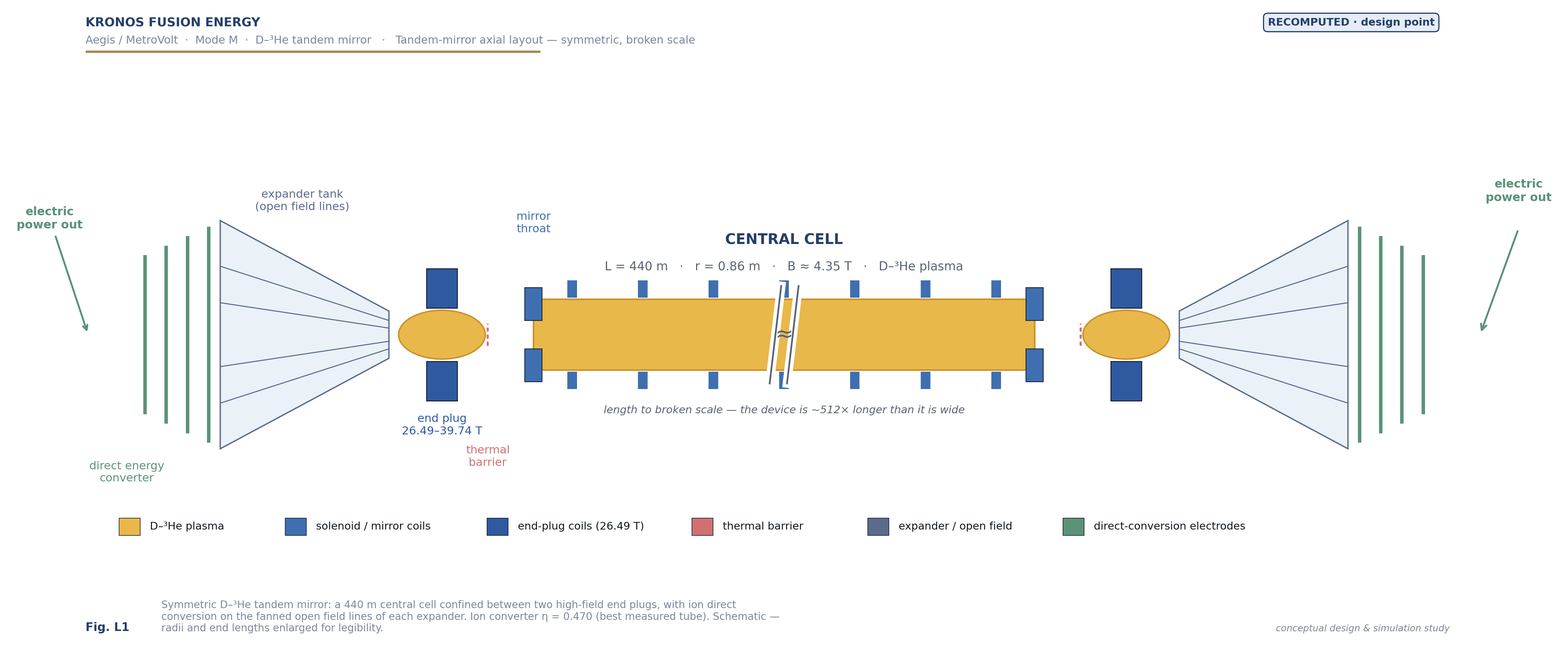
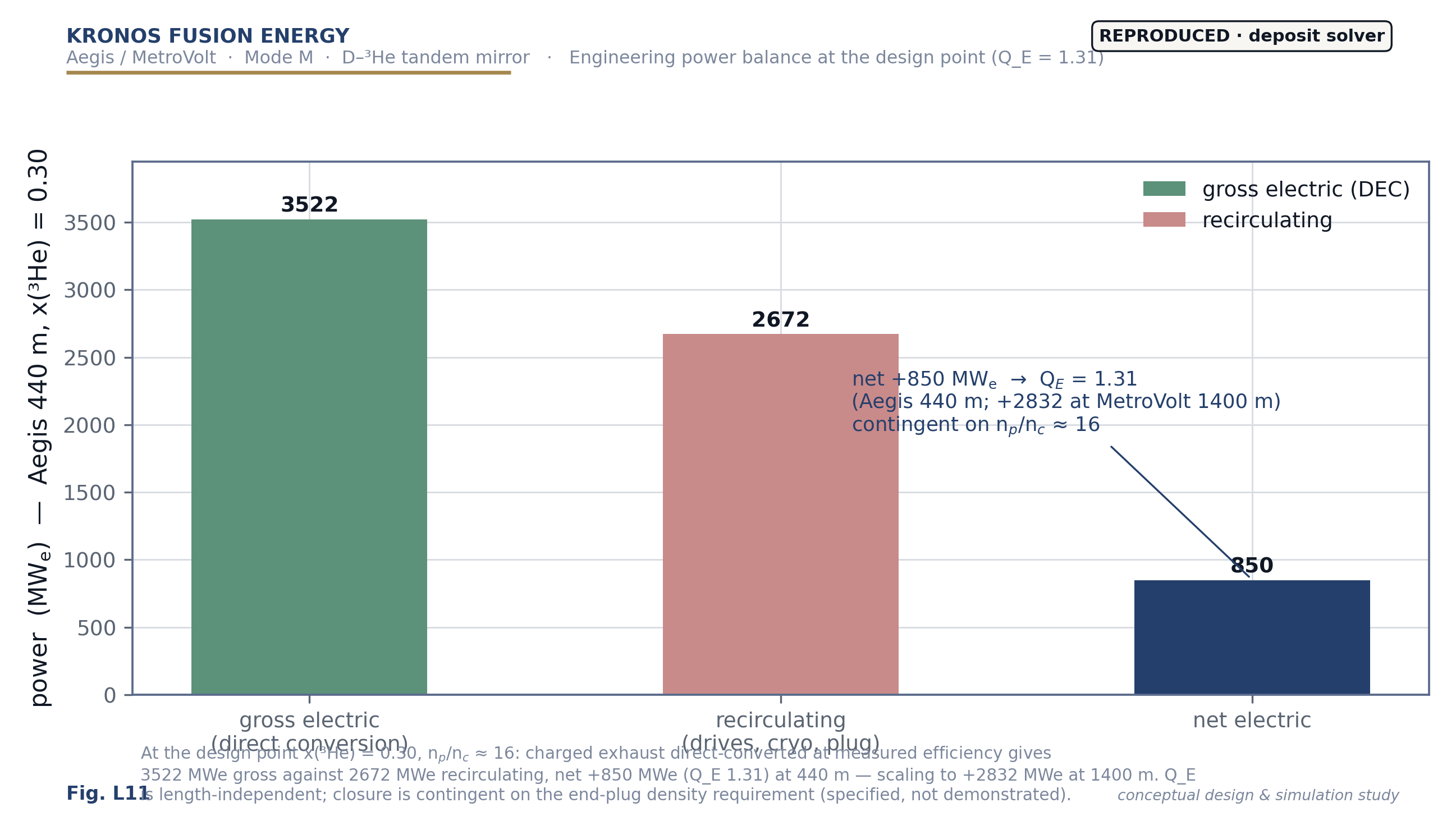
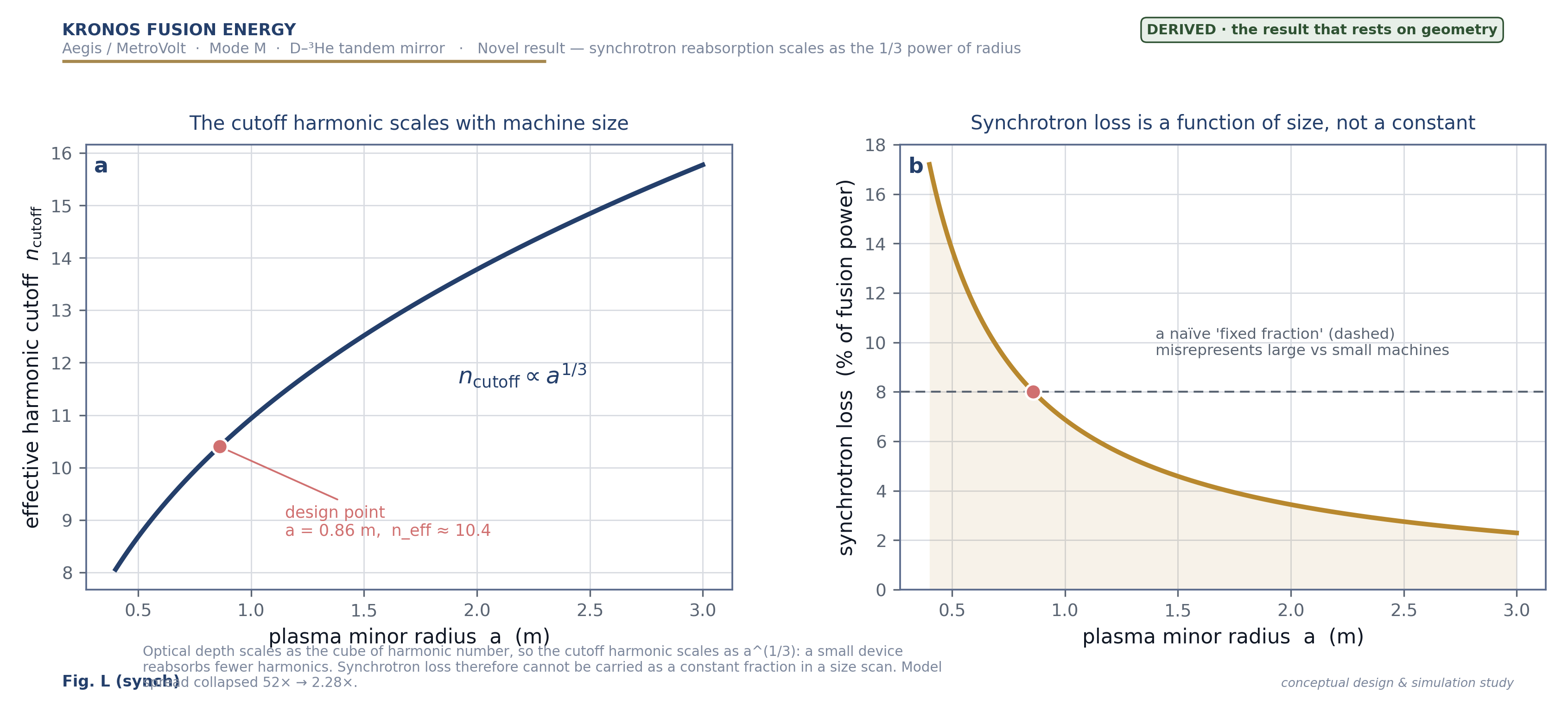
The burner's frozen point (Mode M): QE = 1.31, neutron fraction 5.44%, ion temperature 90 keV (electrons 89.78 keV), density 2.6e20 m^-3, ³He fraction 0.30, central beta 0.55, central-cell radius 0.86 m, DEC efficiency 0.70, plug field 26.49 T (throat 17 T).
The same physics scales in length across three housings: 55 m → +104 MWe (0.537 GW thermal-class), 440 m → +850 MWe (4.298 GW), and 1400 m → +2832 MWe (13.678 GW) — MetroVolt-scale.
Why the burner scales by length
The burner's headline figures — engineering gain QE = 1.31 and neutron fraction 5.44% — are largely independent of the central cell's length, because they are set by the plasma's local physics, not the machine's size. That is what lets one physics core serve three products: 55 m delivering +104 MWe, 440 m delivering +850 MWe, and 1400 m delivering +2832 MWe. Longer machines simply produce proportionally more net power.
The point runs D–³He at 90 keV ion temperature (electrons 89.78 keV), density 2.6e20 m^-3, ³He fraction 0.30, central beta 0.55 and central-cell radius 0.86 m. The escaping charged particles are recovered by direct energy conversion at 0.70 efficiency — no steam cycle.
Common questions
QE = 1.31 at a neutron fraction of 5.44% — low-neutron, not aneutronic. It is a requirement-class figure contingent on the plug-density condition.
Gain and neutron fraction are length-independent, so the same physics core is packaged at 55 m, 440 m (AEGIS) and 1400 m (MetroVolt) to hit different power classes.