Comparisons & Context
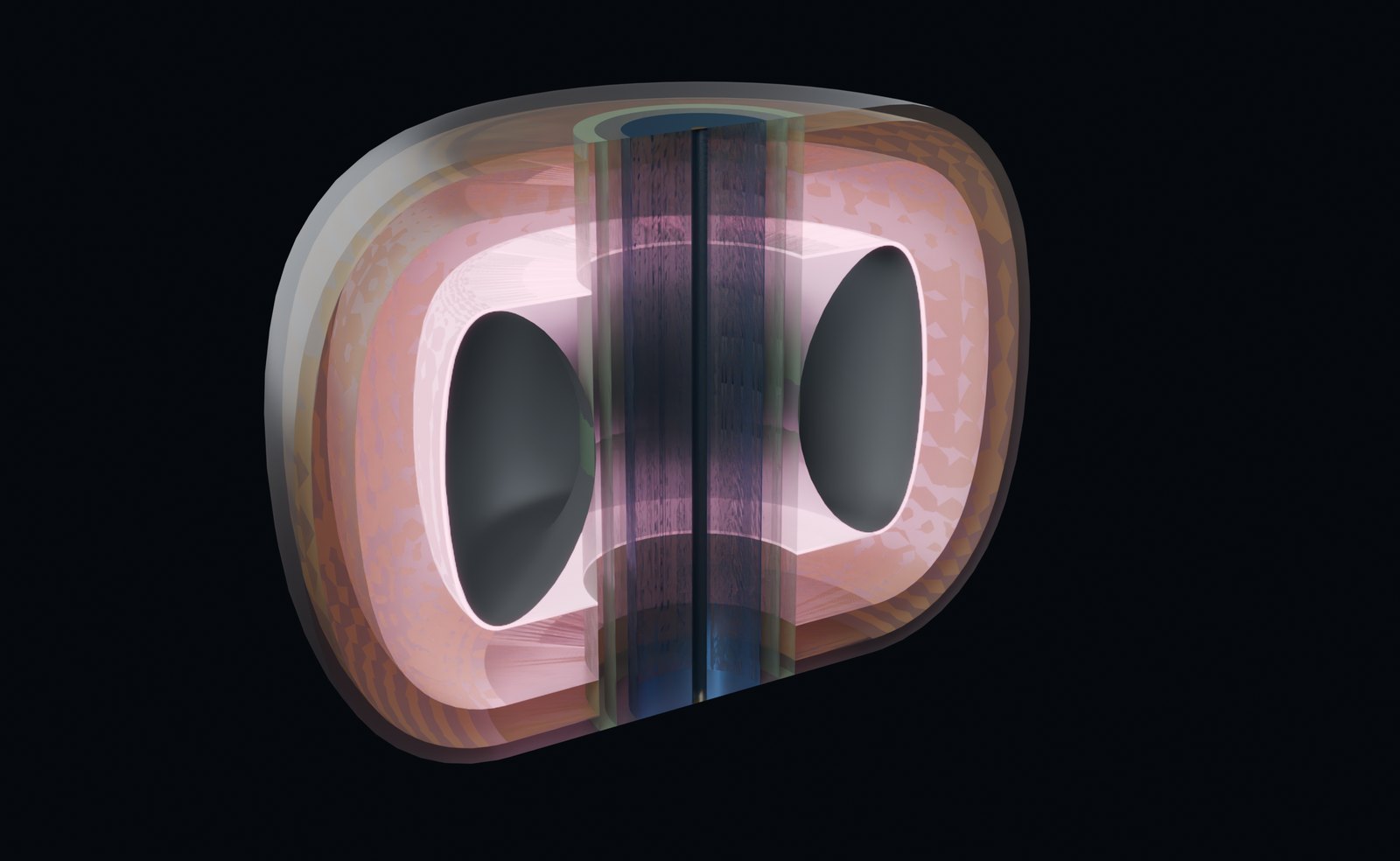
Tandem Mirror vs Tokamak
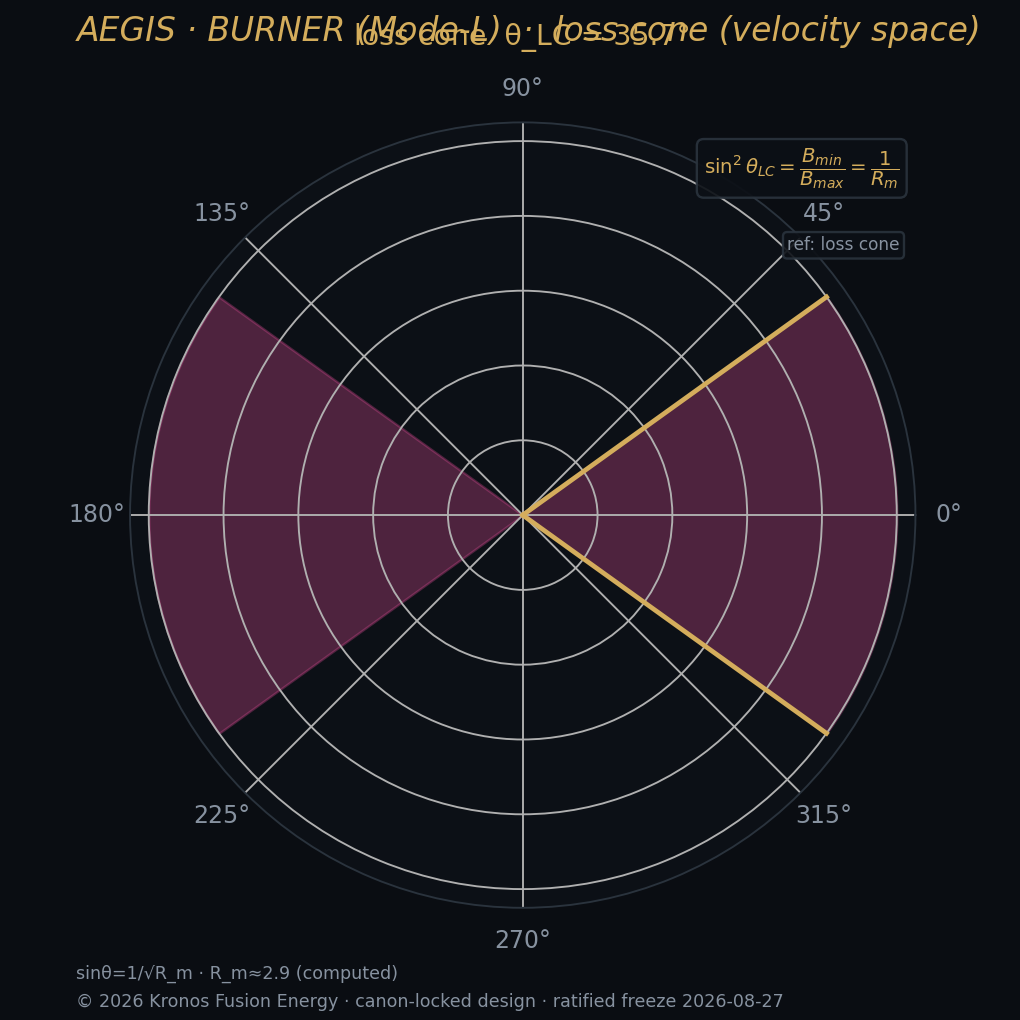
Why burn D–³He in a straight machine instead of a doughnut? Because linearity buys real advantages.
| Geometry | Mirror: linear · Tokamak: toroidal |
|---|---|
| Disruptions | Mirror: none · Tokamak: a design driver |
| Energy conversion | Mirror: direct · Tokamak: thermal |
| Key challenge | Mirror: end plugging · Tokamak: confinement & disruptions |
A tandem mirror is open-ended, so it cannot disrupt and its exhaust flows naturally into a direct converter. The price is that the ends must be plugged — the burner's plug-density requirement. Kronos judges that trade worthwhile for a low-neutron electricity machine.
The plug is the catchThe mirror's advantages hinge on reaching the plug-density requirement (n_p/n_c ≈ 16) — stated openly as the burner's binding gate.
Common questions
Why a mirror instead of a tokamak for the burner?
It cannot disrupt, enables direct conversion, and scales by length — at the cost of end-plugging, the plug-density requirement.