Components & Hardware
Superconducting Joint
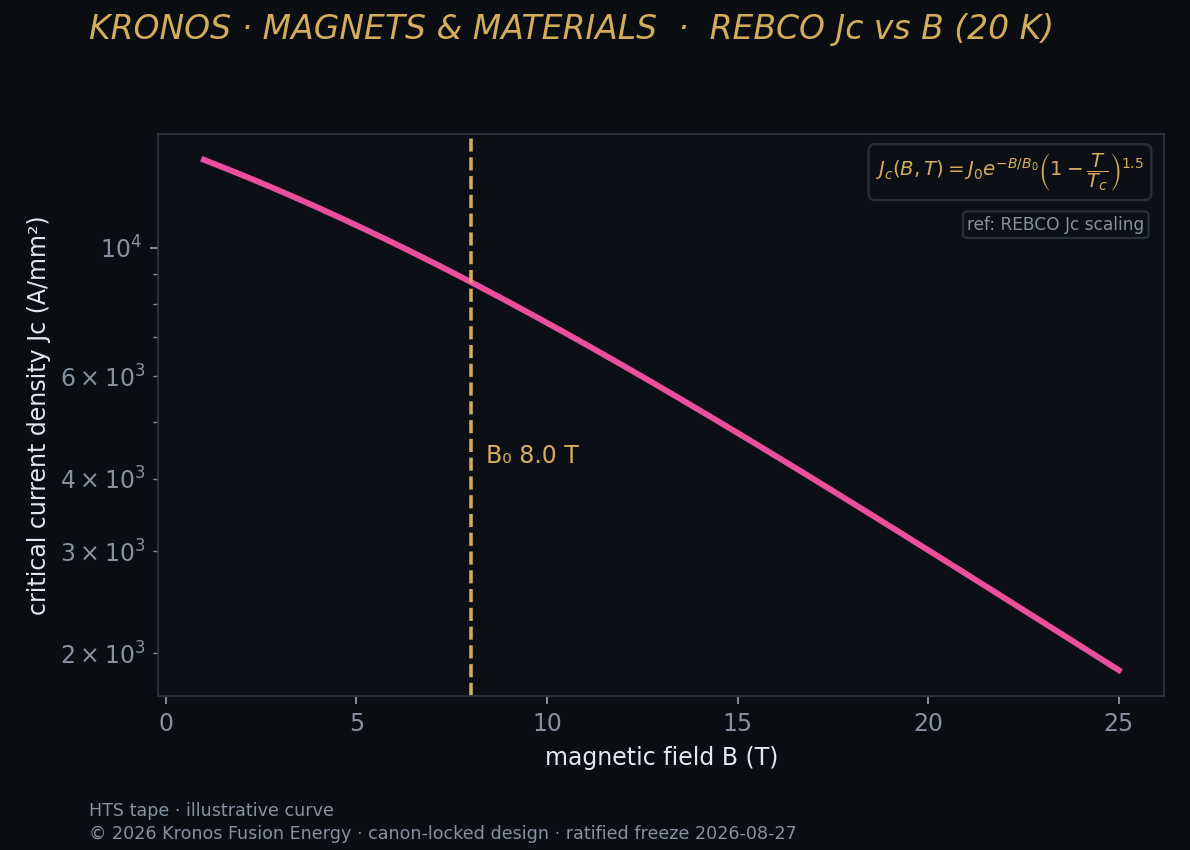
The low-loss splice between lengths of superconducting tape.
- Role
- Tape splice
- Study
- DOI 10.5281/zenodo.21842514
Because superconducting tape comes in finite lengths, coils need low-resistance joints between them. Joint quality affects both efficiency and quench behaviour, and is a focus of the REBCO magnet study.
Common questions
Why do the magnets need superconducting joints?
Superconducting tape comes in finite lengths, so long coils are spliced from many pieces. Joint resistance affects both efficiency and how a coil behaves in a quench, which is why it is a focus of the REBCO study (DOI 10.5281/zenodo.21842514).
Is joint quality a risk?
It is a fabrication-qualification item, not an open physics unknown — the goal is a repeatable low-resistance splice, demonstrated and quality-controlled at production scale.