Cryogenic Structural Alloys
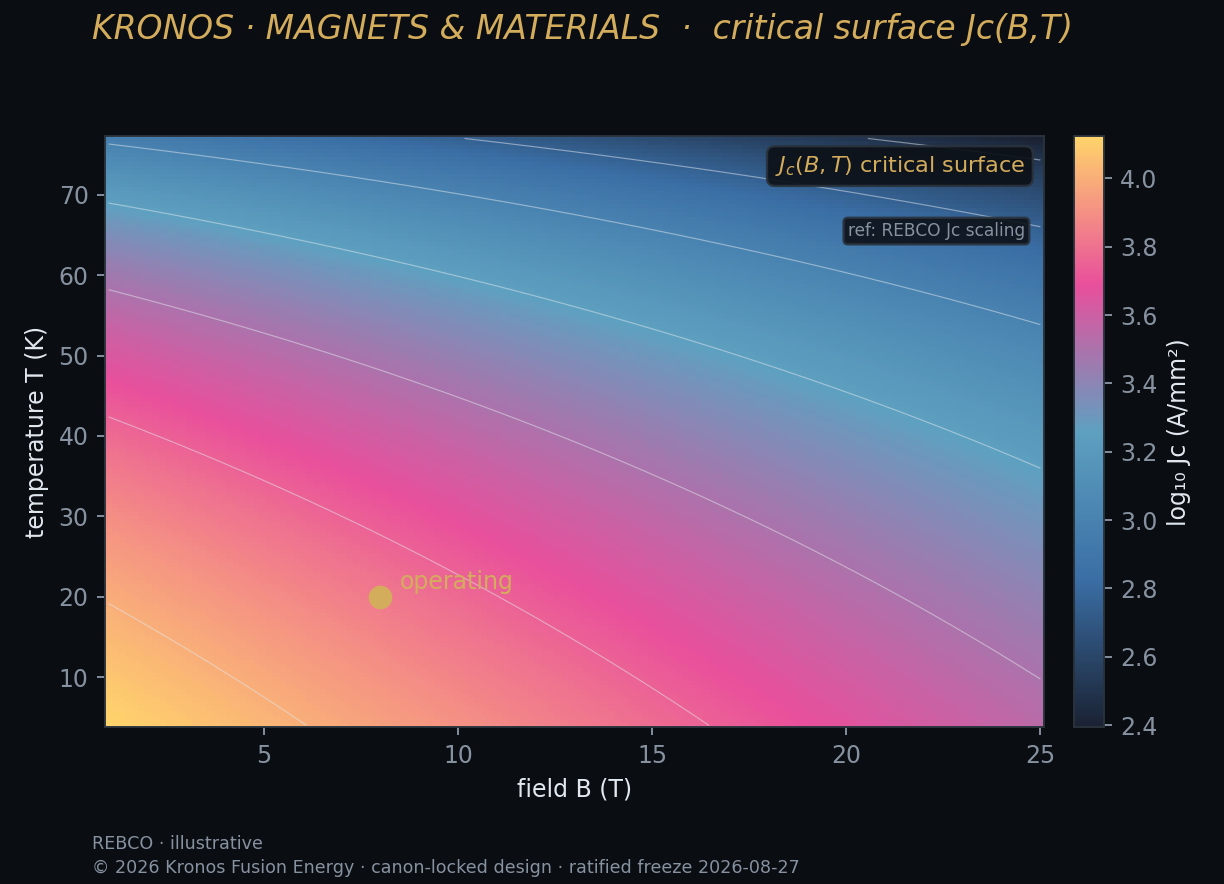
High-strength alloys that stay tough at the temperature of superconducting magnets.
- Use
- Magnet structure
- Requirement
- Cryogenic toughness
Magnet cases and cold-mass structure use alloys that keep high strength and toughness at cryogenic temperatures — austenitic stainless steels and specialised nickel alloys — to contain immense Lorentz forces. Their fatigue behaviour is the binding magnet gate.
Material choice here is inseparable from the magnet's structural integrity.
Common questions
They form the magnet cases and cold structure that must stay strong and tough at liquid-helium temperatures while containing enormous Lorentz forces. Strength actually rises at cryogenic temperature, which helps.
Yes — a single load is well within limits, but cyclic fatigue of the cold structure under repeated operation is part of the burner's named magnet gate.