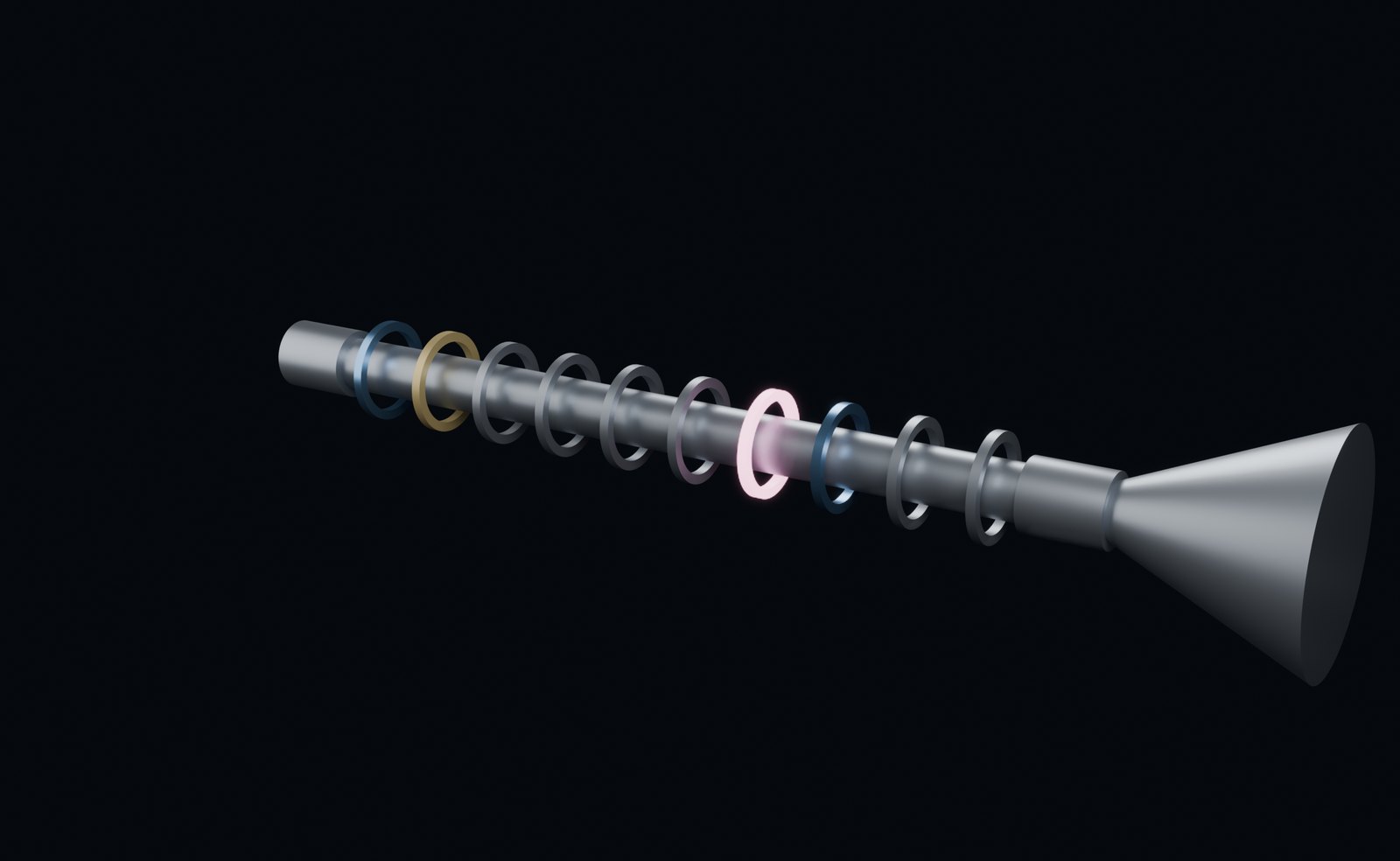
The Stellarator Approach
Twisting the field with external coils alone — no plasma current, no disruptions.
- Strength
- No disruptions
- Cost
- Coil complexity
The stellarator (e.g. the public W7-X device) confines plasma with intricately shaped external coils, needing no driven current and avoiding disruptions, at the cost of complex magnet geometry. It is a serious alternative to the tokamak for steady-state operation.
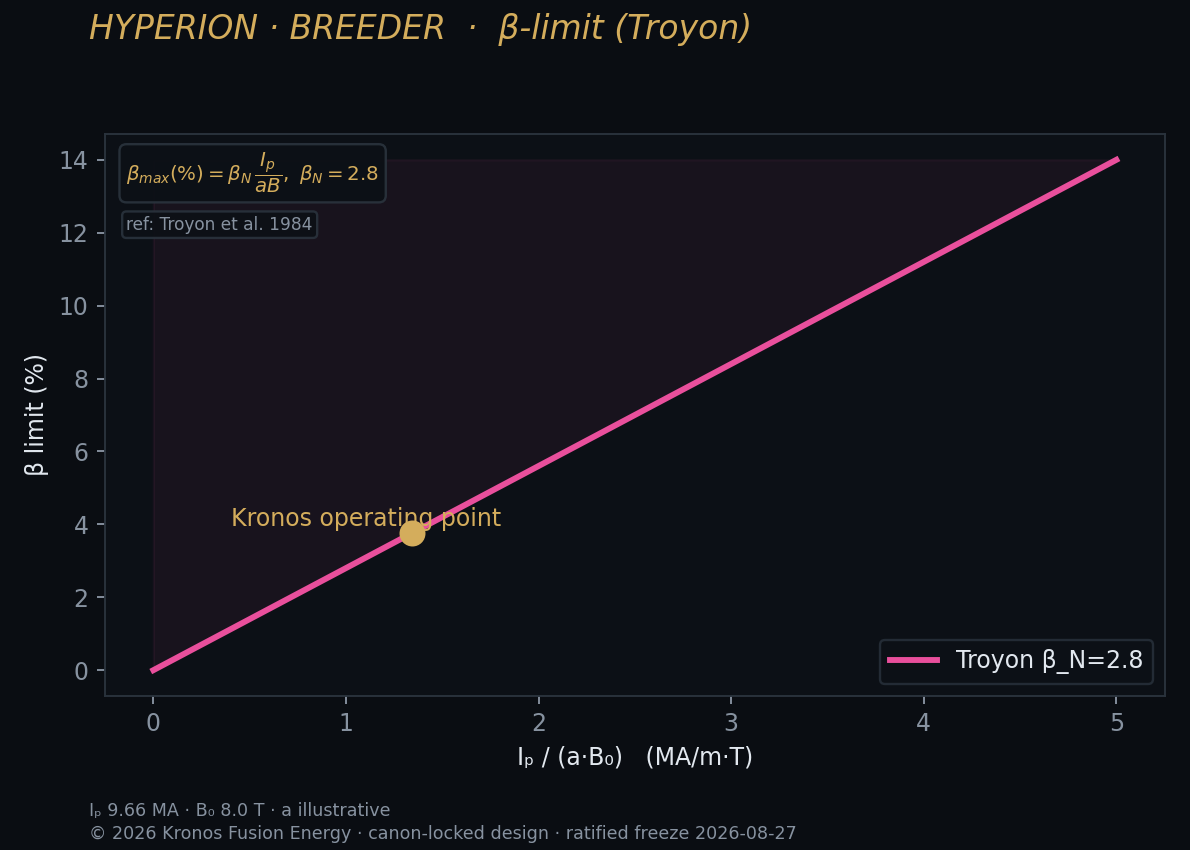
Kronos does not use a stellarator, but the concept frames why the tokamak's plasma current — which the stellarator eliminates — is a design consideration.
Common questions
A toroidal machine that uses intricately shaped external coils, instead of a plasma current, to twist the field — which avoids disruptions at the cost of very complex magnets.
Kronos gets disruption-free operation from its linear burner and compactness from its spherical breeder, without the stellarator's coil-manufacturing complexity — a different route to similar advantages.