Steady-State Operation
Running continuously rather than in pulses — essential for a power plant, and a design driver.
- Breeder bootstrap
- 15.2%
- Burner
- Naturally steady-state
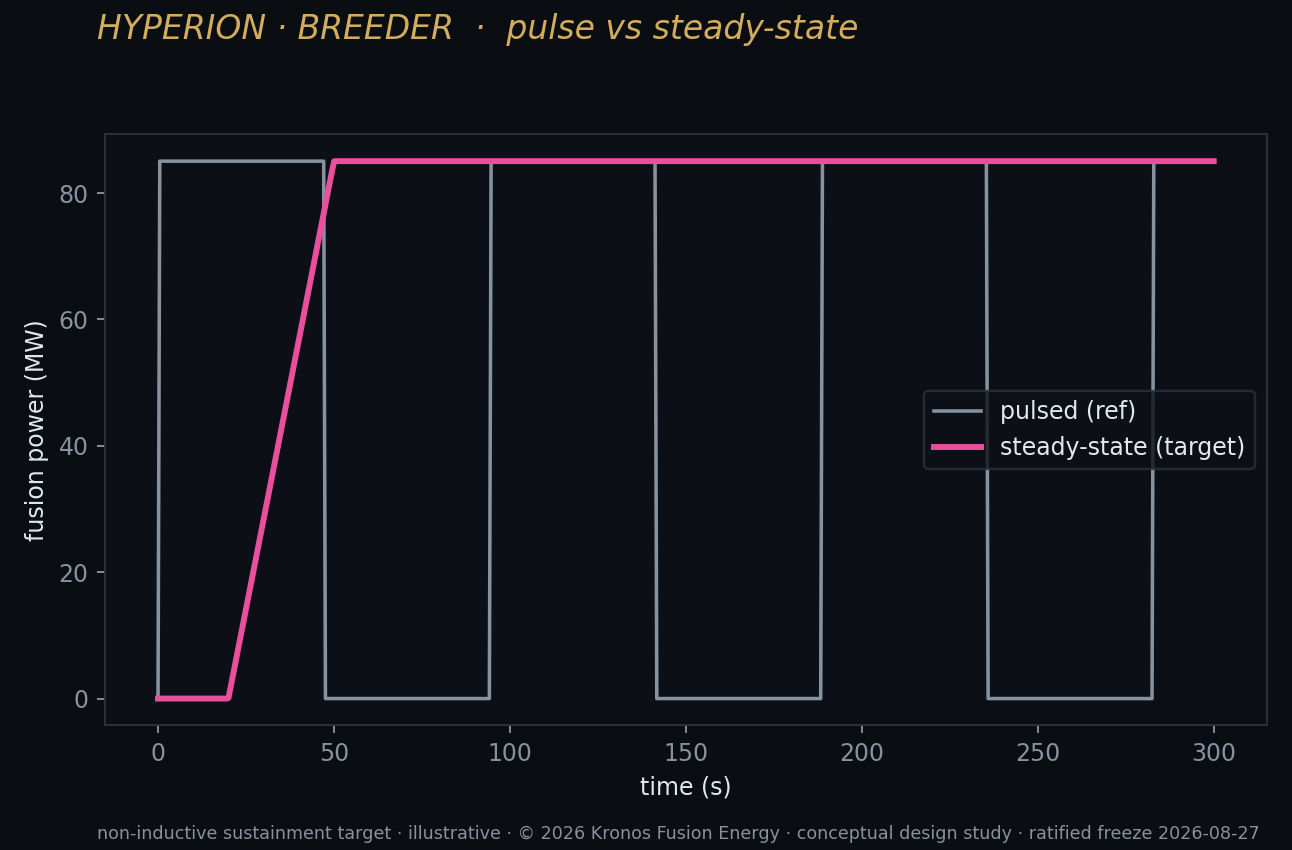
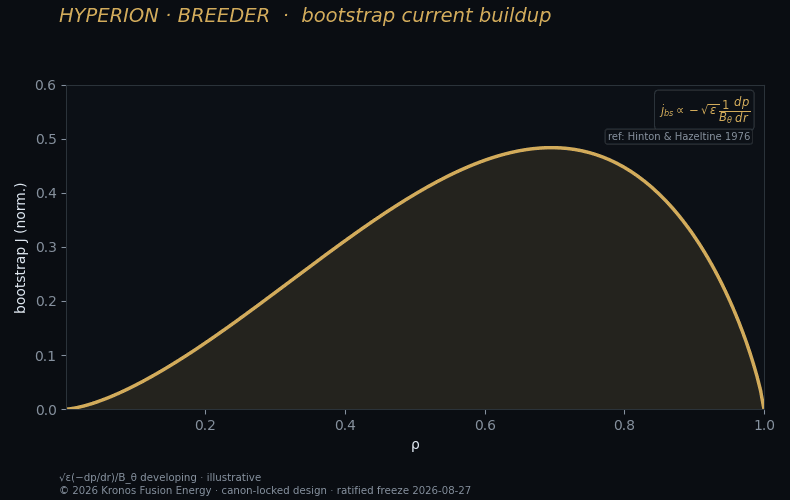
A power plant must run continuously, which for a tokamak means sustaining the plasma current indefinitely by combining bootstrap self-generation with efficient external current drive. HYPERION's 15.2% bootstrap fraction reduces, but does not eliminate, the drive it needs for steady state. The burner, driven continuously by heating, is naturally steady-state.
Designing for genuine steady state, not just a long pulse, is part of the Kronos approach.
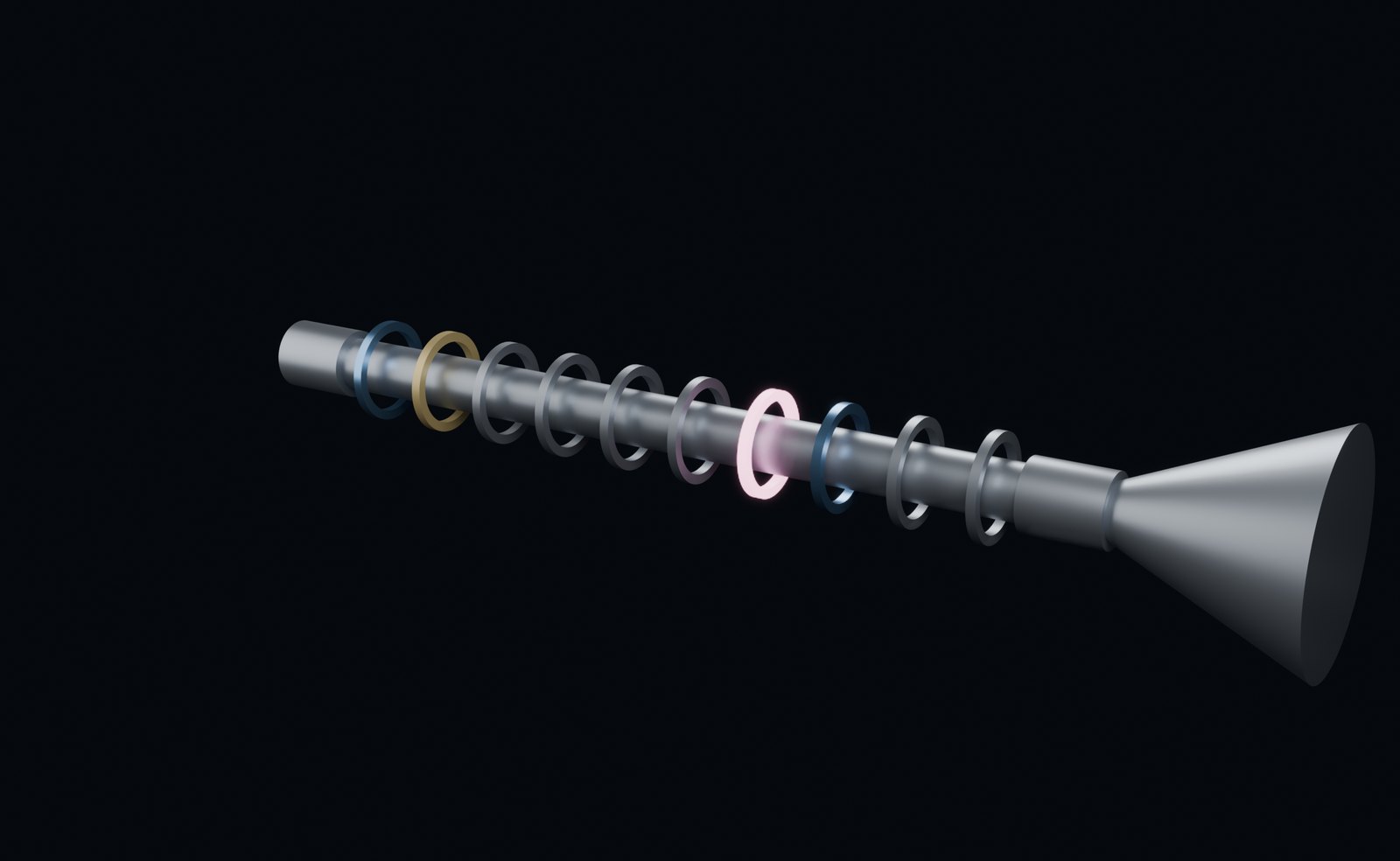
A power plant must run continuously, which for the breeder means sustaining its 9.66 MA current indefinitely by combining the 15.2% bootstrap fraction with efficient external drive. The burner, driven continuously by heating, is naturally steady-state — one more way its linear architecture simplifies the path to a plant.
Common questions
Sustaining the plasma indefinitely rather than in pulses. For the breeder that means holding 9.66 MA of current by combining the 15.2% bootstrap fraction with efficient external drive.
Yes, naturally — being continuously driven by its heating, it runs steadily by design, one of the linear architecture's simplifications over a pulsed tokamak.