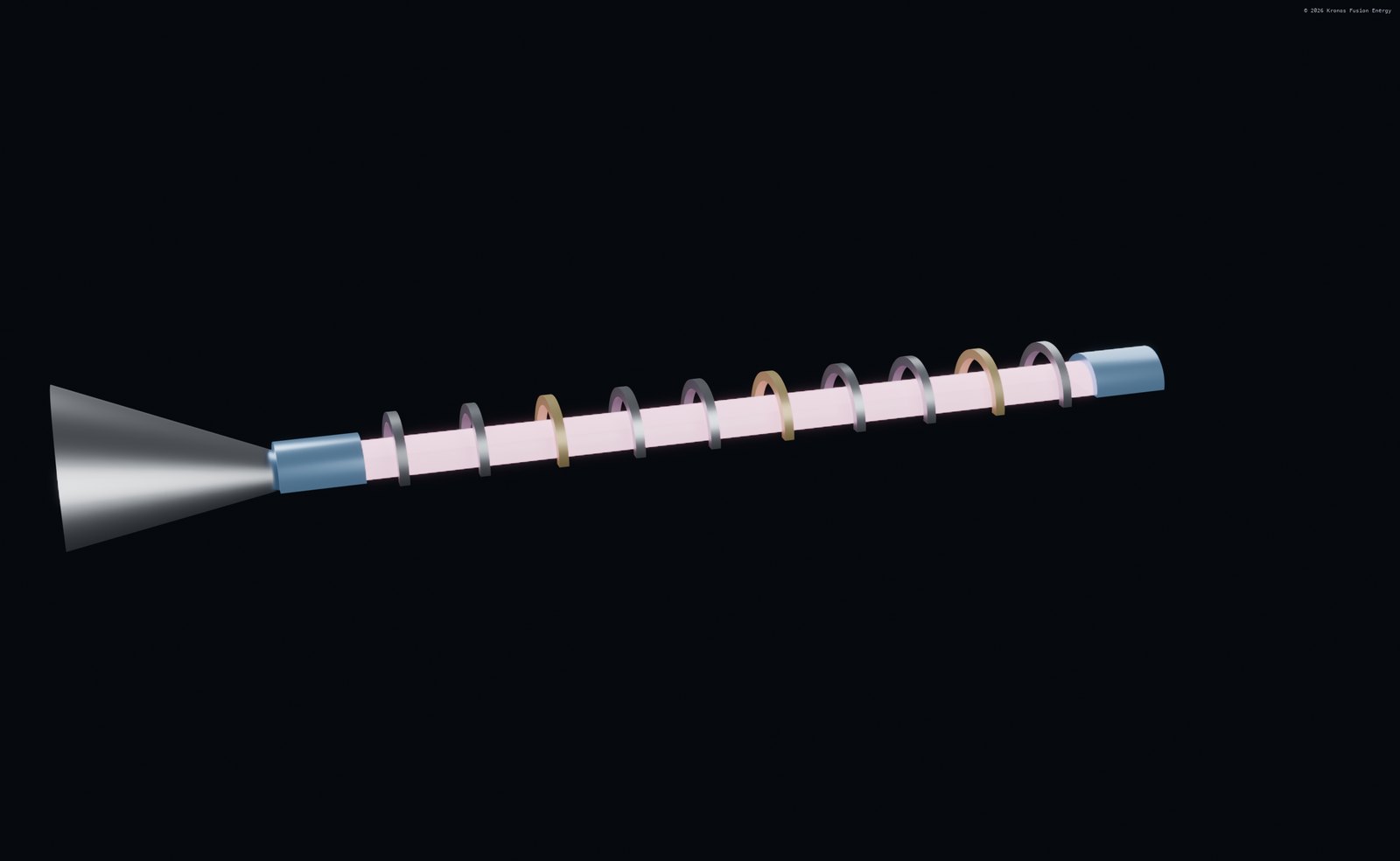
Plasma Start-Up Physics
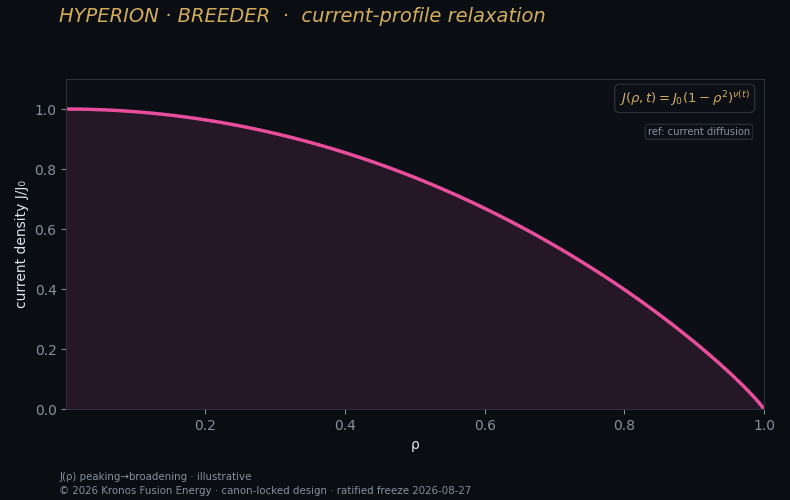
The delicate sequence of breakdown, ramp-up and reaching the operating point.
- Sequence
- Breakdown → ramp → flat-top
Start-up must break down the gas, ramp the current while keeping the profile stable, and reach the operating point without tripping instabilities — all within the flux budget. It is a physics-rich sequence, especially in a compact machine with a small solenoid.
A robust start-up scenario is part of demonstrating operability.
Common questions
A discharge goes from gas breakdown through current ramp-up to the steady flat-top where fusion conditions are held, all while keeping the current and density profiles stable within the flux budget.
Yes — the slim central column leaves little room for the solenoid, so robust, partly non-inductive start-up is a real design requirement Kronos treats as part of proving operability.