The Spherical-Tokamak Story
How the low-aspect-ratio idea grew into a serious reactor line.
- Line
- Low-A, high-beta
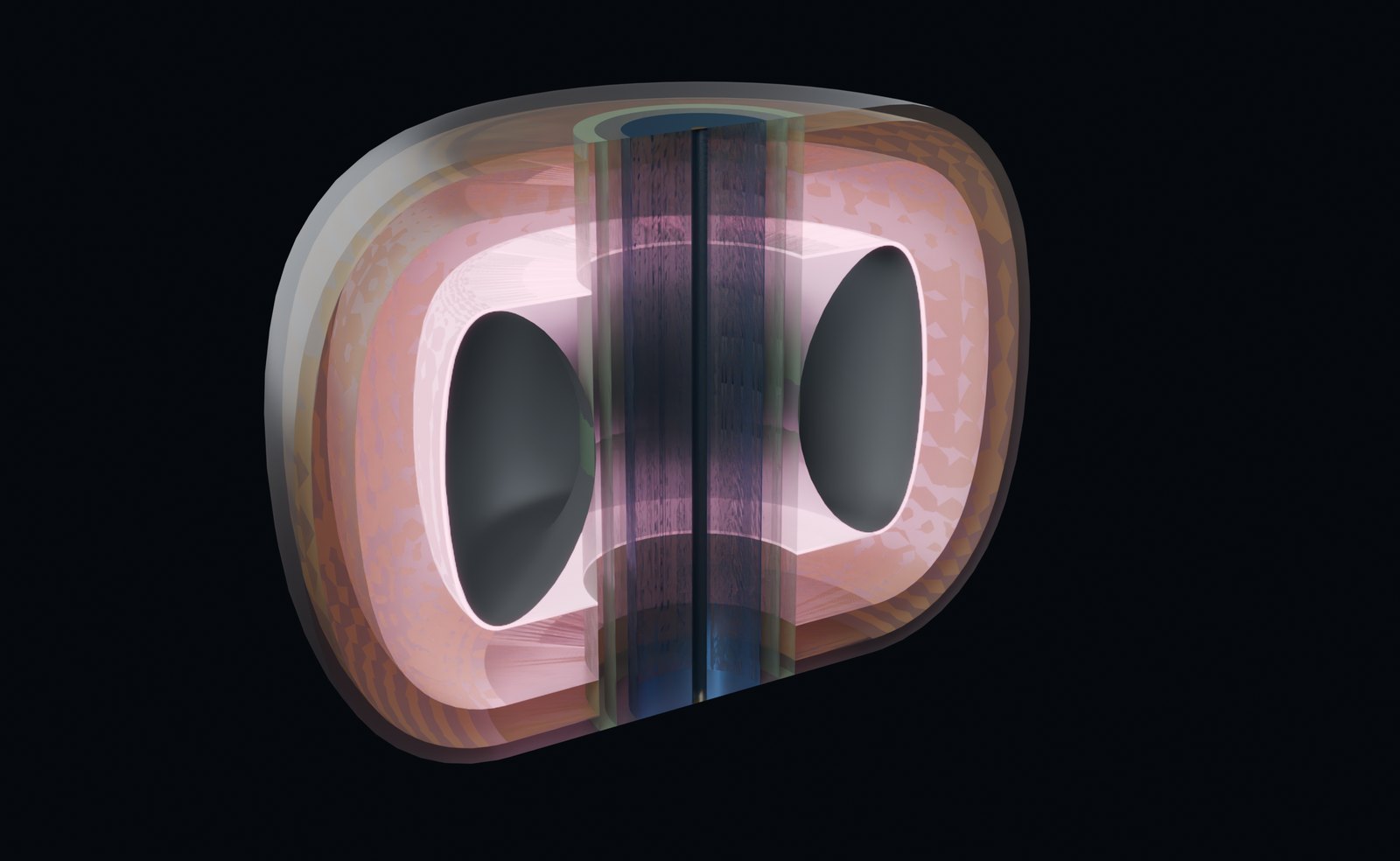
The spherical tokamak emerged from the insight that squeezing the torus to low aspect ratio yields high beta and strong shaping. Experiments established its physics, and high-temperature superconductors now make a compact ST reactor credible — the lineage of the Kronos breeder.
It is a maturing line with a clear reactor rationale.
Common questions
Experiments like NSTX and MAST showed that squeezing the aspect ratio down raises achievable beta and stability — the physics HYPERION uses at A = 2.5 and βN = 1.532.
The tight central column limits solenoid and magnet space, and high field was hard to reach there. High-temperature superconductors are what now make a compact, high-field spherical breeder practical.