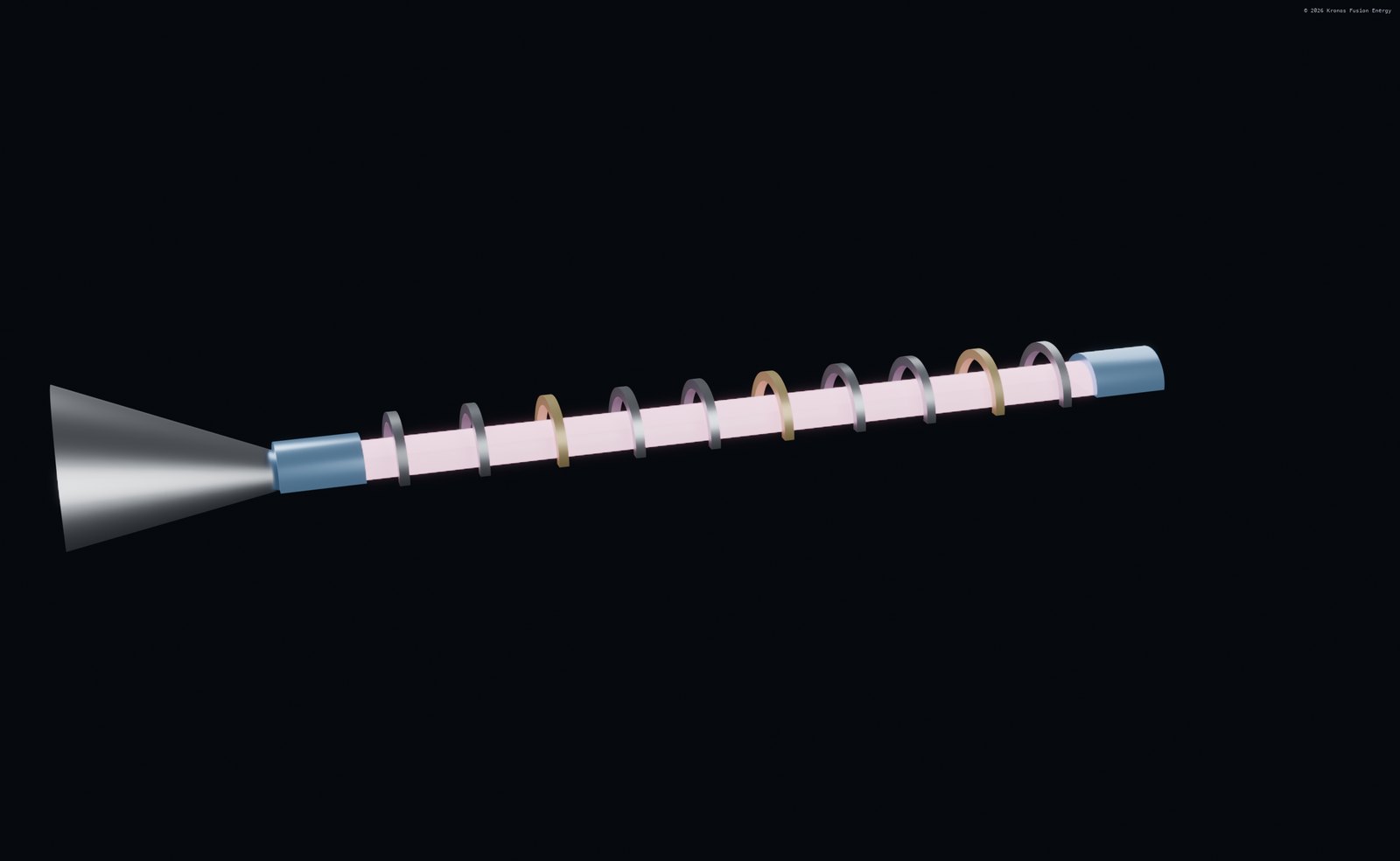
The Burner Reflector Liner
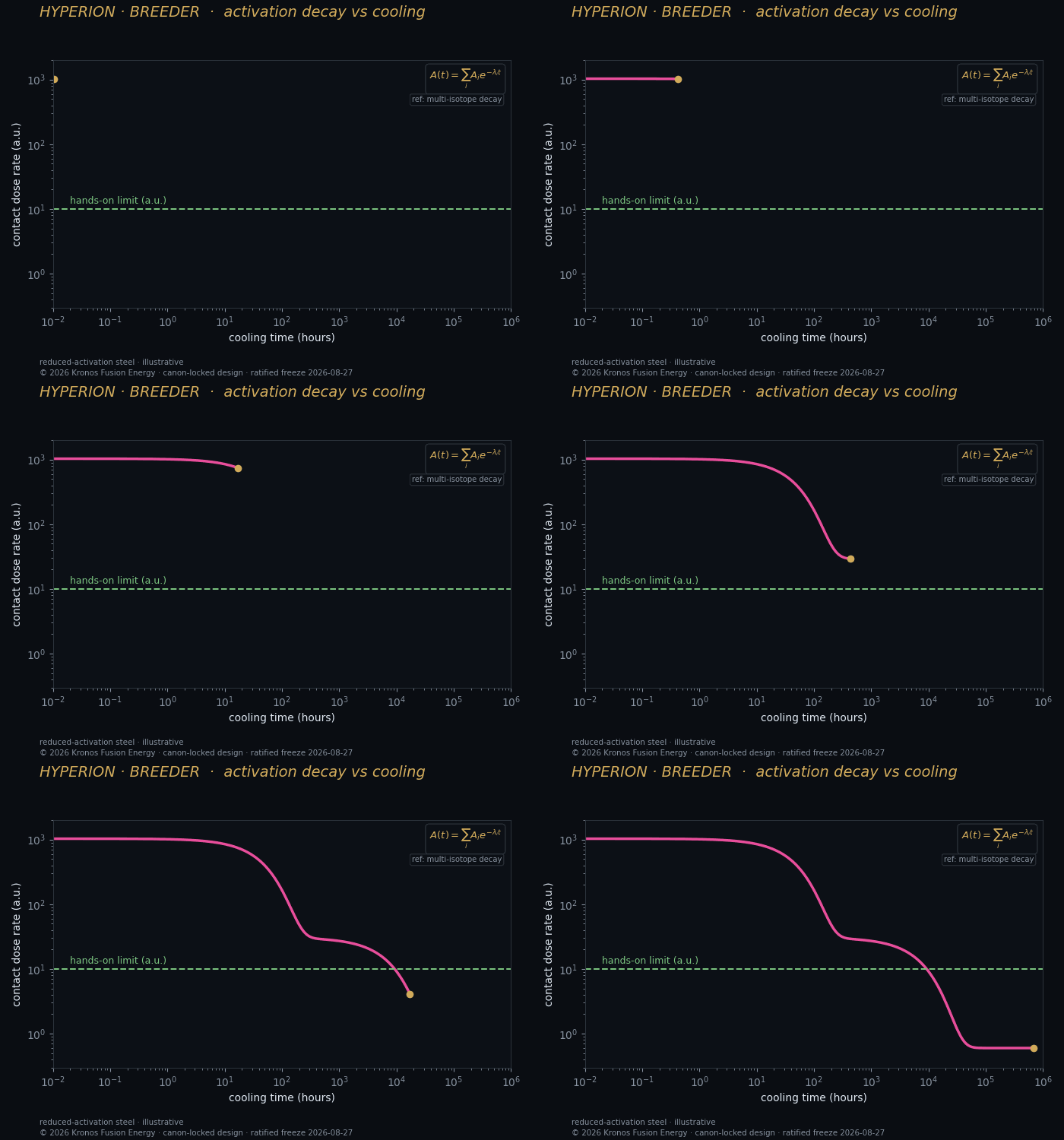
A reflective liner that returns escaping radiation, central to the burner's power balance.
- Role
- Radiation return
- Trade
- Reflectivity vs activation
The D–³He burner lines its central cell with a reflective material to return radiation to the plasma, improving the power balance. The liner's reflectivity is a deciding parameter for net power, and its material must balance that against neutron activation.
Kronos flags the copper-versus-activation tension in the liner choice explicitly rather than assuming an ideal reflector.
The burner's reflective liner is a deciding component, not a detail: by returning radiation to the plasma it improves the power balance that closes the machine. Its reflectivity trades directly against neutron activation of the liner material, a tension Kronos flags explicitly rather than assuming an ideal reflector.
Common questions
A reflective inner surface that returns radiation to the plasma, improving the power balance that closes the machine. In the low-neutron burner it is a deciding component, not a detail.
Higher reflectivity helps the power balance, but the liner material also activates under residual neutrons. Kronos states that reflectivity-versus-activation trade explicitly rather than assuming an ideal reflector.