The Radial Build
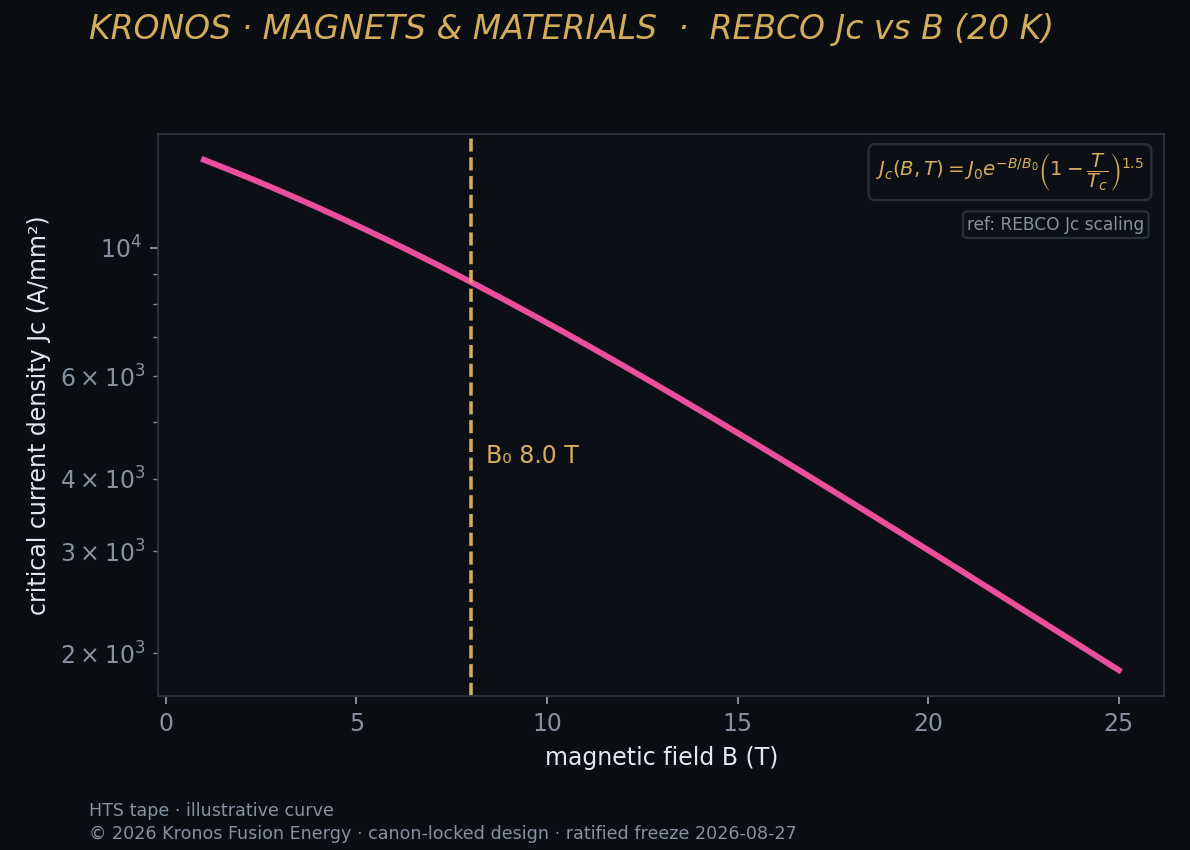
The layer-by-layer stack from plasma to magnet — plasma, first wall, blanket, shield, vessel, coil — that every dimension follows from.
- Major radius
- 1.2 m
- Aspect ratio
- 2.5
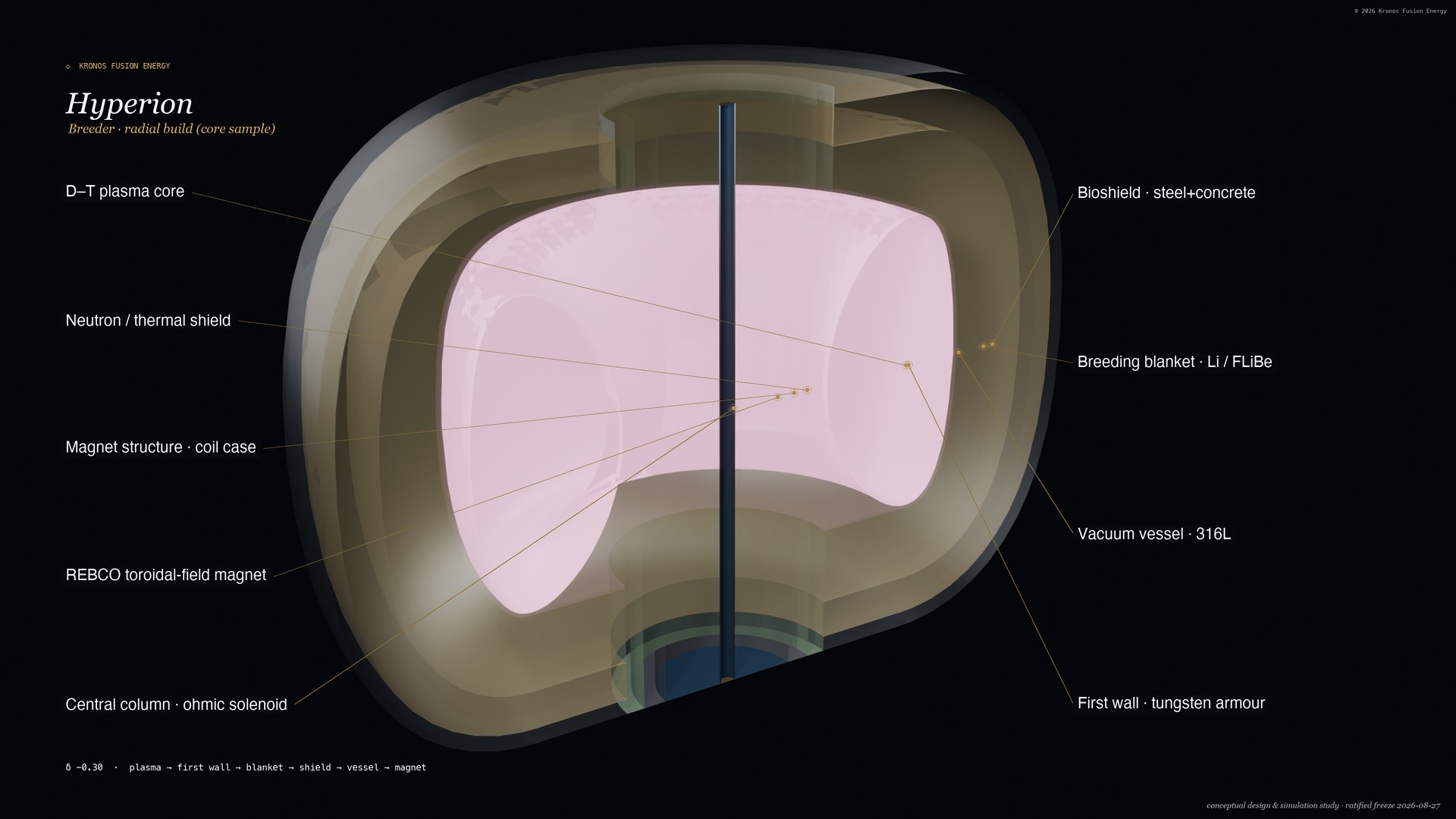
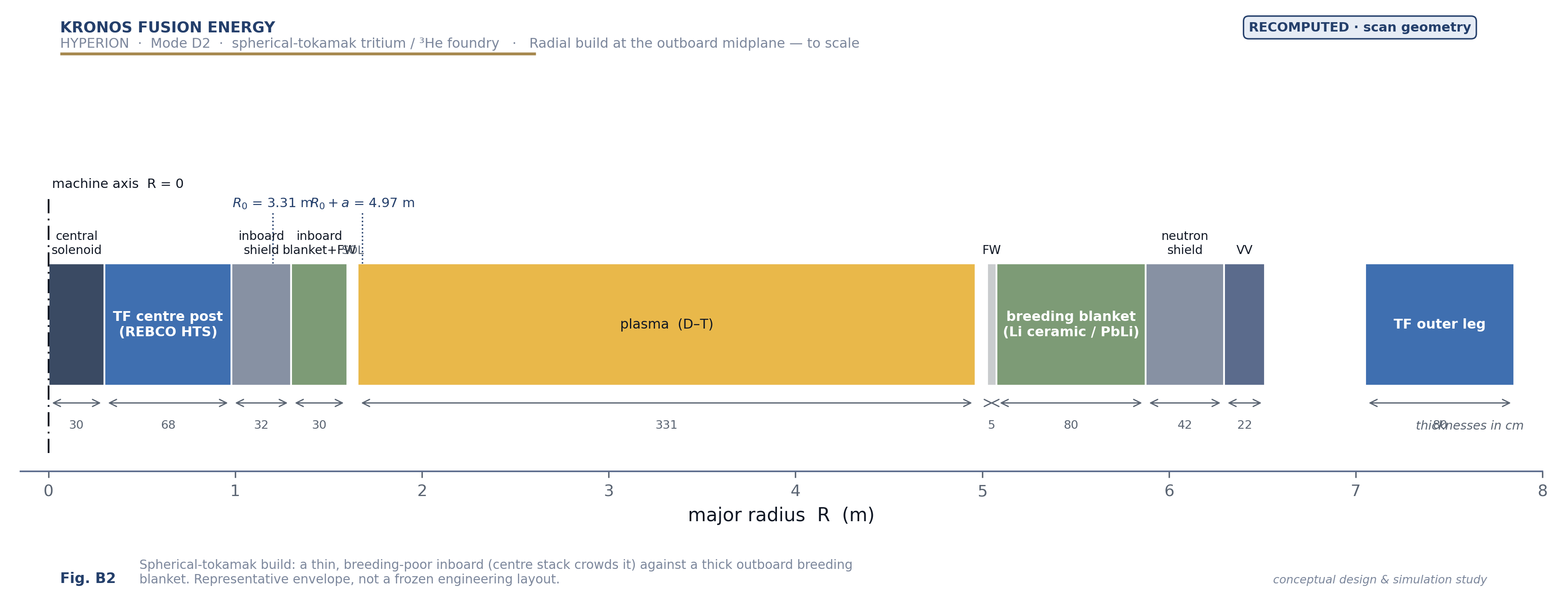
The radial build is the ordered stack of components from the plasma outward: scrape-off layer, first wall, breeding blanket, neutron shield, vacuum vessel, thermal shield, and the superconducting coil. In a compact spherical tokamak (R₀ = 1.2 m, A = 2.5) every millimetre is contested, especially at the centre column.
Fixing the radial build is one of the first design acts: it sets the machine's size, its shielding margin, and the field the magnet must deliver.
Common questions
The sequence of layers from plasma outward — first wall, blanket, shield, vacuum vessel, magnet — each competing for radial space, especially in the breeder's tight central column.
Because every layer must fit while still breeding tritium and protecting the magnets. The radial build is where the compact machine's hardest trades are settled.