Power Conversion
How each machine turns fusion output into electricity — thermal for the breeder, direct for the burner.
- Breeder
- Thermal cycle
- Burner
- Direct, 0.70
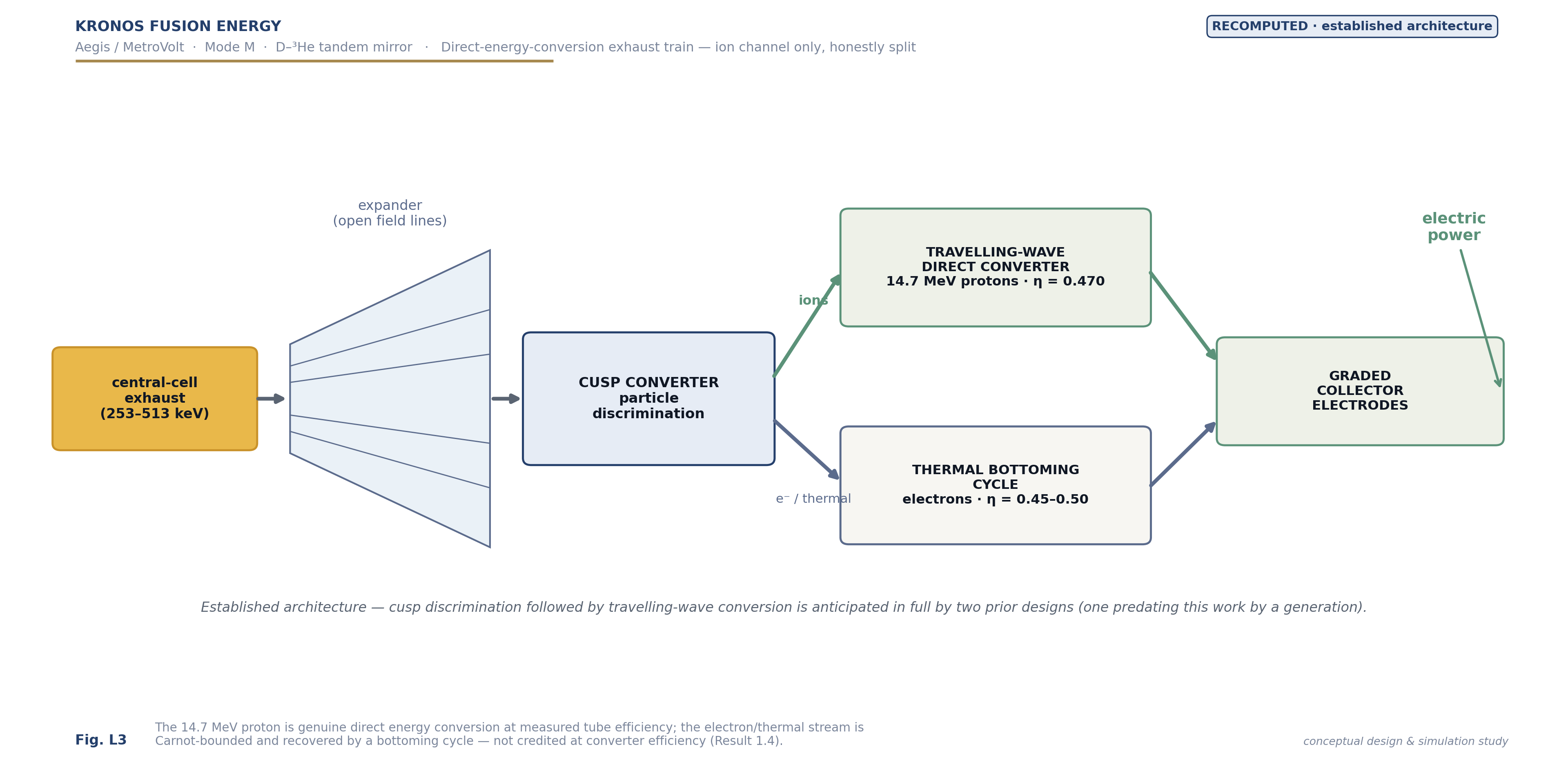
The breeder recovers its energy as heat through a blanket and a thermal cycle. The burner, running low-neutron D–³He, recovers charged-particle energy directly at about 0.70 efficiency — skipping the steam cycle's losses entirely.
The choice of conversion follows the fuel: direct conversion only pays off when most of the energy is in charged particles.
Conversion follows the fuel: the breeder recovers its energy as heat through a thermal cycle, while the burner recovers charged-particle energy directly at about 0.70, skipping the Carnot-limited steam cycle. Reporting net electricity after the plant's own consumption — not gross — is how Kronos states the burner's honest engineering gain.
Common questions
The breeder recovers heat through a conventional thermal cycle; the burner recovers charged-particle energy directly at about 0.70, skipping the Carnot-limited steam cycle. Conversion follows the fuel.
It lifts plant-level efficiency above a thermal plant's, underpinning the burner's QE = 1.31. Kronos reports net electricity after the plant's own draw, not gross.