Plasma Power Balance
The accounting of heating in versus losses out that determines whether a plasma produces net power.
- Breeder heating
- 25.9 MW
- Breeder gain
- 3.076
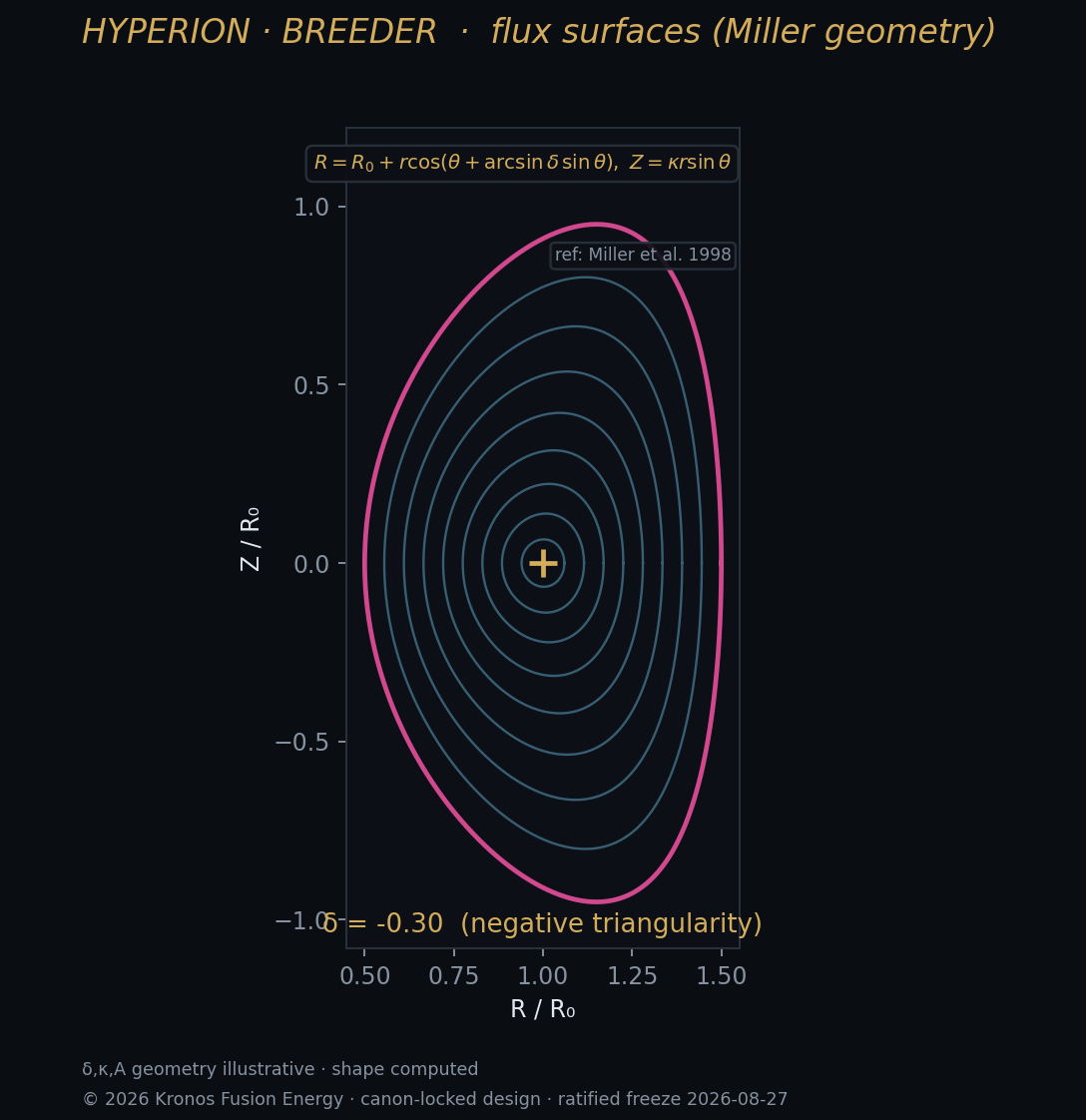
A plasma's power balance sums the inputs — auxiliary heating plus any self-heating — against the losses — transport, radiation and exhaust. Steady operation means they balance at the design temperature. HYPERION balances 25.9 MW of heating against its losses to sustain Q = 3.076.
Getting this ledger right, and reporting it honestly at the plant level rather than only the plasma level, is central to the Kronos method.
Common questions
It is the accounting of heating in versus losses out — conduction, radiation and particle loss — that determines whether a plasma sustains its temperature. Closing it is what defines a working operating point.
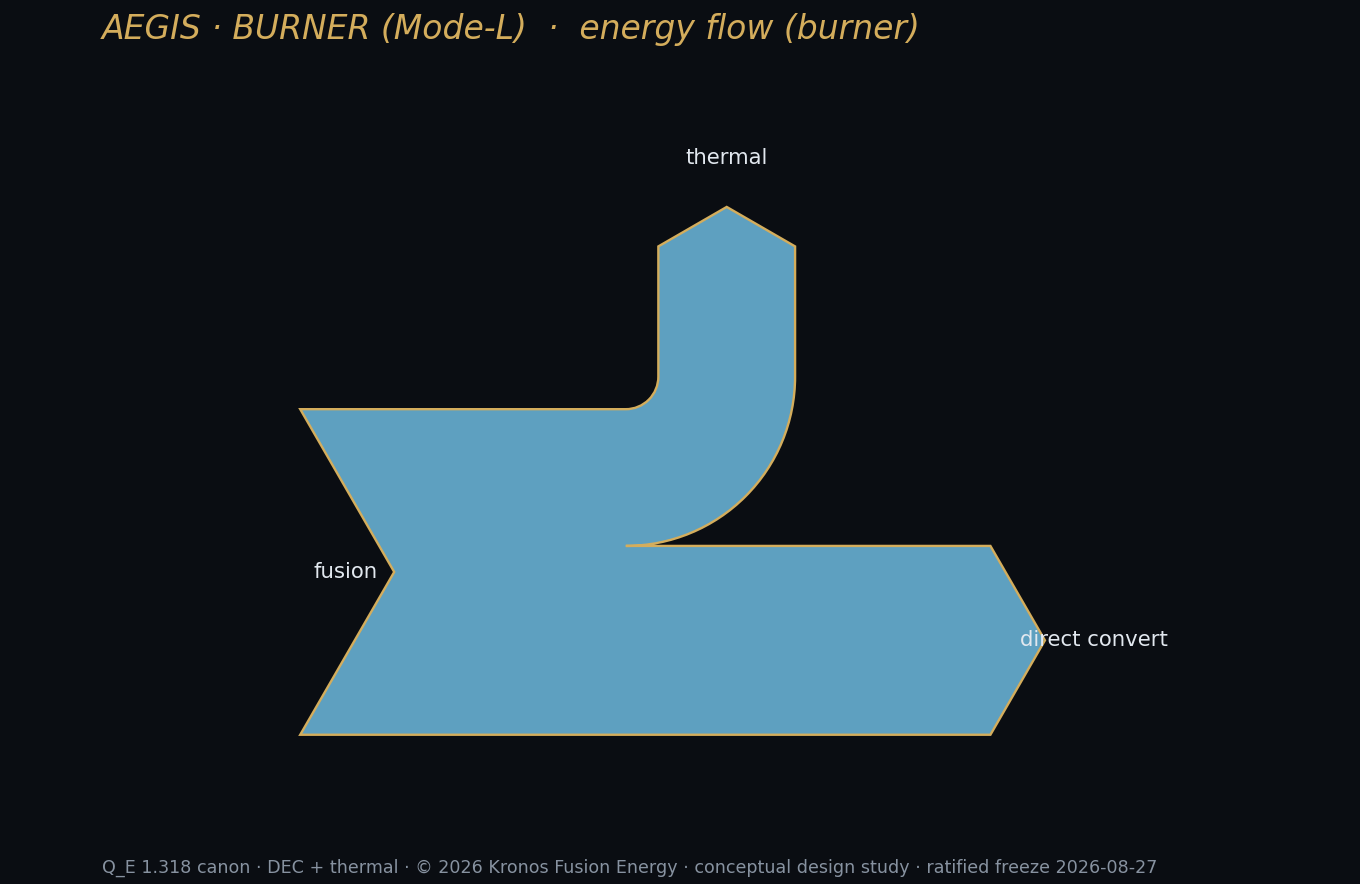
Net. The burner's headline figures are net electricity after the plant's own consumption, and it labels net power requirement-class because it depends on the plug reaching a density ratio near 16.