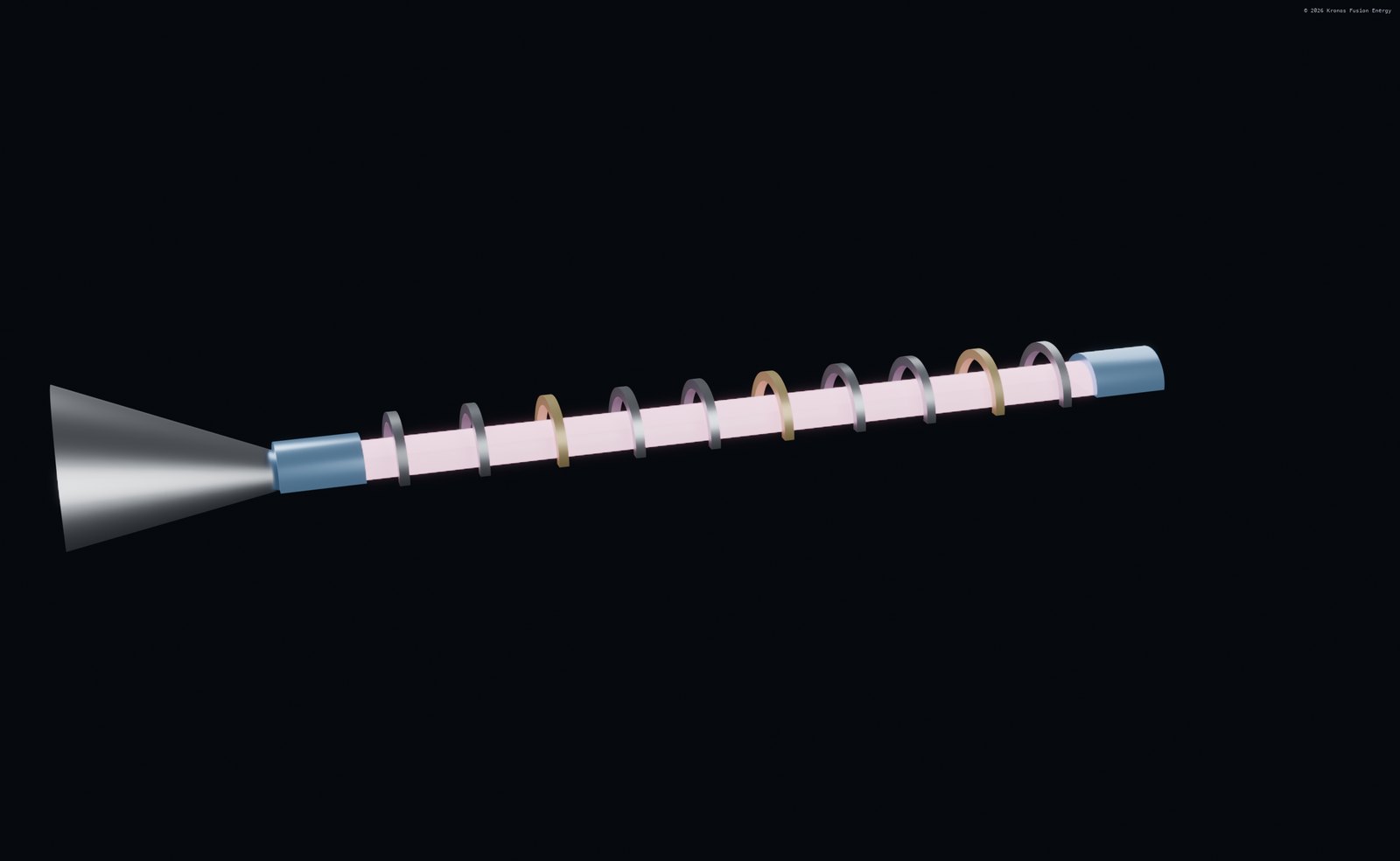
Neutron-Heavy vs Low-Neutron Machines
Where the fusion energy goes shapes everything — conversion, materials, siting.
- Neutron-heavy
- Breeder — 79.7%
- Low-neutron
- Burner — 5.44%
A D–T machine puts most of its energy into 14 MeV neutrons, driving a steam cycle and heavy shielding and activation. A low-neutron machine keeps most energy in charged particles, enabling direct conversion and gentler materials demands. The choice cascades through the whole plant.
Kronos uses the neutron-heavy breeder deliberately (neutrons are its product) and the low-neutron burner (5.44%) for clean electricity — matching the neutron budget to the job.
Common questions
Neutron-heavy D–T machines like the breeder (79.7%) put most energy into neutrons — ideal for breeding and isotopes. Low-neutron D–³He machines like the burner (5.44%) put it into charged particles — ideal for direct conversion and cleaner siting.
Both, deliberately — one for each product. The breeder sells neutrons; the burner sells firm power. Fuel follows purpose rather than one fuel being forced to do every job.