Mirror Confinement Physics
How a magnetic mirror traps particles — and why it needs plugging.
- Trap
- High-field throats
- Leak
- Loss cone
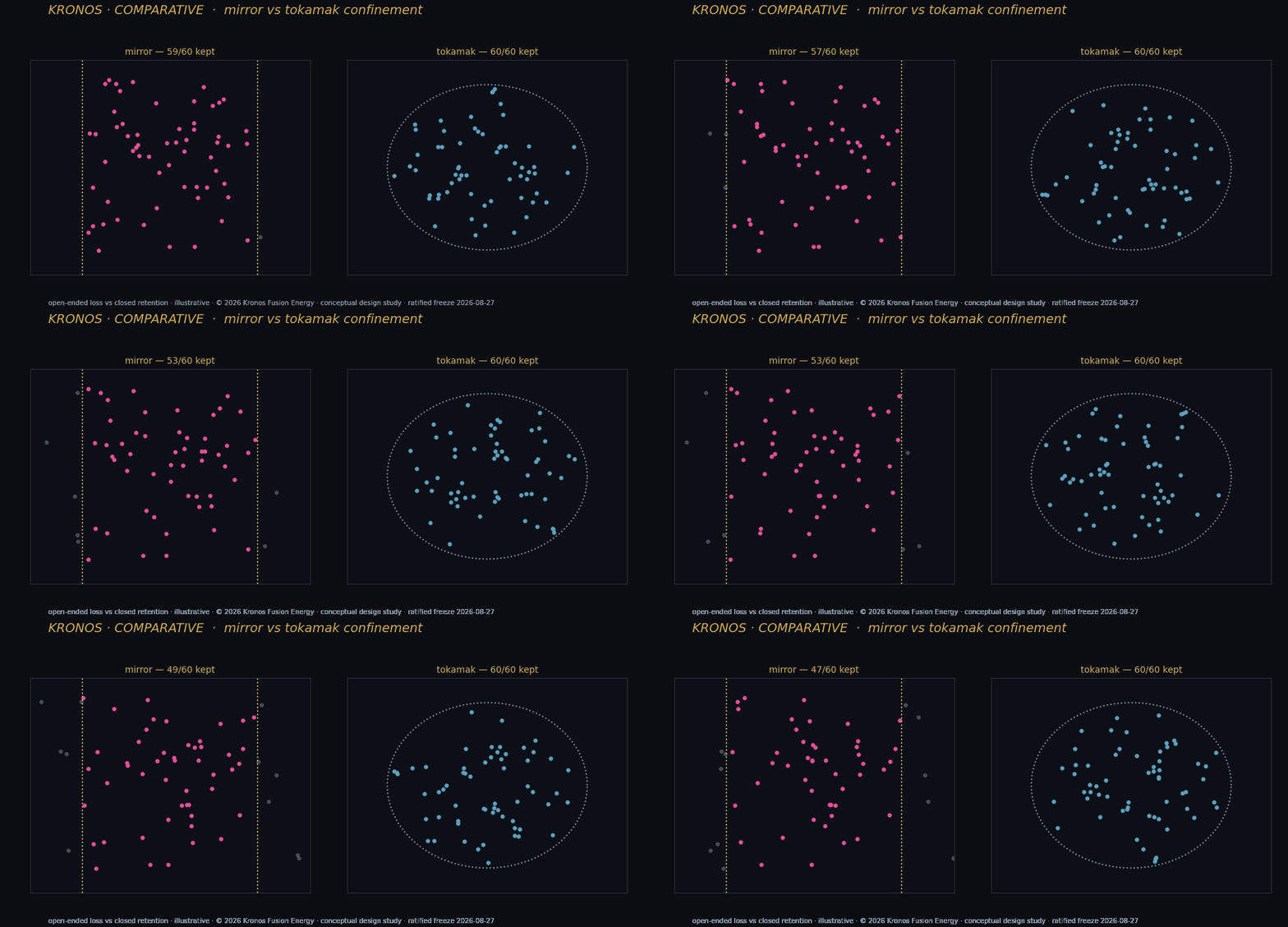
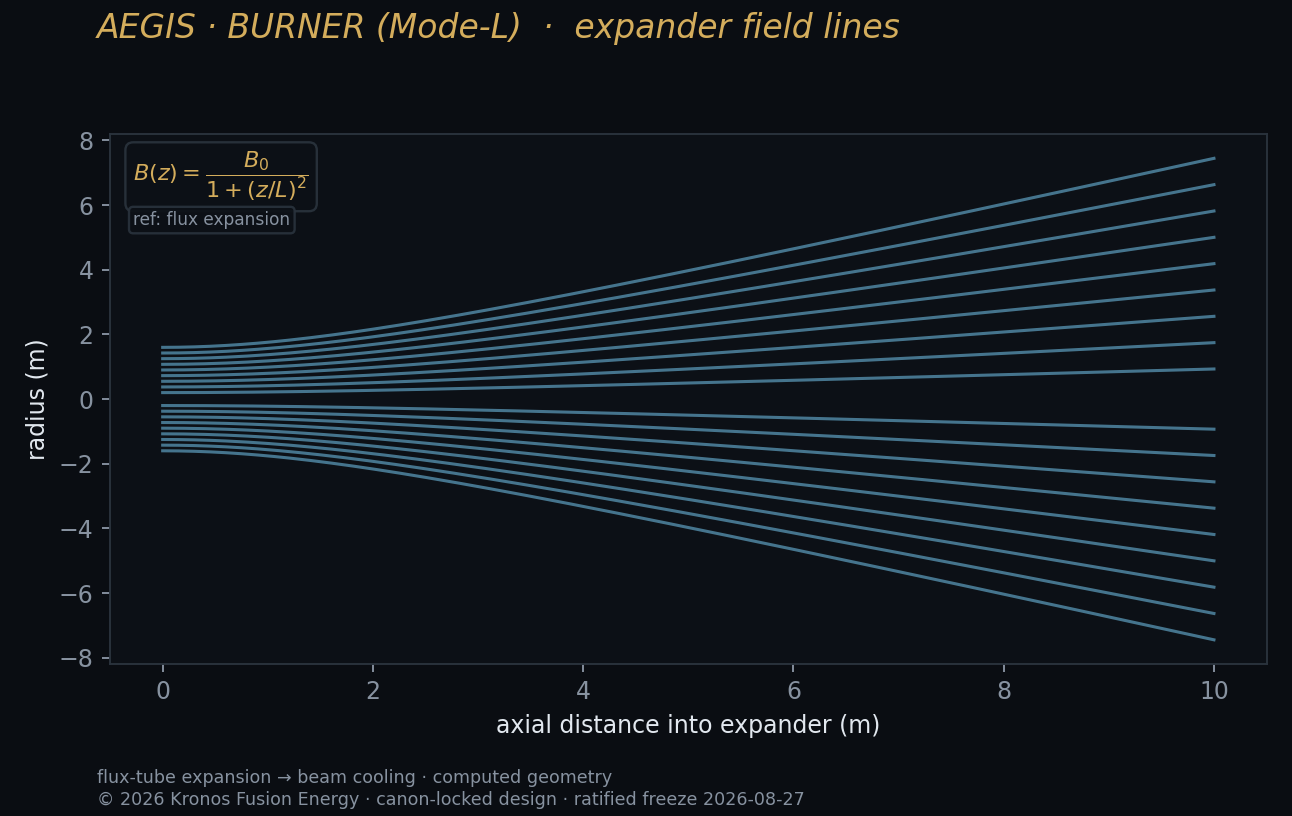
A magnetic mirror traps particles whose velocity is mostly perpendicular to the field, reflecting them from high-field throats; particles moving too parallel escape through a 'loss cone'. This end loss is the mirror's defining challenge, which the tandem-mirror plug addresses electrostatically — the burner's plug-density requirement.
Understanding the loss cone is understanding why the burner needs its plugs.
Common questions
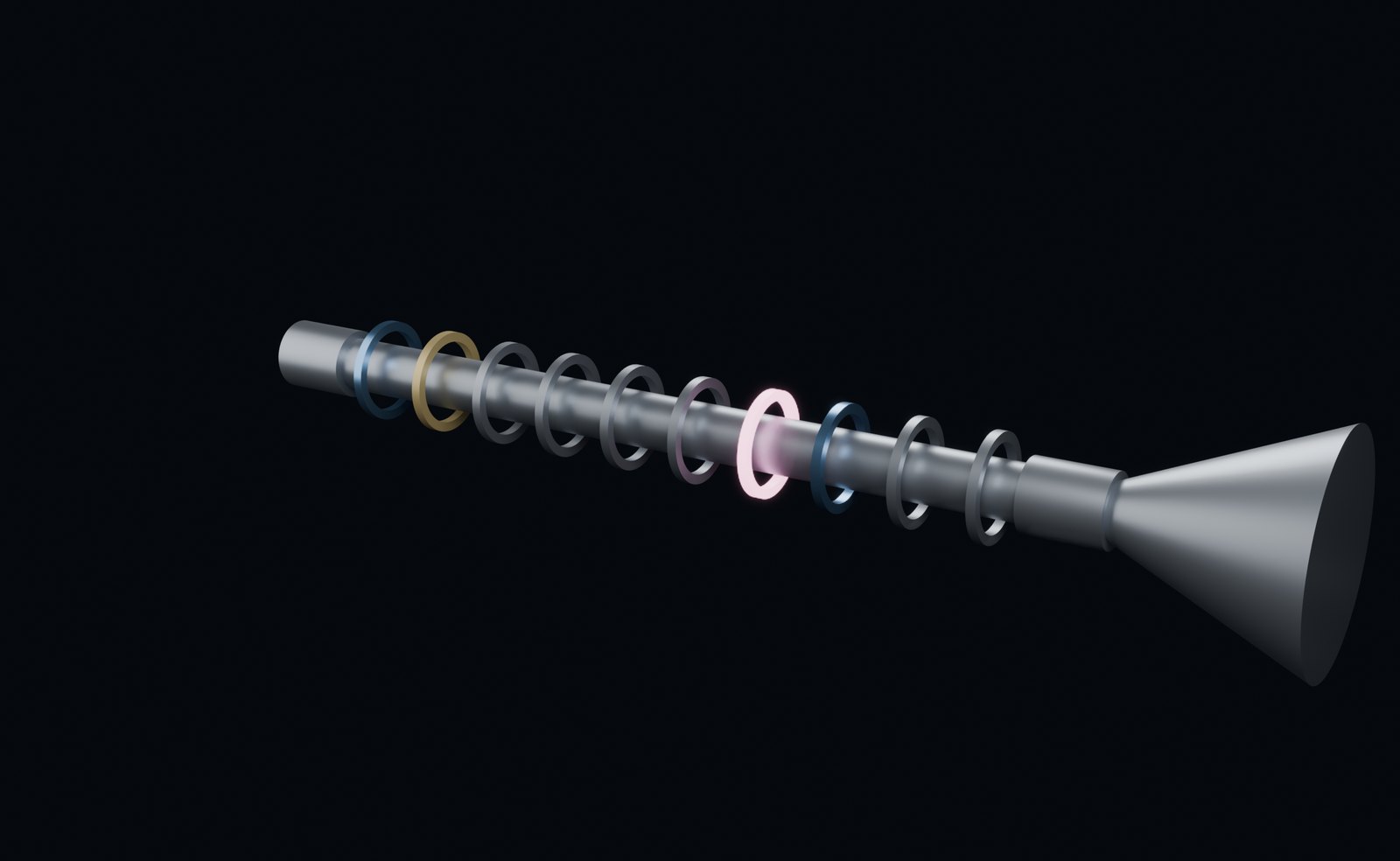
A straight field that is stronger at its ends reflects particles back toward the centre. Simple mirrors leak through a loss cone; the tandem configuration adds end plugs and an electrostatic barrier to plug that leak.
Modern high-field REBCO magnets make the required plug fields (26.49 T) attainable, and direct conversion suits the linear geometry — reviving a concept whose physics was well understood but whose magnets were not previously available.