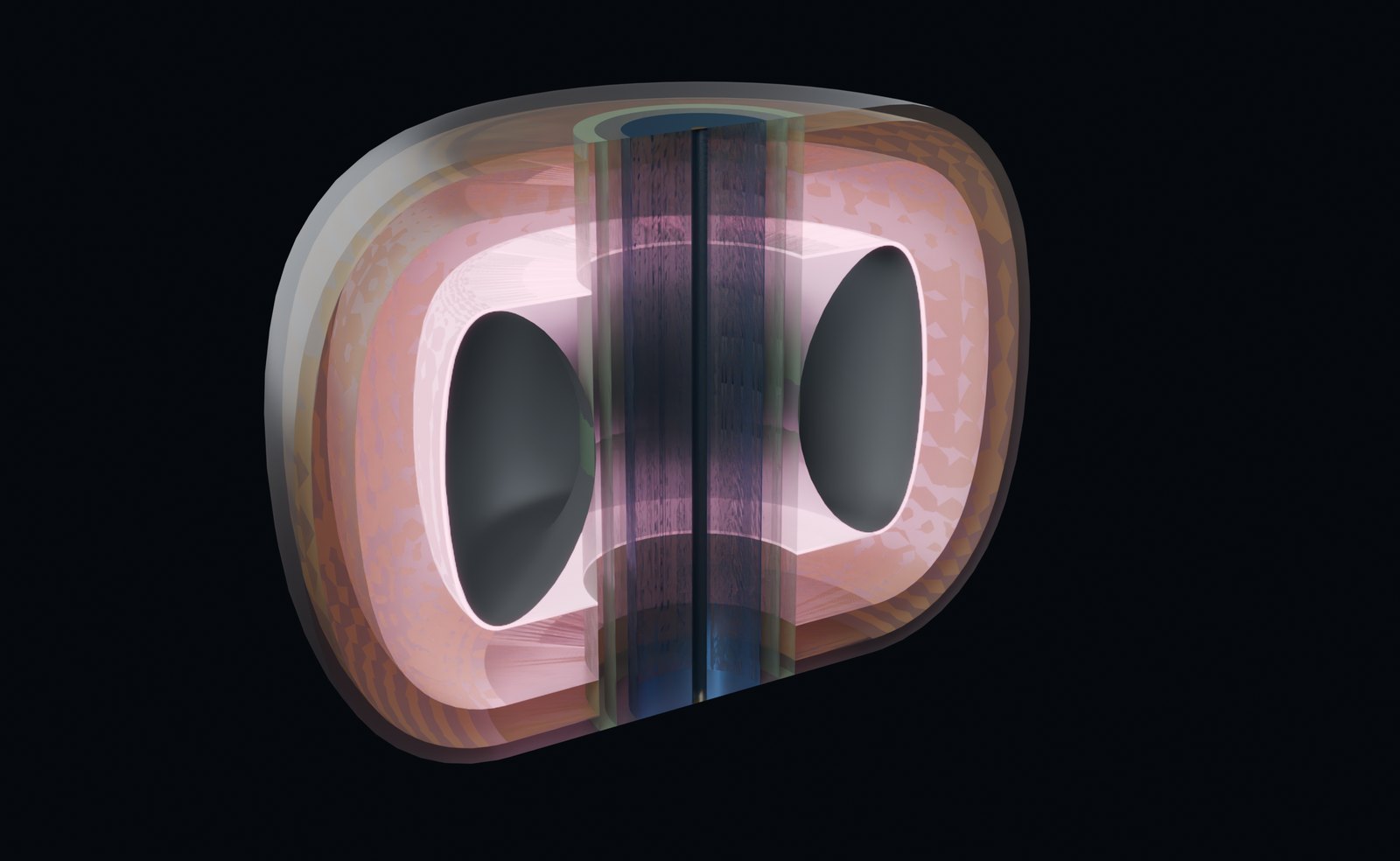
Magnet Structural Materials
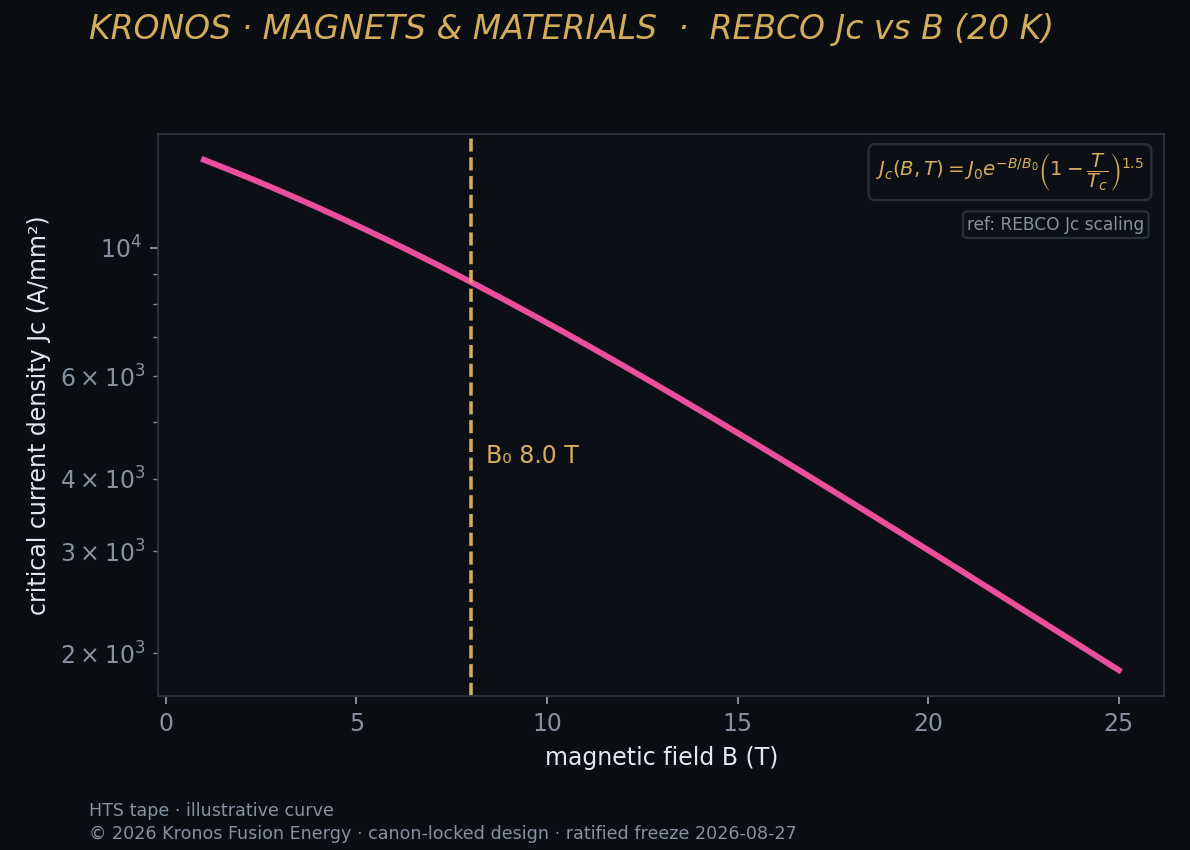
The high-strength alloys that hold a magnet together against its own field.
- Loads
- Lorentz hoop forces
- Analysis
- Bore-resolved stress
A high-field magnet generates immense Lorentz forces that try to blow it apart; the winding pack must be reinforced with high-strength, cryogenically-tough structural alloys and a robust case. The REBCO study resolves the stress through the winding-pack stack.
Kronos analyses bore-resolved stress against material limits; the static case is sound, with cyclic fatigue flagged as the binding magnet gate.
A high-field magnet is really a structure problem: the Lorentz forces try to blow the coil apart, and the winding pack alone cannot hold them, so a high-strength cryogenic case and intercoil structure carry the hoop and overturning loads. Bore-resolved stress analysis shows the static case is sound; cyclic fatigue of that structure is the binding magnet gate.
Common questions
The Lorentz forces try to blow the coil apart, and the winding pack alone cannot hold them, so a high-strength case and intercoil structure carry the hoop and overturning loads. The magnet is as much steel as superconductor.
Bore-resolved analysis shows the static case is sound with margin; cyclic fatigue is the binding open item, mapped in the open REBCO study (DOI 10.5281/zenodo.21842514).