Skip to content
Technology How it works Breeder — Hyperion Burner — Aegis Burner — MetroVolt AI-Native Architecture Magnets Fuel cycle Safety Roadmap
Solutions AI & Data Centers Defense & Government Grid & Baseload Neutron Detection Quantum
Learn Technical Library
Proof Publications Whitepapers Technical Library Open Science & Reproducibility The Honest Gates
Company About / Mission Leadership Environment Health & Safety Investors Careers Press Contact
3D Model
Technical LibrarySafety & Environment
Safety & Environment
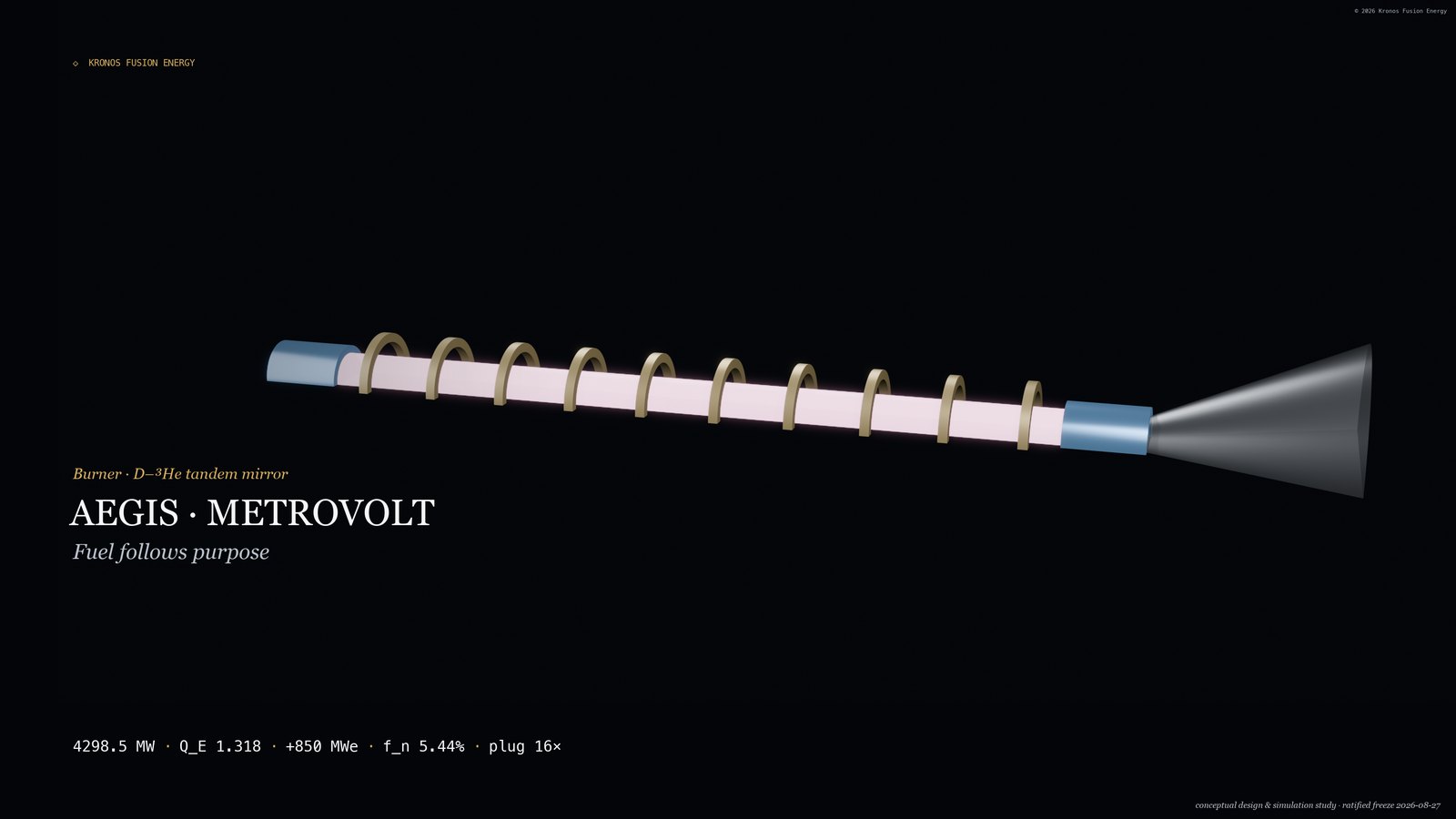
Aegis / MetroVolt burner · design render
Aegis / MetroVolt burner · design render · © 2026 KFE

Lifecycle Environmental Assessment
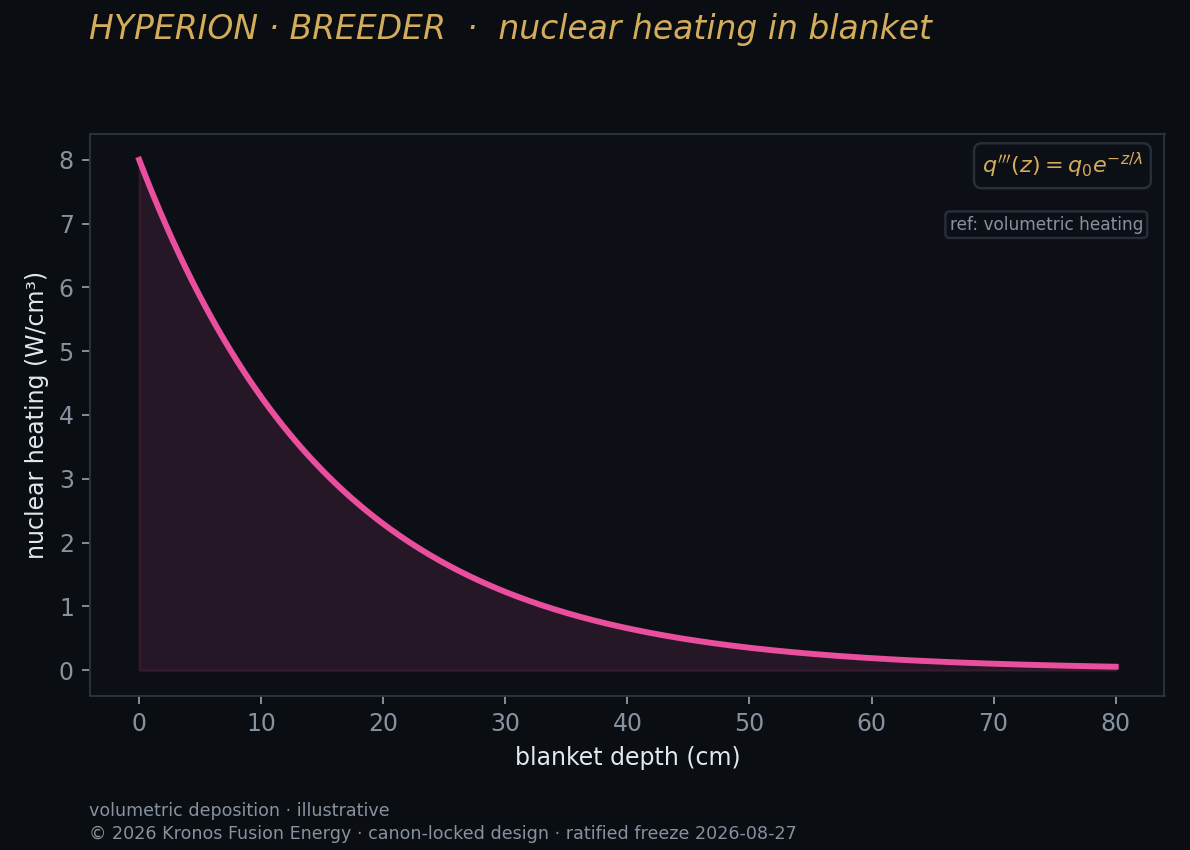
Nuclear heating deposited in the structure — OpenMC.
Nuclear heating deposited in the structure — OpenMC. canon 2026-08-27 · © 2026 KFE

Judging fusion on its whole lifecycle, not just clean operation.

Safety & EnvironmentUpdated 2026-08-11
Scope
Cradle to grave

An honest environmental case looks at the whole lifecycle — construction materials and embodied carbon, operation (zero-carbon, low waste), and decommissioning (short-lived activated material). Kronos frames its environmental screening this way, flagging the items still to be computed.

Zero operational carbon is not the whole story, and Kronos says so.

Common questions

What does a lifecycle assessment cover?

All the environmental inputs and outputs across a plant's life — construction materials, water and land use, operation and decommissioning — not just what comes out of the stack during operation.

Has Kronos finished one?

Kronos screens lifecycle impacts by product and flags what remains to be computed rather than publishing a finished, polished number it cannot yet defend.

← PreviousFusion's Waste ProfileNext →Radiation Protection