Comparisons & Context
Kronos vs the Mainstream D–T Tokamak
The mainstream bet is one big D–T tokamak that makes electricity. Kronos makes a different bet.
- Mainstream
- One D–T tokamak → electricity
- Kronos
- Breeder + low-neutron burner
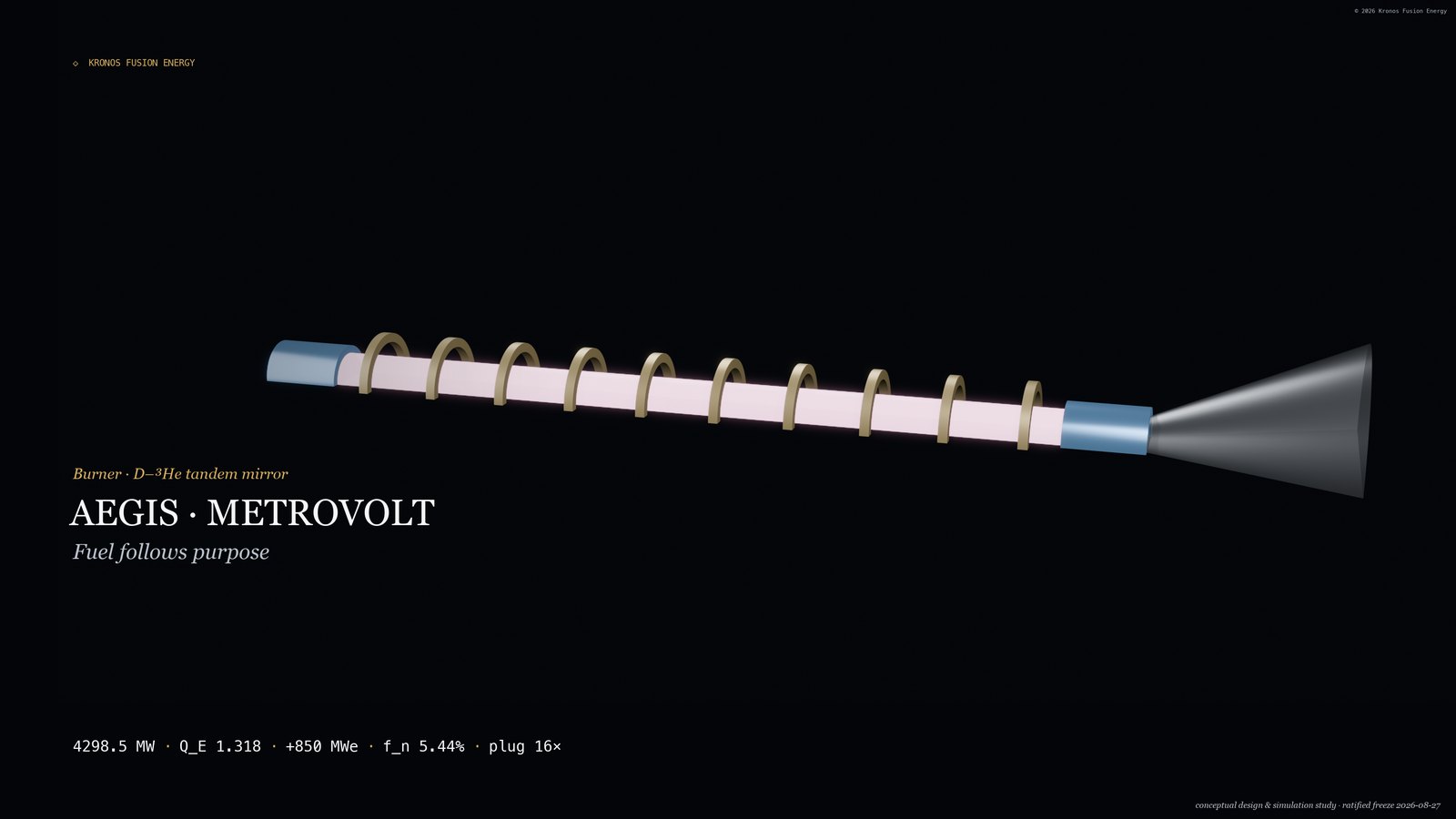
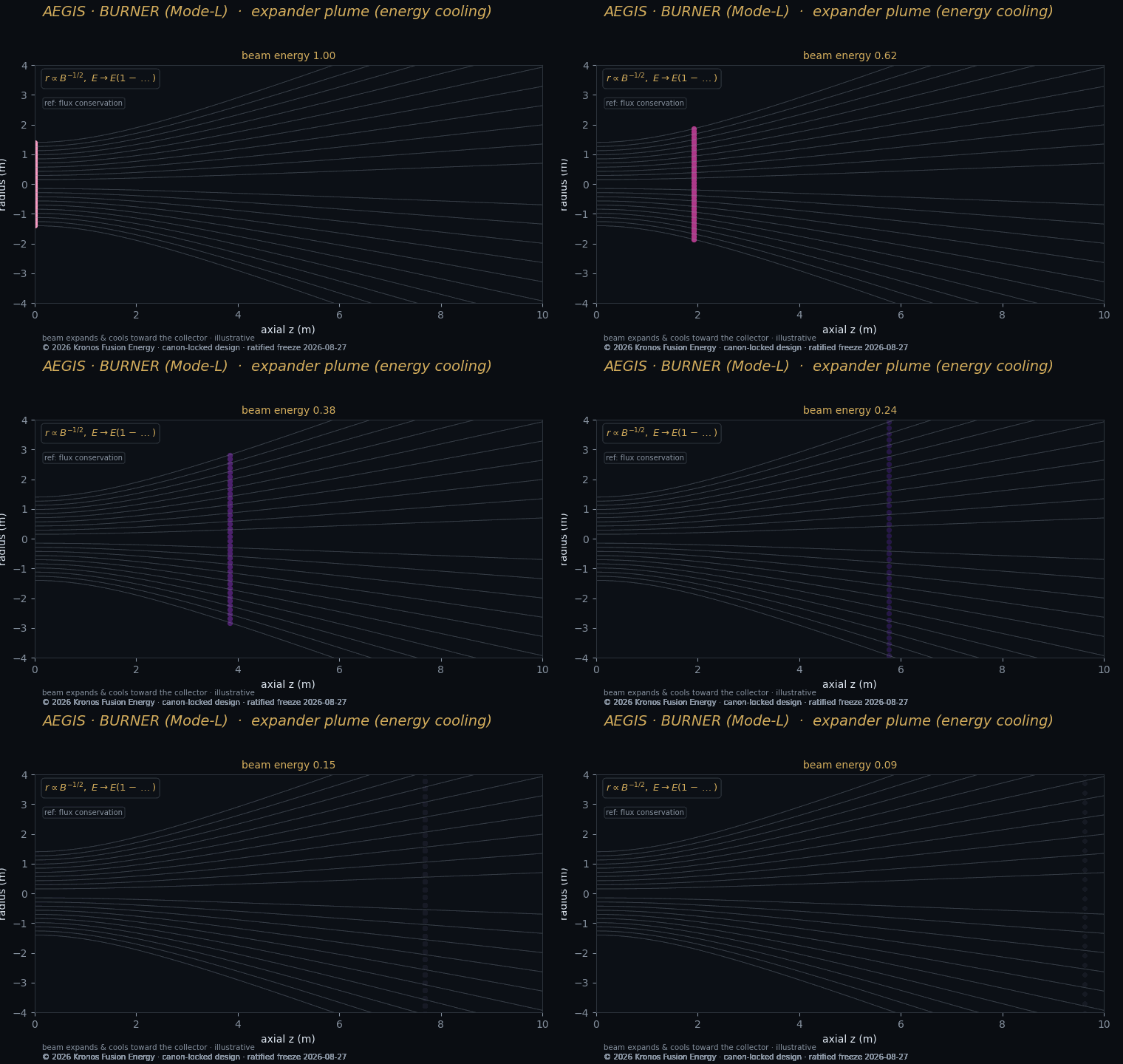
A conventional D–T tokamak puts ~80% of its energy into 14 MeV neutrons and must convert heat through a steam cycle. Kronos instead uses a compact D–T breeder to make fuel and neutrons, and a low-neutron D–³He burner (5.44% neutrons) to make electricity by direct conversion.
The payoff is a saleable product (isotopes, tritium) before net electricity is proven, and a cleaner, disruption-free electricity machine. The cost is running two machines and a harder burner fuel.
Both share hard physicsThe breeder still faces tokamak confinement questions; the burner faces its plug-density requirement. Kronos does not claim to have escaped hard physics — only to have arranged it more favourably.
Common questions
How is Kronos different from a normal fusion tokamak?
Instead of one D–T tokamak racing to net electricity, Kronos uses a D–T breeder to make fuel and neutrons, and a low-neutron D–³He burner to make electricity by direct conversion.