Why Fusion Is Inherently Safe
Fusion's safety is not a system bolted on — it is physics. There is nothing to run away.
- Chain reaction
- None
- Fuel in machine
- Seconds' worth
- Meltdown pathway
- None
A fusion plasma holds only a tiny, continuously-supplied amount of fuel and depends on precisely maintained conditions. Anything that perturbs it — a power loss, a leak, a fault — makes it cool and extinguish within seconds. There is no chain reaction, no critical mass, and no stored energy that can drive a runaway.
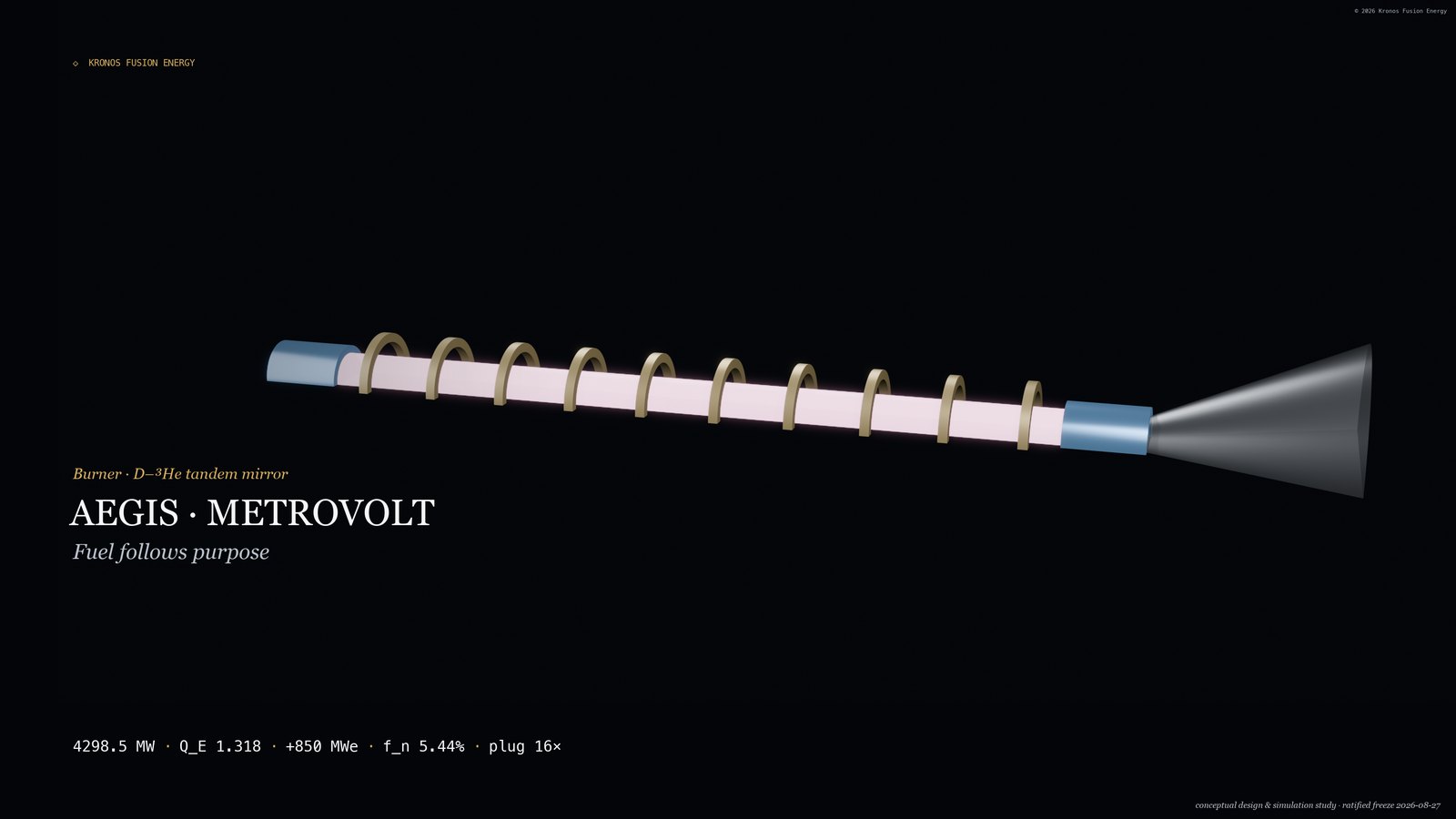
The burner adds a further margin: as a linear mirror it has none of the tokamak's disruption failure mode.
Fusion's safety is physics, not a bolted-on system: the plasma holds only seconds of fuel and depends on precisely maintained conditions, so any fault makes it cool and stop. There is no chain reaction, no critical mass and no stored energy to drive a runaway — and the linear burner additionally lacks the tokamak's disruption failure mode.
Common questions
No. There is no chain reaction and only seconds of fuel; any fault makes the plasma cool and stop. There is no meltdown pathway.