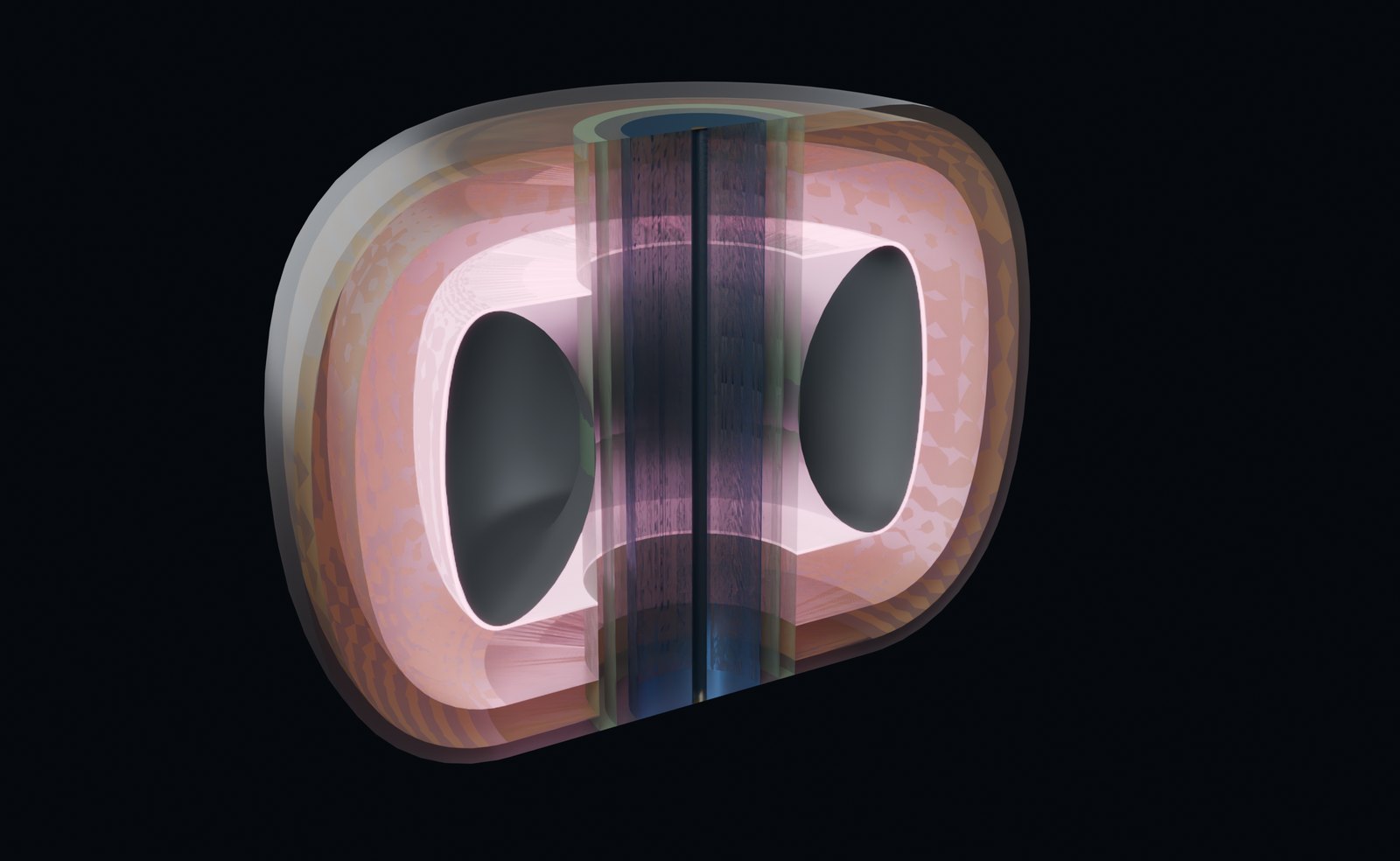
The Magnetic Mirror's Second Life
Why an old idea, reworked with modern magnets and physics, is compelling again.
Magnetic mirrors were among the earliest fusion concepts but fell behind tokamaks when simple mirrors proved leaky and unstable. Decades of physics — minimum-B stabilisation, the tandem-mirror plug, thermal barriers — solved the core problems, and modern high-field superconductors make the required plug fields attainable.
The Kronos burner is a modern tandem mirror: low-neutron D–³He, direct conversion, no disruptions — with the plug-density requirement (n_p/n_c ≈ 16) as its honest open item.
Common questions
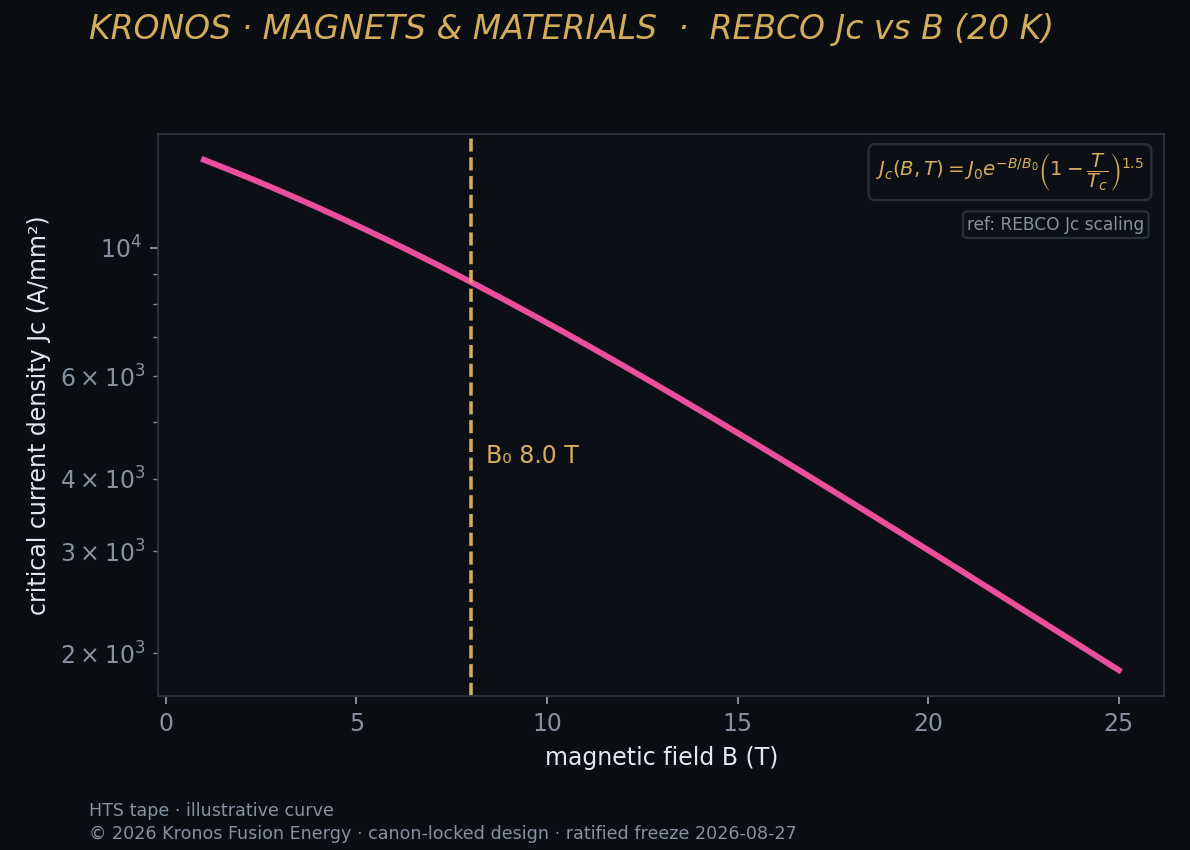
Early mirrors leaked through the loss cone and the tandem fixes needed stronger magnets than existed. Modern REBCO reaching 26.49 T is what gives the concept its second life in the burner.
No — the tandem-plug and ambipolar physics were understood; the enabling magnets simply were not available until now.