The Tritium Fuel Cycle
Breeding, extracting, and recycling tritium so the plant fuels itself.
- Breeding ratio
- 1.8
- Tritium output
- 4.0 kg/yr
- Startup inventory
- 6.47 kg
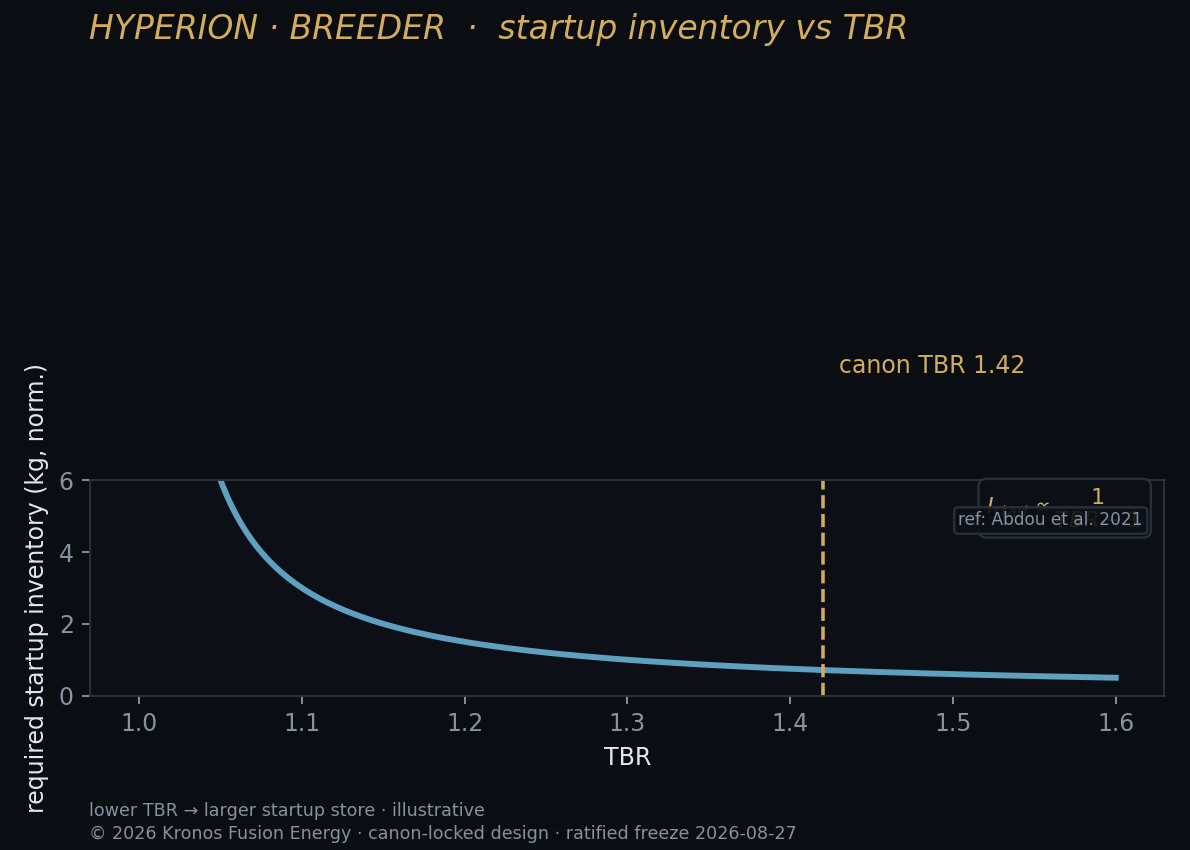
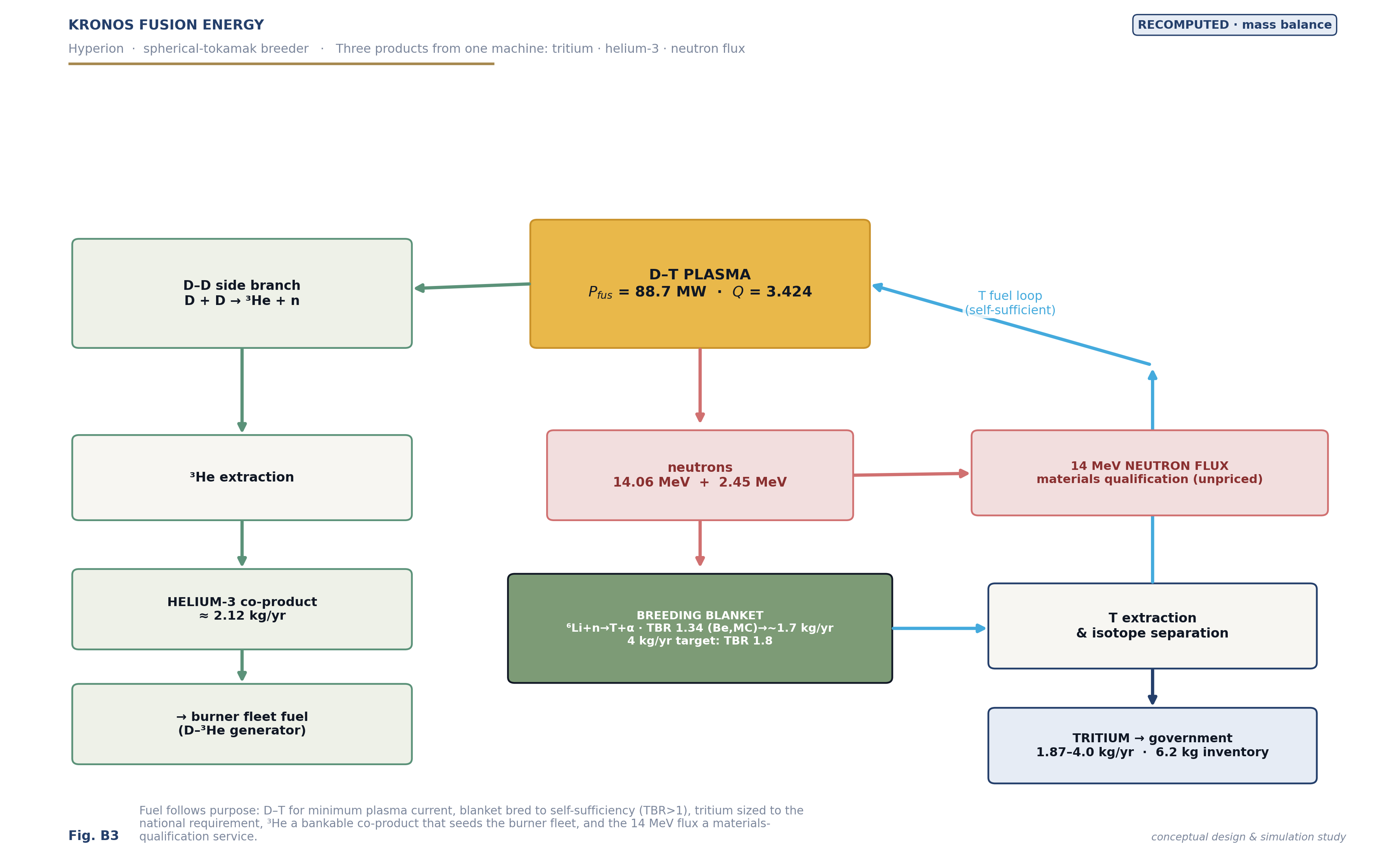
A D–T plant must breed, extract, purify and re-inject its own tritium. HYPERION's blanket breeds 4.0 kg/yr at a breeding ratio of 1.8, against a startup inventory of 6.47 kg, while co-producing helium-3 for the burner.
Tritium handling and accountancy are licensing-relevant systems, treated as a gate item on the breeder side.
The tritium fuel cycle is a closed loop unique to the D–T breeder: breed in the blanket, extract and purify, account for every gram, and re-inject. HYPERION runs it at breeding ratio 1.8 to make 4.0 kg/yr while co-producing helium-3, and because tritium is mobile and radioactive the loop is one of the breeder's licensing-relevant systems.
Common questions
A closed loop unique to the D–T breeder: breed tritium in the blanket, extract and purify it, account for every gram, and re-inject it. HYPERION runs it at breeding ratio 1.8 for ~4.0 kg/yr/yr.
Because tritium is mobile and radioactive, its inventory, containment and accounting are core safety systems — one reason the breeder carries most of Kronos's radiological engineering.