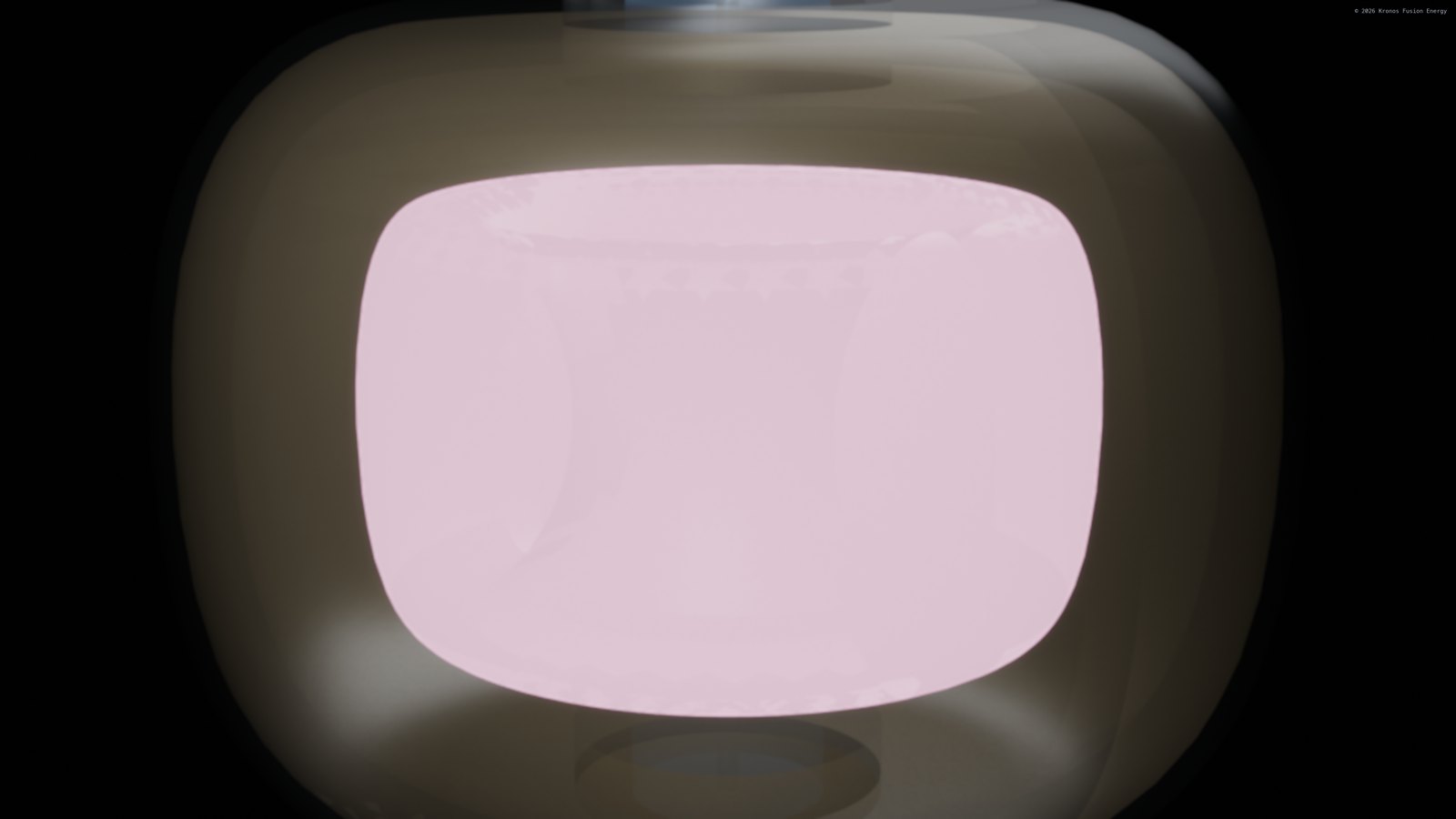
End Loss and Plugging in Mirrors
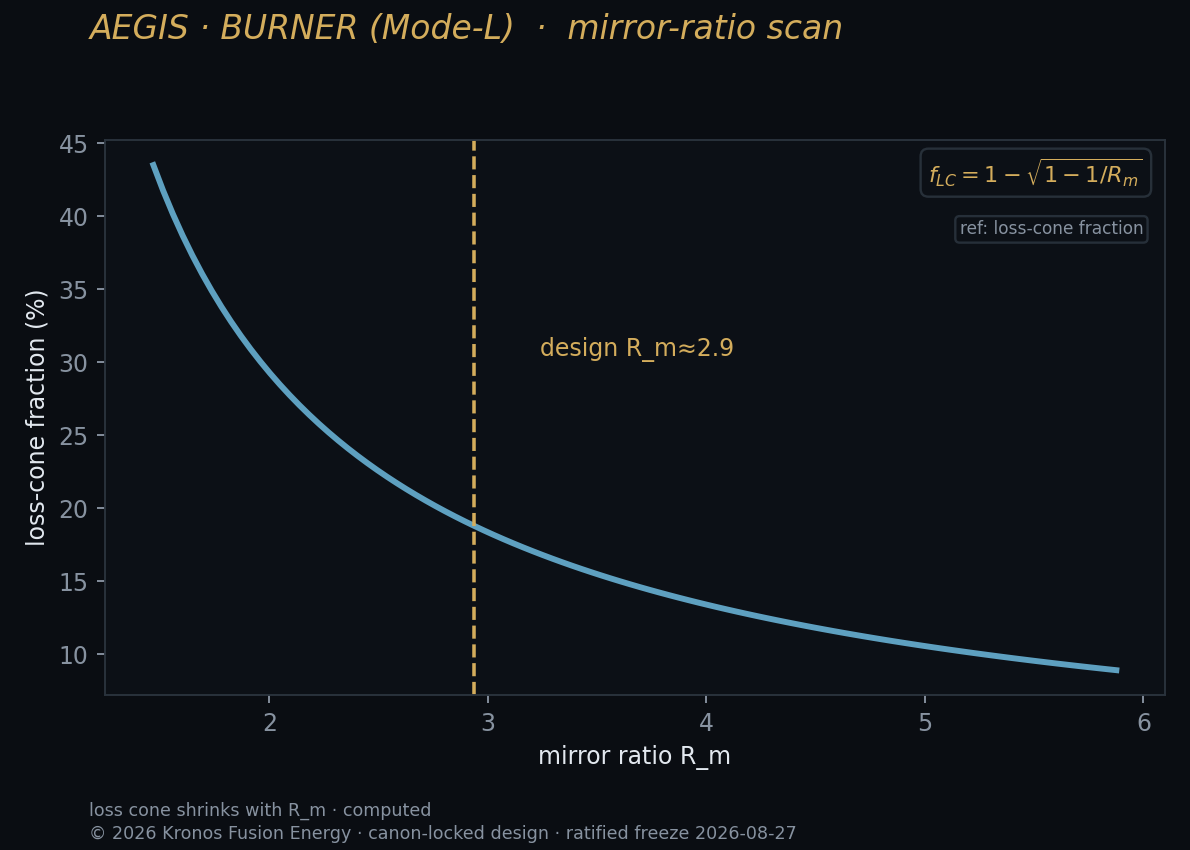
Why open-ended mirrors leak, and how the tandem-mirror plug fixes it.
- Problem
- Open-end leakage
- Solution
- Ambipolar plug
- Requirement
- n_p/n_c 16
A simple magnetic mirror leaks plasma out its open ends. The tandem mirror solves this by placing dense, high-field plugs at each end whose electrostatic (ambipolar) potential repels escaping ions. Building that potential requires the plug to reach a density about 16× the central cell — the burner's binding requirement.
Understanding end loss is understanding both the burner's advantage (no disruptions, direct conversion) and its central gate.
Common questions
Particles whose velocity falls in the loss cone escape out the ends of a mirror, the fundamental leak of the simple configuration. Controlling it is the central problem of mirror confinement.
With high-field plug coils and an ambipolar electrostatic potential that reflects escaping ions. The plugging effectiveness hinges on the ~16 plug-density ratio, the burner's binding physics condition.