Plasma Edge Physics
The thin, complex boundary region that disproportionately sets overall performance.
- Why it matters
- Sets core performance & exhaust
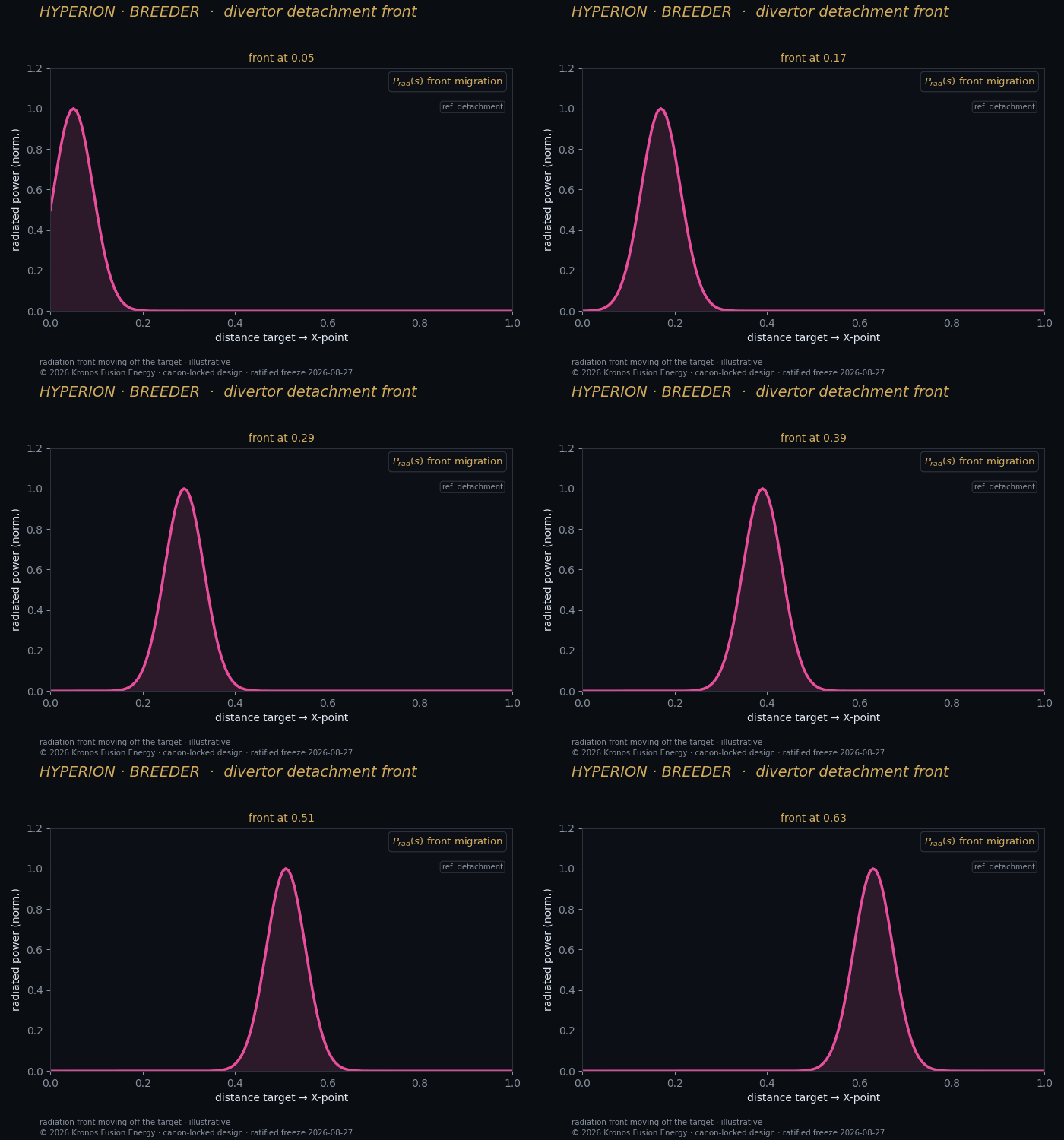
The plasma edge — the pedestal and scrape-off layer — punches above its weight: the pedestal height strongly sets core performance (through profile stiffness), and the scrape-off layer governs exhaust. Edge physics is where confinement, stability and exhaust all meet.
HYPERION's negative triangularity is an edge-physics choice aimed at benign ELM behaviour.
Common questions
The narrow edge region sets how much heat concentrates on the divertor and, through the H-mode pedestal, strongly influences the whole plasma's performance. Small edge changes have large global effects.
HYPERION's negative triangularity (δ = -0.30) can suppress edge-localised modes while keeping good confinement — a deliberate choice to tame the edge without violent ELM bursts.