Deuterium–Tritium vs Advanced Fuels
The field's central fuel divide — and why Kronos runs both sides of it.
- Mainstream
- D–T
- Advanced
- D–³He, p–¹¹B
- Kronos
- Both, by purpose
Most fusion uses D–T for its unmatched reactivity, accepting a heavy neutron load (79.7%) and a steam cycle. A minority pursue low-neutron 'advanced' fuels (D–³He, p–¹¹B) for cleaner operation and direct conversion, accepting much higher temperatures. The two camps rarely overlap.
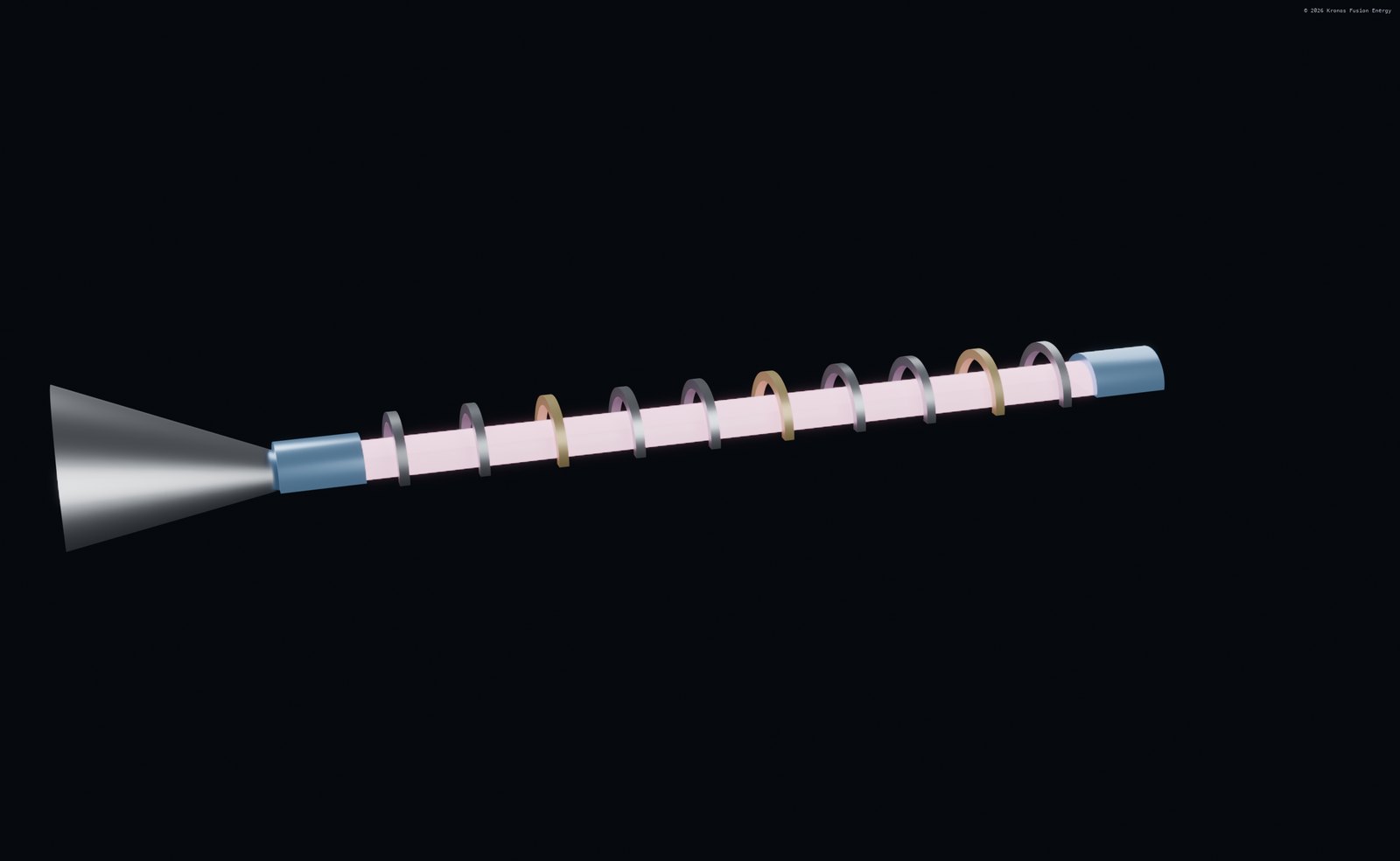
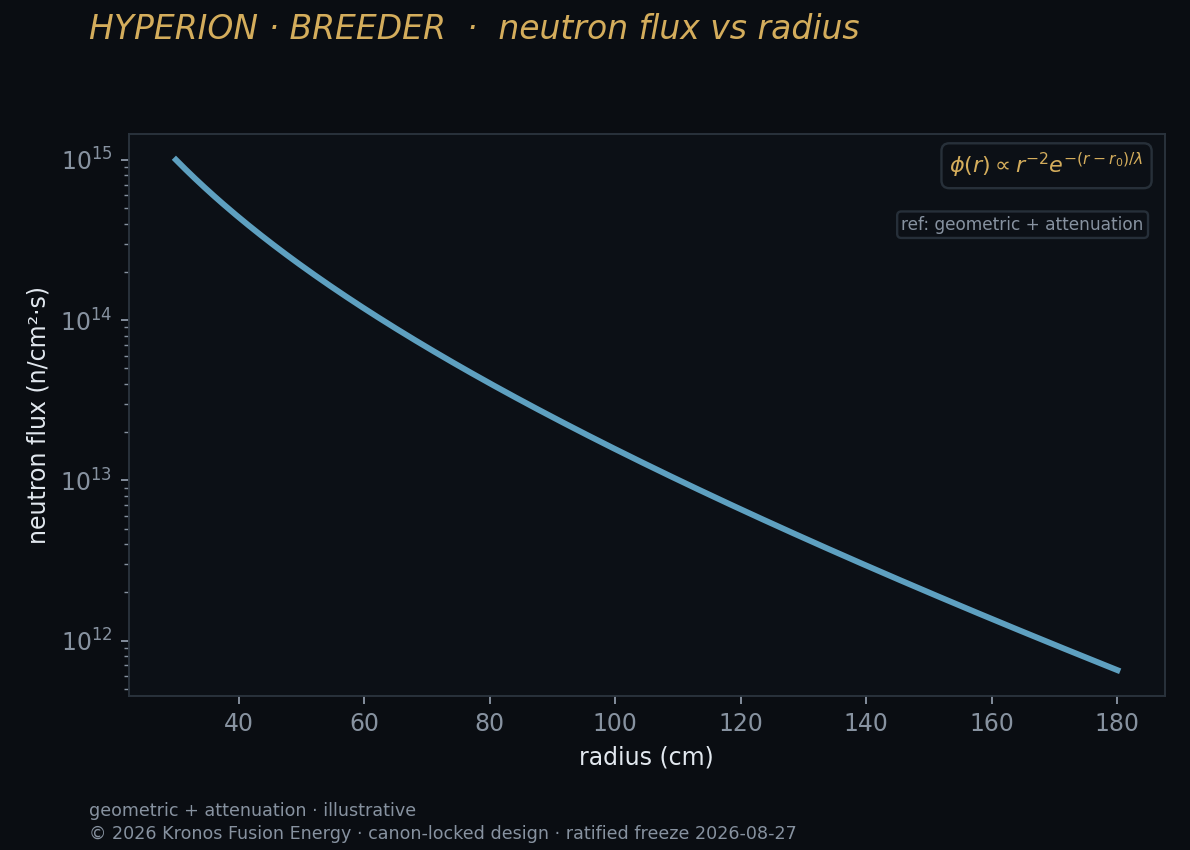
Kronos runs both: D–T in the breeder to make fuel and neutrons, and low-neutron D–³He in the burner to make clean electricity — capturing each fuel's advantage where it fits.
Common questions
D–T is easiest but neutron-heavy; advanced fuels like D–³He are cleaner but far harder and need scarce helium-3. Kronos uses each where it wins: D–T to breed, D–³He to burn.
Be careful with them — even D–³He produces some neutrons via side reactions (5.44% in the burner). Kronos never calls its burner aneutronic, only low-neutron.