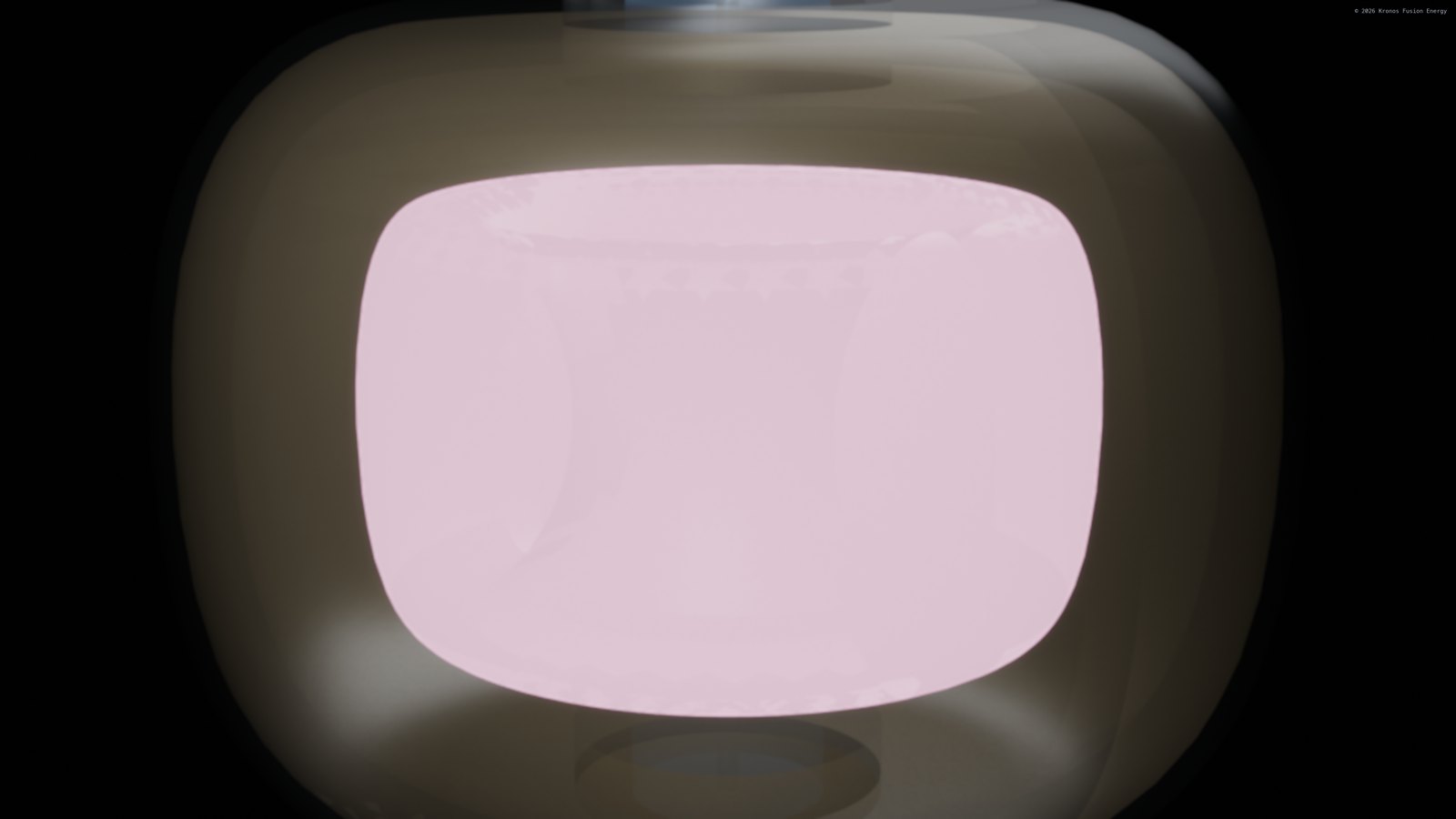
Deuterium–Tritium (D–T) Fuel
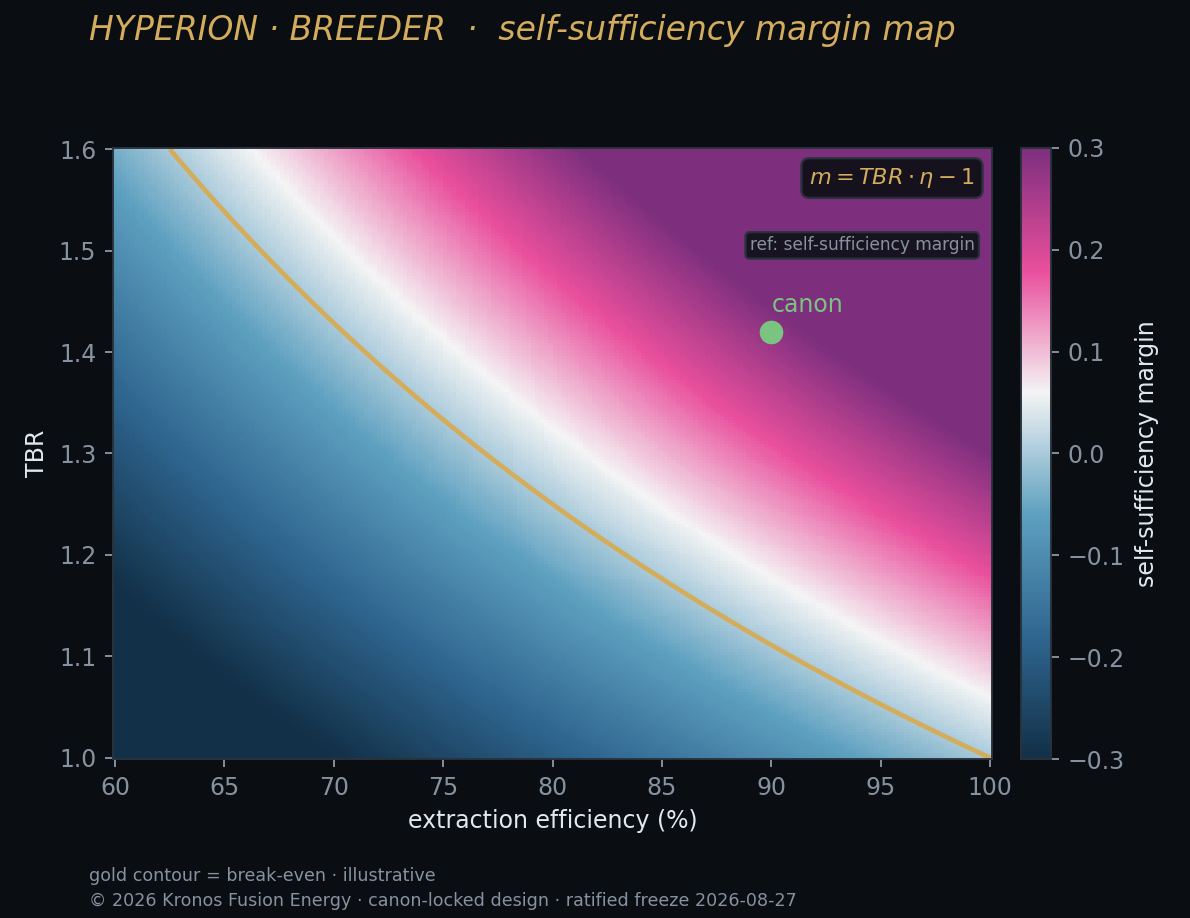
D–T is where practical fusion starts: the highest reactivity at the lowest temperature. Kronos embraces its neutrons rather than apologising for them.
- Reaction
- D + T → &sup4;He + n
- Energy
- 17.6 MeV
- Neutron fraction
- 79.7%
- Peak temperature
- ~15 keV
Deuterium and tritium fuse to helium-4 plus a 14.1 MeV neutron, releasing 17.6 MeV total. It has the highest reactivity of any candidate fuel and peaks at a comparatively low 15 keV, which is why the HYPERION breeder uses it.
About 79.7% of D–T energy leaves as neutrons. Kronos treats that as a feature: the neutrons breed tritium in the blanket (target breeding ratio 1.8) and co-produce helium-3, feeding the burner side of the architecture.
D–T is the easiest fusion fuel — highest reactivity at the lowest temperature — and Kronos embraces its 79.7% neutron fraction rather than apologising for it, because those neutrons are the breeder's product. The catch is that tritium must be bred, which is the blanket's job, targeting 4.0 kg/yr per year.
Common questions
It has the highest reactivity at the lowest temperature of any candidate fuel, which is why the breeder runs comparatively cool at 15 keV. The trade is a high neutron yield and the need to breed tritium.
The breeder makes its own in the blanket at breeding ratio 1.8, about 4.0 kg/yr per year — turning the tritium-supply problem into a product line.