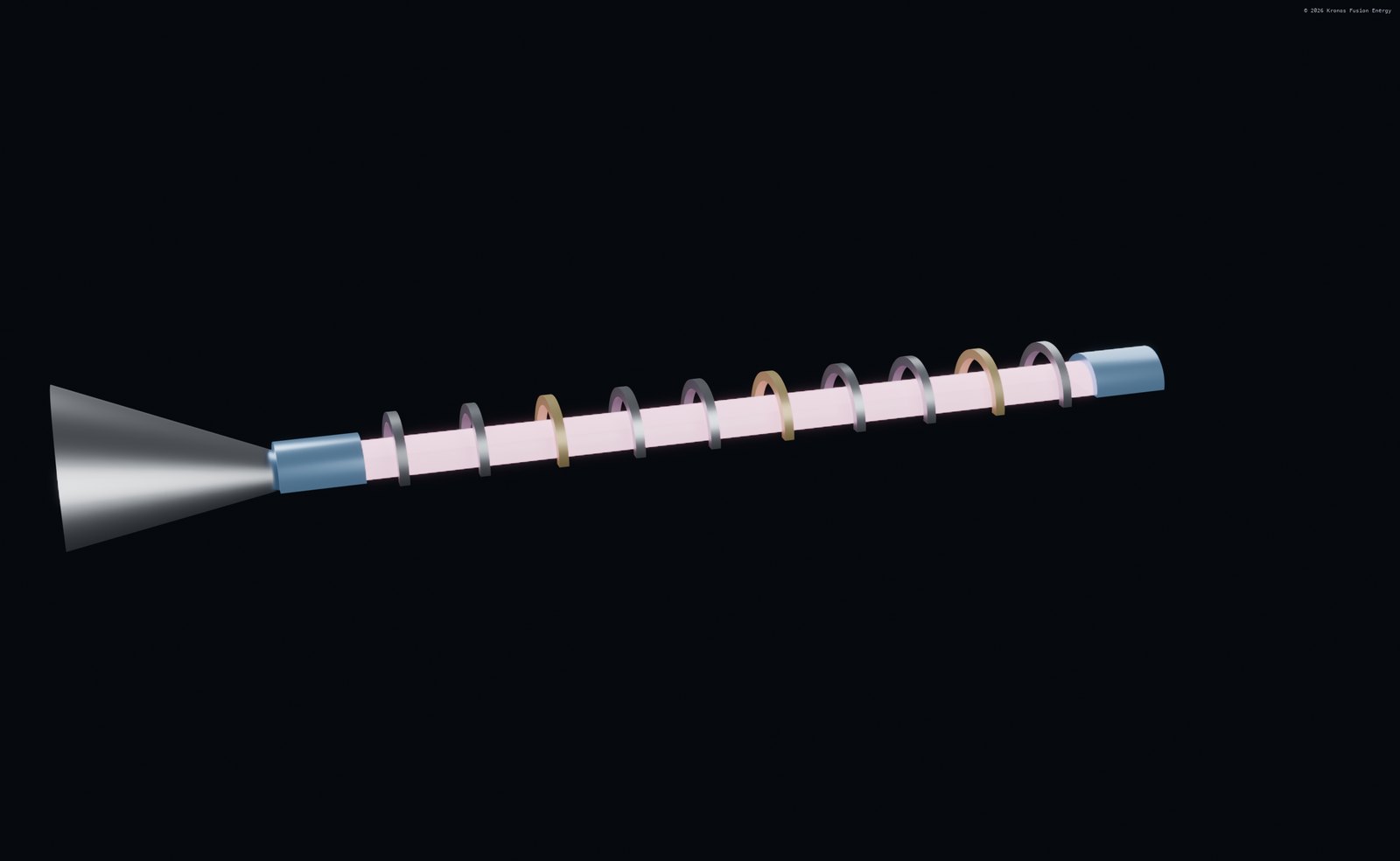
Divertor
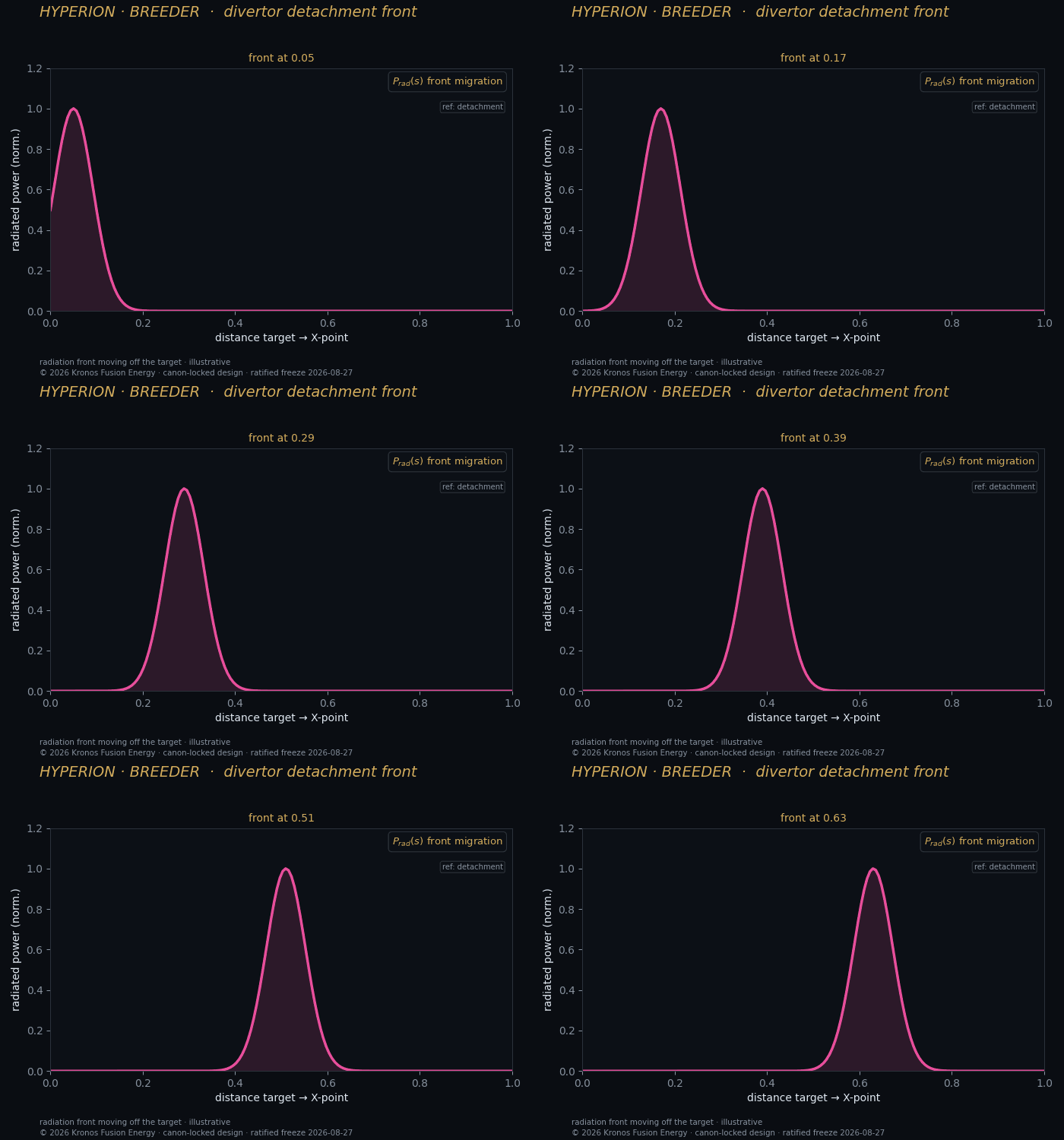
The component that exhausts heat and helium ash from a tokamak while protecting the wall.
The divertor channels the plasma's edge onto dedicated, actively cooled target plates, exhausting fusion 'ash' (helium) and heat away from the main wall. Handling its heat flux is one of the toughest engineering problems in tokamaks.
HYPERION's divertor design leans on a high radiated fraction to spread the load — an approach with a real, named performance gate.
The divertor is where the plasma's exhaust meets solid matter, and concentrating that heat on a small target can exceed material limits. The modern solution is to radiate most of the exhaust power before it lands and to run the target plasma detached. HYPERION leans on a high radiated fraction — effective, and named as a performance gate rather than assumed.
Common questions
It must exhaust concentrated heat without failing. HYPERION spreads the load with a high radiated fraction — an effective technique with a named performance gate.