Engineering & Subsystems
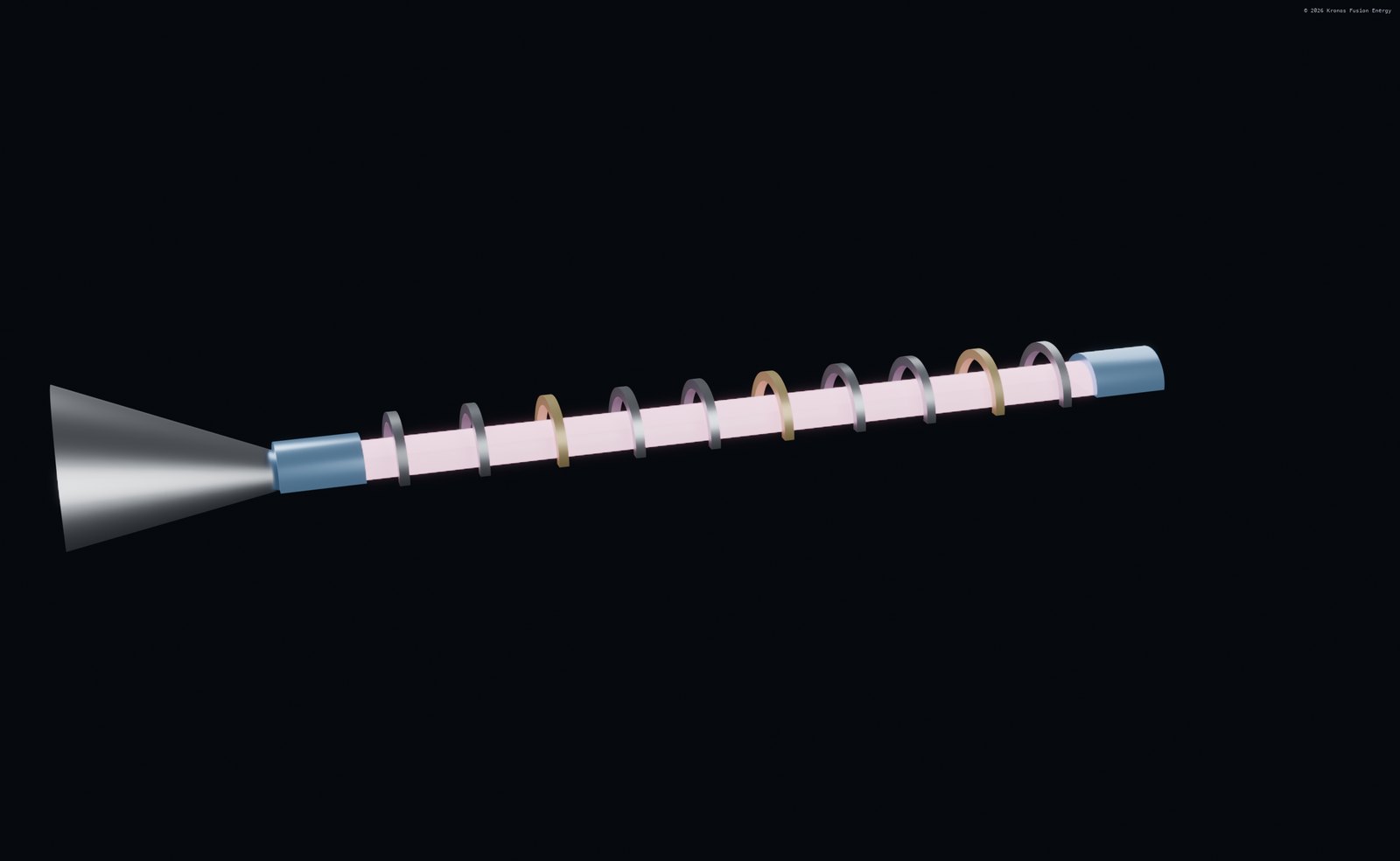
Compact vs Conventional Fusion
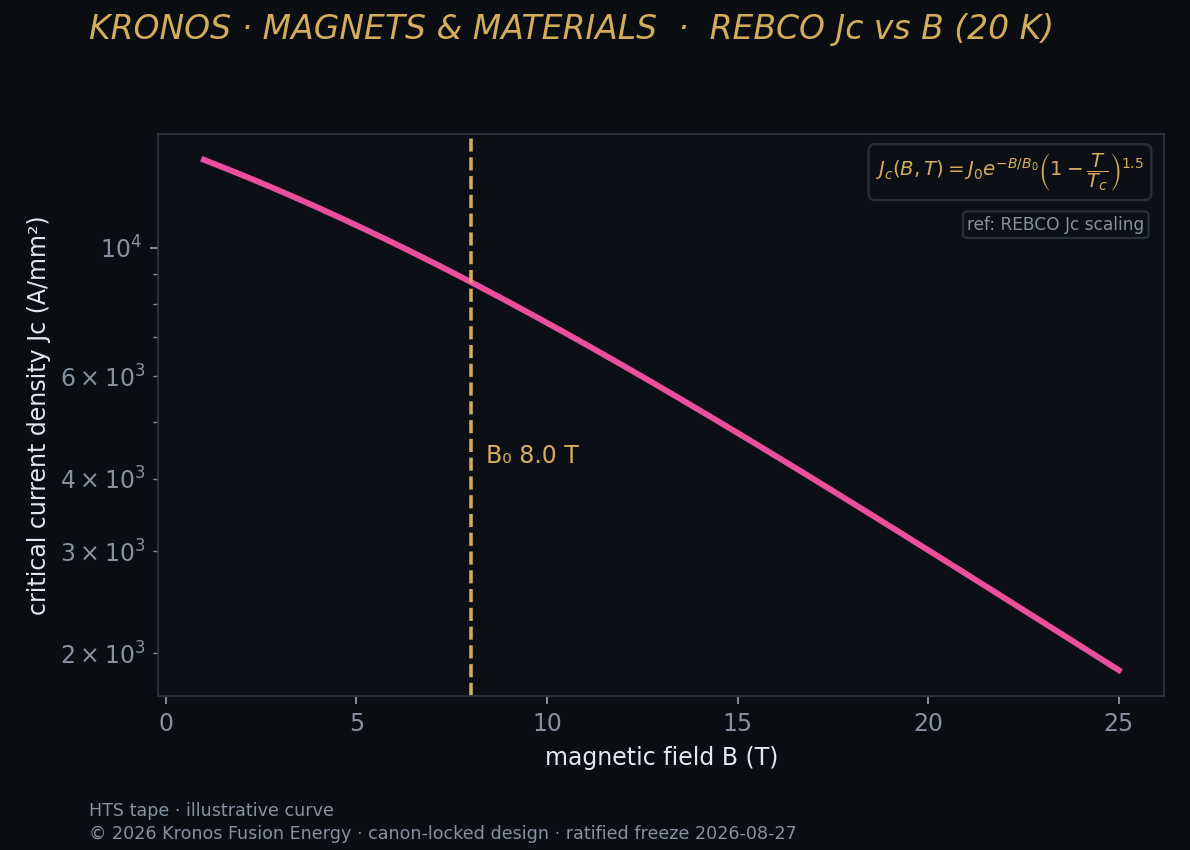
Why Kronos pursues small, high-field machines rather than very large ones.
- Breeder major radius
- 1.2 m
- Aspect ratio
- 2.5
Conventional tokamak designs reach performance through sheer size. The compact, high-field approach reaches it through field strength instead — a smaller, faster-to-build, potentially cheaper machine. HYPERION is a compact spherical tokamak (R₀ = 1.2 m, A = 2.5).
The compact path trades a tighter, more highly-loaded core for size and cost — a trade Kronos takes deliberately.
Common questions
Why go compact instead of large?
High-temperature superconductors reach fields that let a small machine hit useful performance, trading size and cost for a tighter, higher-field core.