Technical
Charged-Particle Self-Heating
How fusion's charged products help keep the plasma hot.
- Effect
- Internal heating
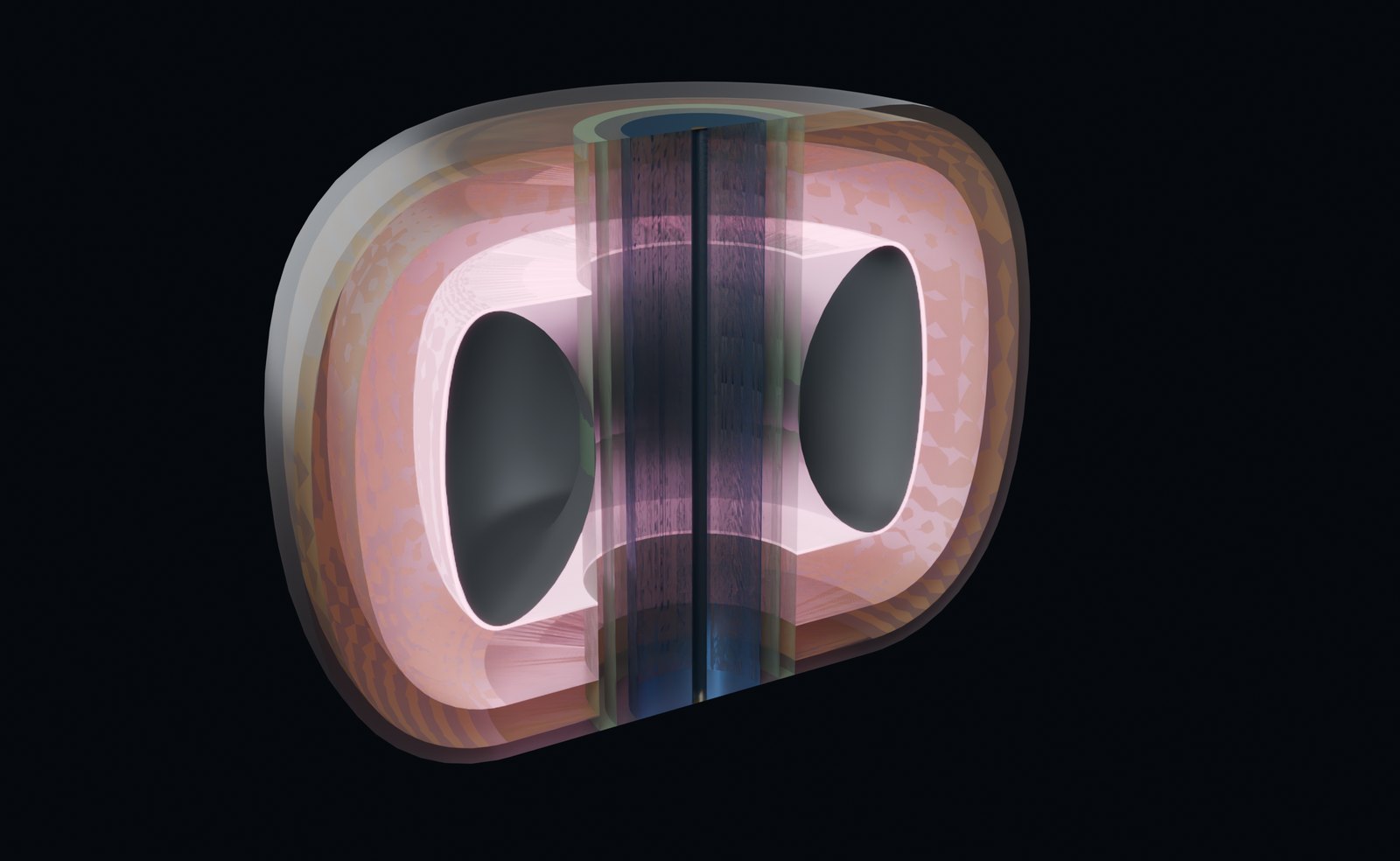
The charged products of fusion — helium in D–T, protons and helium in D–³He — stay confined and deposit their energy back into the plasma, providing self-heating. In a driven machine this supplements, rather than replaces, external heating.
It is why keeping fast ions confined matters for the energy balance.
Common questions
What is charged-particle self-heating?
Confined fusion products (like the D–T helium nucleus) deposit their energy back into the plasma, helping sustain its temperature. Strong self-heating is what makes ignition possible.
Do Kronos machines rely on it?
Not dominantly — both are driven designs whose power tracks the external heating, a deliberately conservative posture that keeps them controllable rather than depending on self-heating running away.