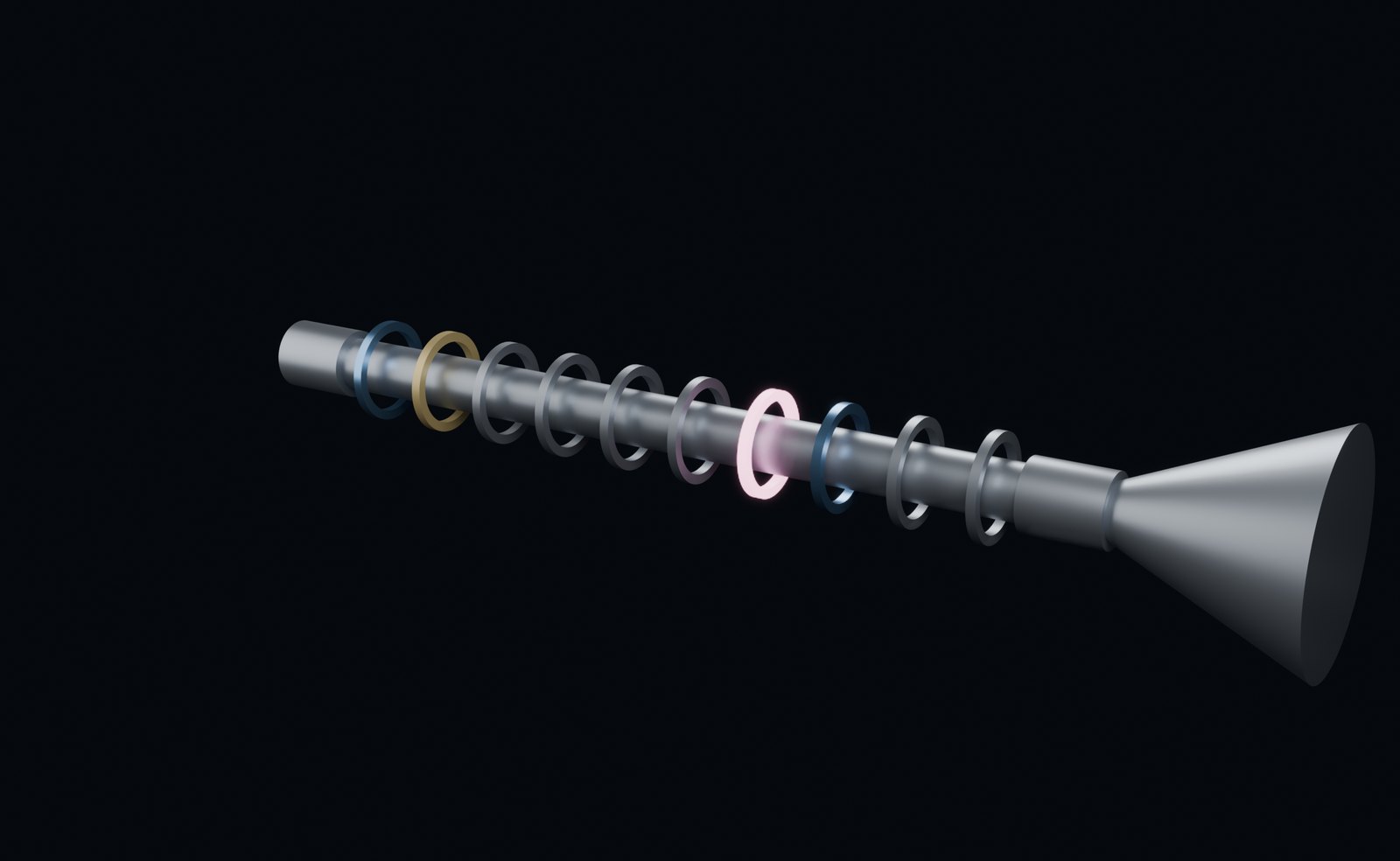
The Centre-Column Challenge
Why the slim central column is the defining engineering problem of a spherical tokamak.
- Aspect ratio
- 2.5
- Challenge
- Slim, highly-loaded centre column
A spherical tokamak's low aspect ratio (A = 2.5) leaves very little room at the machine centre for the toroidal-field conductor, central solenoid, and shielding. Fitting the field, current and neutron protection into that slim column — while carrying huge forces — is the defining engineering challenge Kronos's breeder design confronts head-on.
It is a real, named focus of the design rather than an afterthought.
Common questions
A spherical tokamak squeezes the doughnut's hole nearly shut, leaving very little room in the central column for the solenoid, conductor and shielding — all of which compete for the same scarce space.
Because low aspect ratio (A = 2.5) buys high beta and compactness. The tight, highly-loaded centre column is the defining engineering trade Kronos accepts to get a small, high-performance breeder.