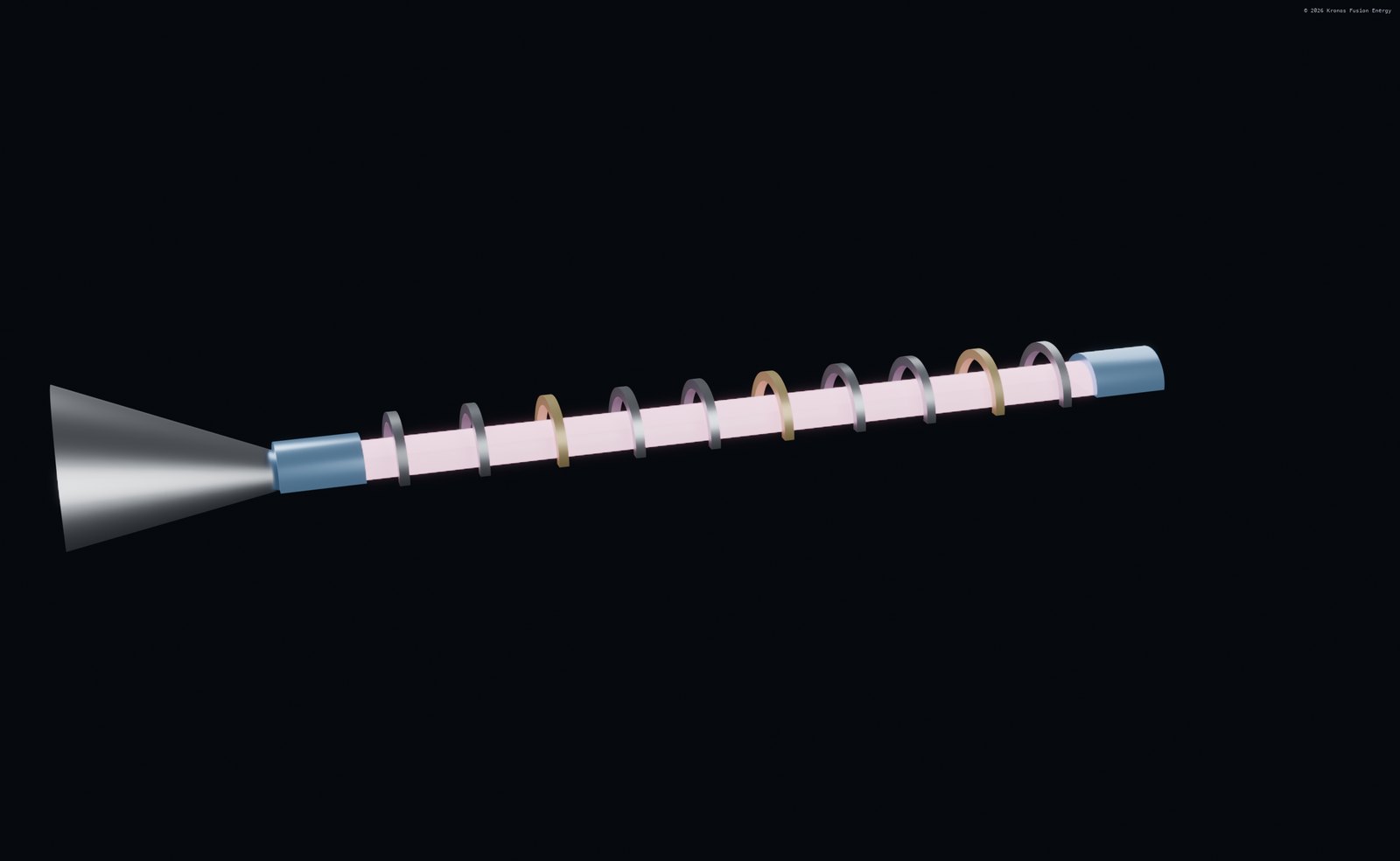
Catalysed Deuterium–Deuterium (D–D)
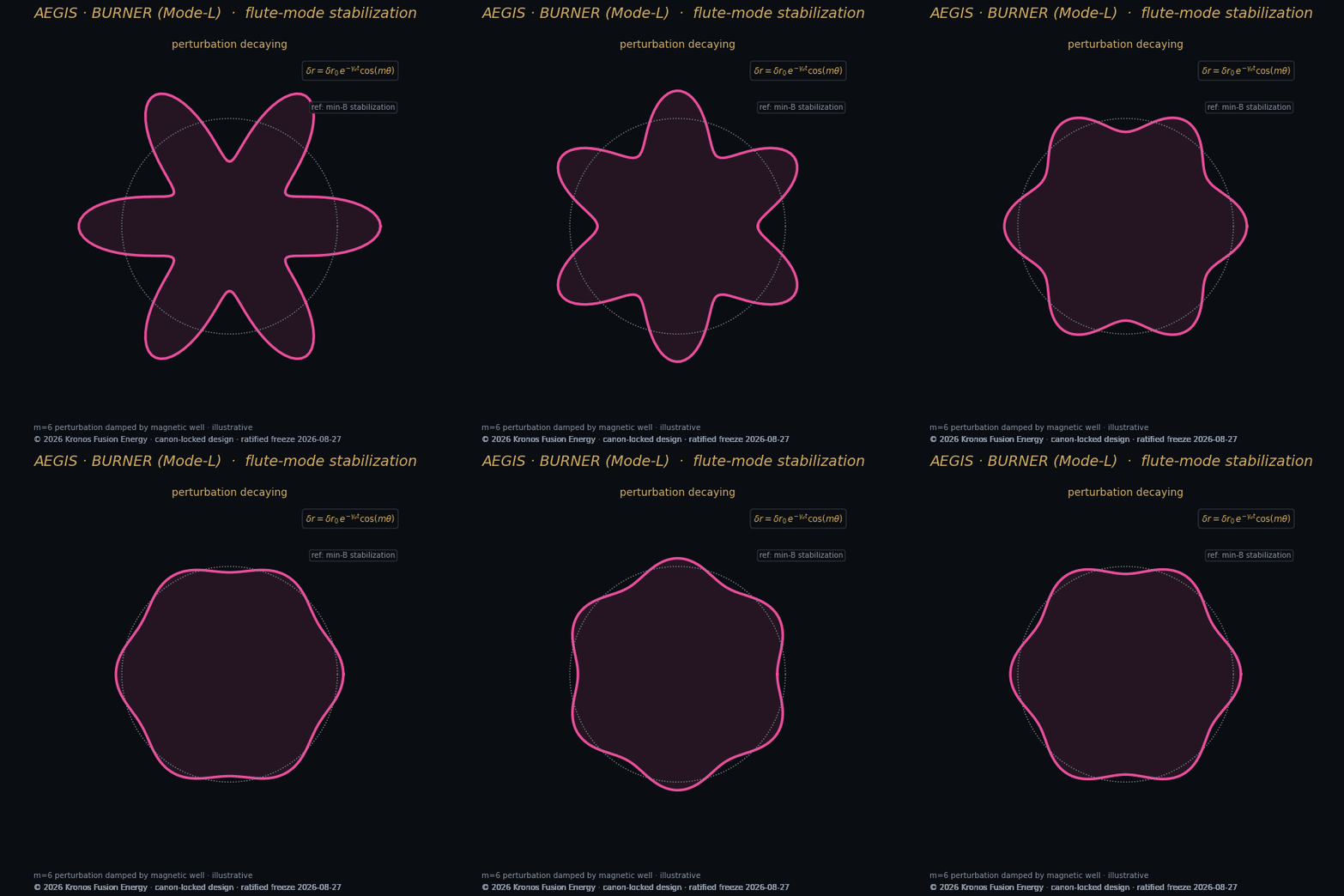
D–D fusion needs only deuterium — abundant in seawater — but asks more of the machine. Kronos treats it as a strategic option, not a baseline.
- Fuel
- Deuterium only
- Source
- Seawater (abundant)
- Trade
- Higher temperature required
Deuterium fuses with itself along two branches of nearly equal probability, one yielding tritium and a proton, the other helium-3 and a neutron. 'Catalysed' D–D burns the tritium and helium-3 in situ. The appeal is fuel that needs no breeding; the cost is a lower reactivity that demands higher temperature and confinement.
Common questions
Deuterium fusing with itself produces tritium and helium-3, which can then react further — a fuel cycle needing only deuterium. It avoids external tritium supply but demands even higher temperatures than D–³He.
It is relevant background physics, not a Kronos product fuel. The breeder runs D–T and the burner runs D–³He; catalysed D–D is discussed for completeness of the fuel-cycle picture.