Water Use & Siting
A direct-conversion, thermally-light fusion plant uses far less cooling water than a steam station — widening where it can be sited.
- Steam plants
- Consume large volumes of cooling water
- Kronos
- Thermally light — no steam cycle
- Benefit
- Lower water use; more siting flexibility
- Also compact
- High power density → small footprint
Conventional thermal power stations — coal, gas, fission, and steam-cycle fusion — reject large amounts of waste heat, which usually means consuming or evaporating enormous volumes of cooling water. That ties them to rivers, lakes, or coasts and makes water availability a real constraint on where they can be built.
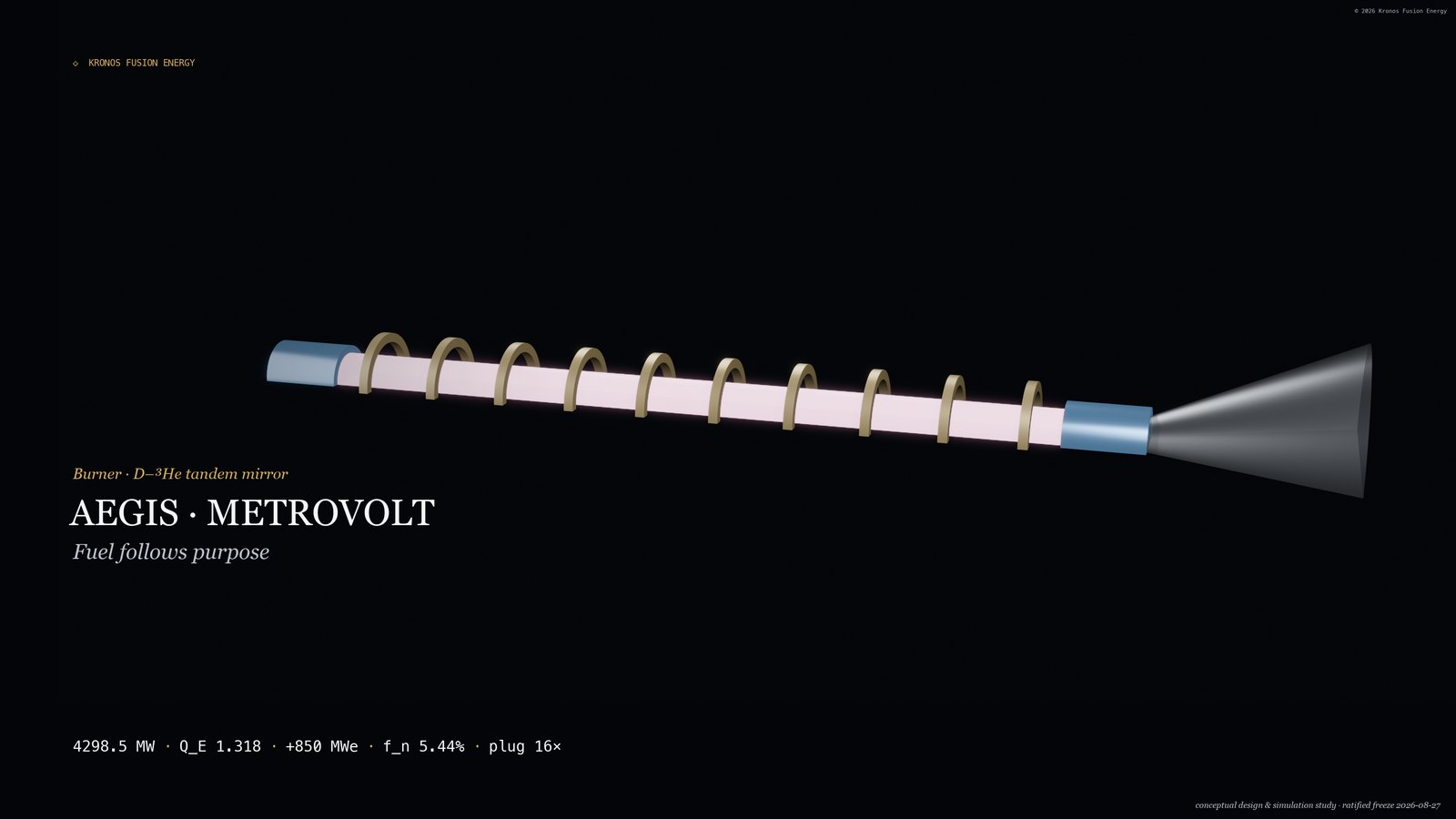
Because Kronos MetroVolt converts much of its energy through direct energy conversion rather than a steam cycle, it rejects far less waste heat and uses correspondingly less cooling water. Combined with the high power density that keeps its footprint compact, that thermal-lightness gives the plant meaningful siting flexibility — including near inland loads such as data centers where water is scarce.