Deep Dive: Remote Maintenance & Availability
How a plant is maintained sets its availability — and its economics. A low-neutron design with demountable magnets makes Kronos faster and cheaper to service.
- Driver
- Maintenance speed sets capacity factor
- Method
- Robotic handling of activated parts
- Kronos eases
- Low activation + demountable magnets + no blanket
- Result
- Higher availability, lower LCOE
How quickly a plant can be maintained largely determines its capacity factor — and therefore its economics. Activated components must be handled by remote, robotic systems behind shielding, and slow maintenance means expensive downtime.
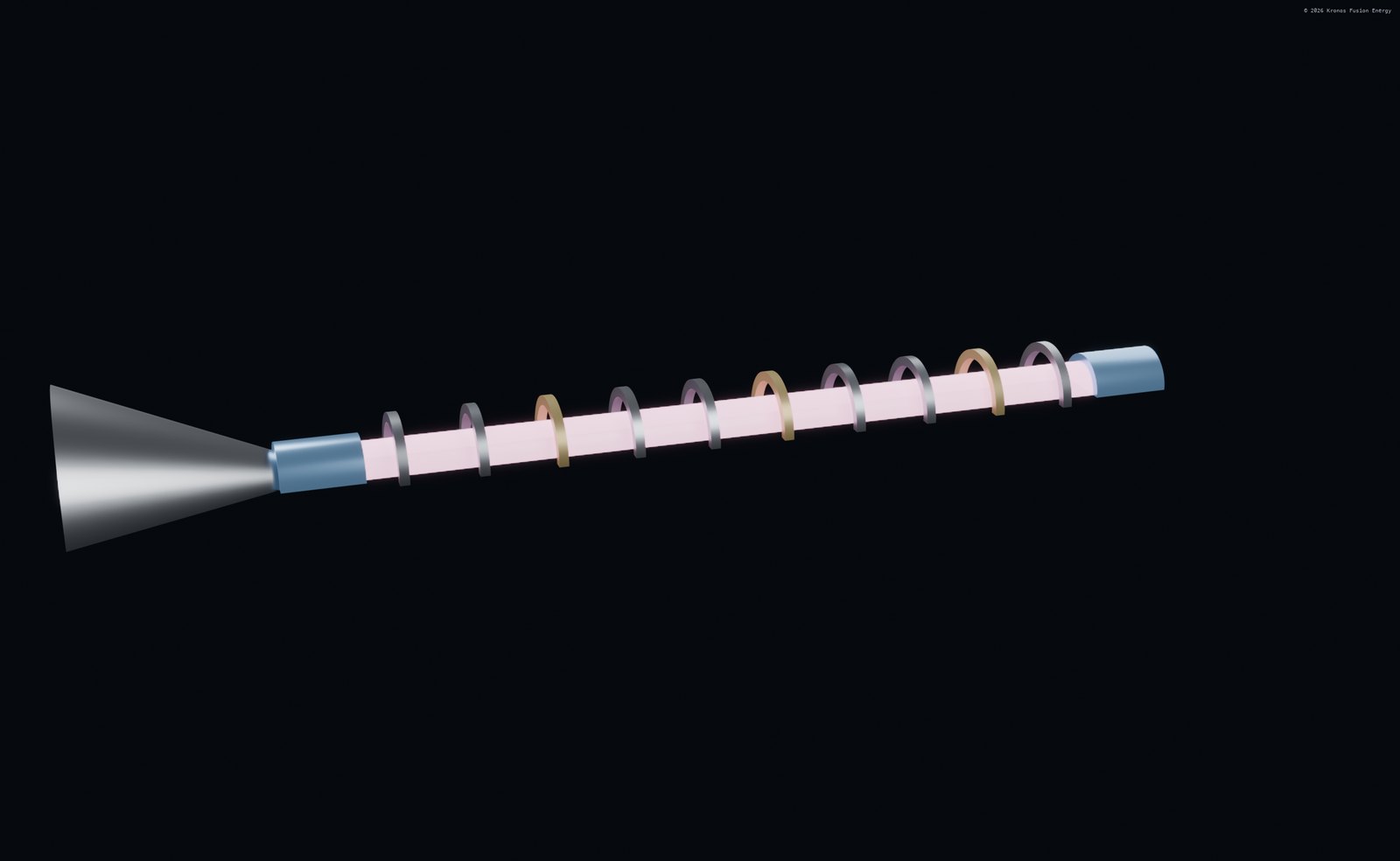
Three Kronos choices make servicing faster and cheaper. Being low-neutron means components are far less activated, so more work can be done sooner with lighter shielding. The demountable magnets open access to the vacuum vessel that welded coils would block. And with no breeding blanket, there's an entire maintenance-heavy subsystem simply absent.
Together these shorten maintenance outages and raise availability — feeding directly into the high capacity factor and low LCOE the economics assume. Maintainability is an economic design parameter, not an afterthought.