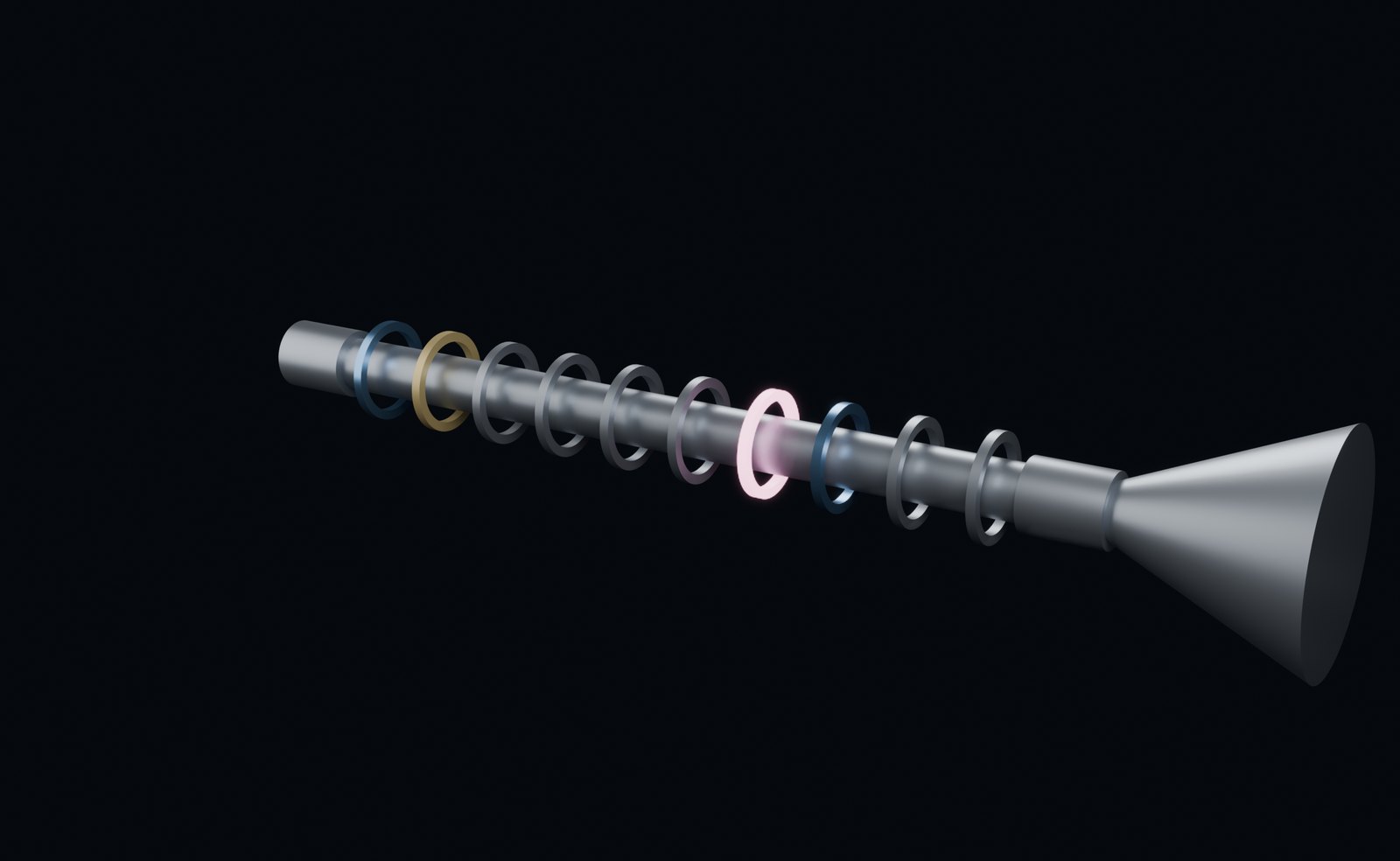
The plant power flow.
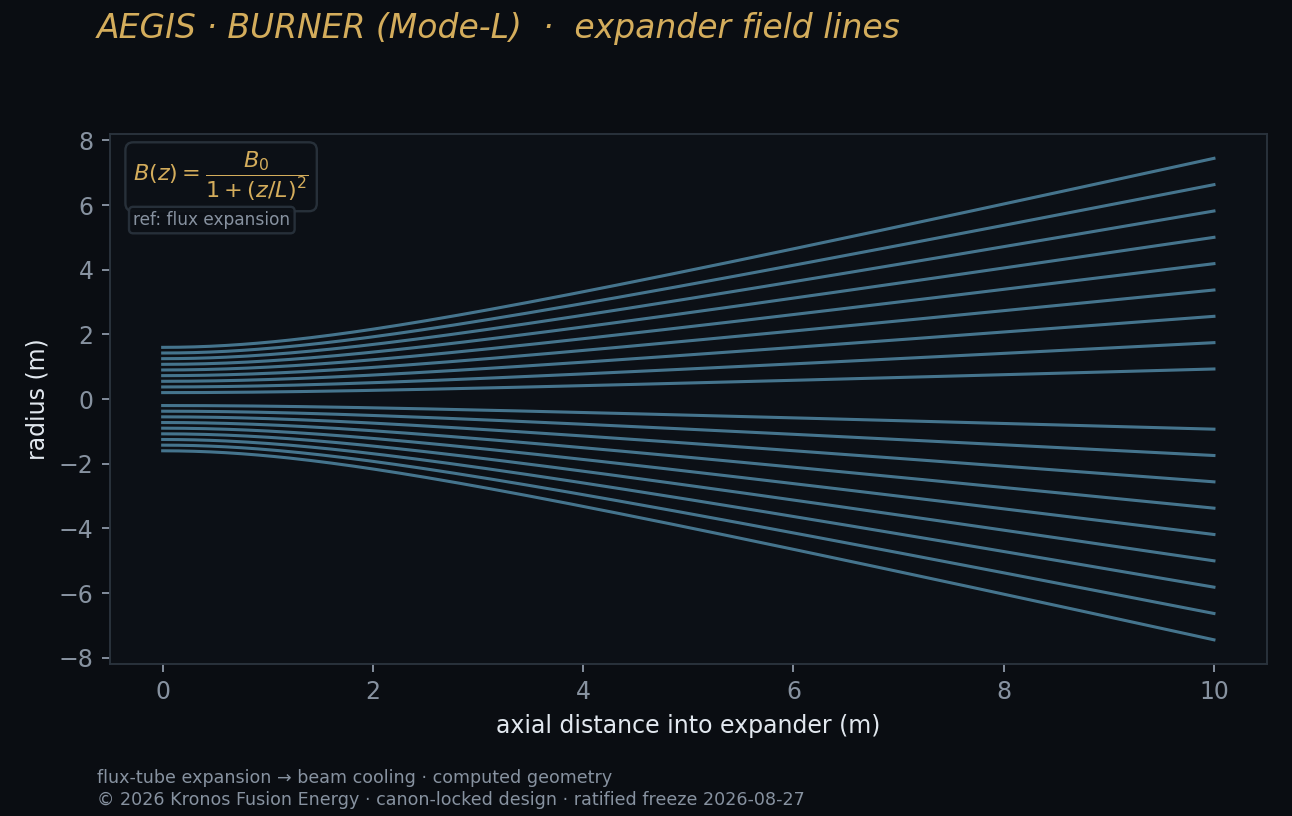
Follow the watts. Each Kronos machine has a distinct power path — and both are computed in the deposited code, not asserted. Here is where the energy goes.
- Breeder fusion power
- 85.0 MW at Q 3.076
- Burner (Mode M)
- Q_E 1.31 · f_n 5.44%
- Burner net (Aegis / MetroVolt)
- +850 / +2832 MWe
- Both
- Computed in the deposits
The breeder. HYPERION produces 85.0 MW of fusion power at a scientific gain of Q 3.076. A fraction recirculates to sustain the plasma; the rest, plus the value of the bred tritium and helium-3, is the machine's output. The full balance — including the electron-radiation and exhaust loss terms — is in the breeder deposit.
The burner. The D–³He plasma's power splits into charged particles and a small (5.44%) neutron fraction. Charged power is captured partly by direct conversion, partly thermally; a large axial loss streams out the open ends and must be spread over the end expanders. What remains after running the machine is the net electric — which scales with length: +850 MWe at 440 m (Aegis), +2832 MWe at 1400 m (MetroVolt). The engineering gain that summarizes it is Q_E 1.31.