Learn › Concept encyclopedia
Concept · Architecture
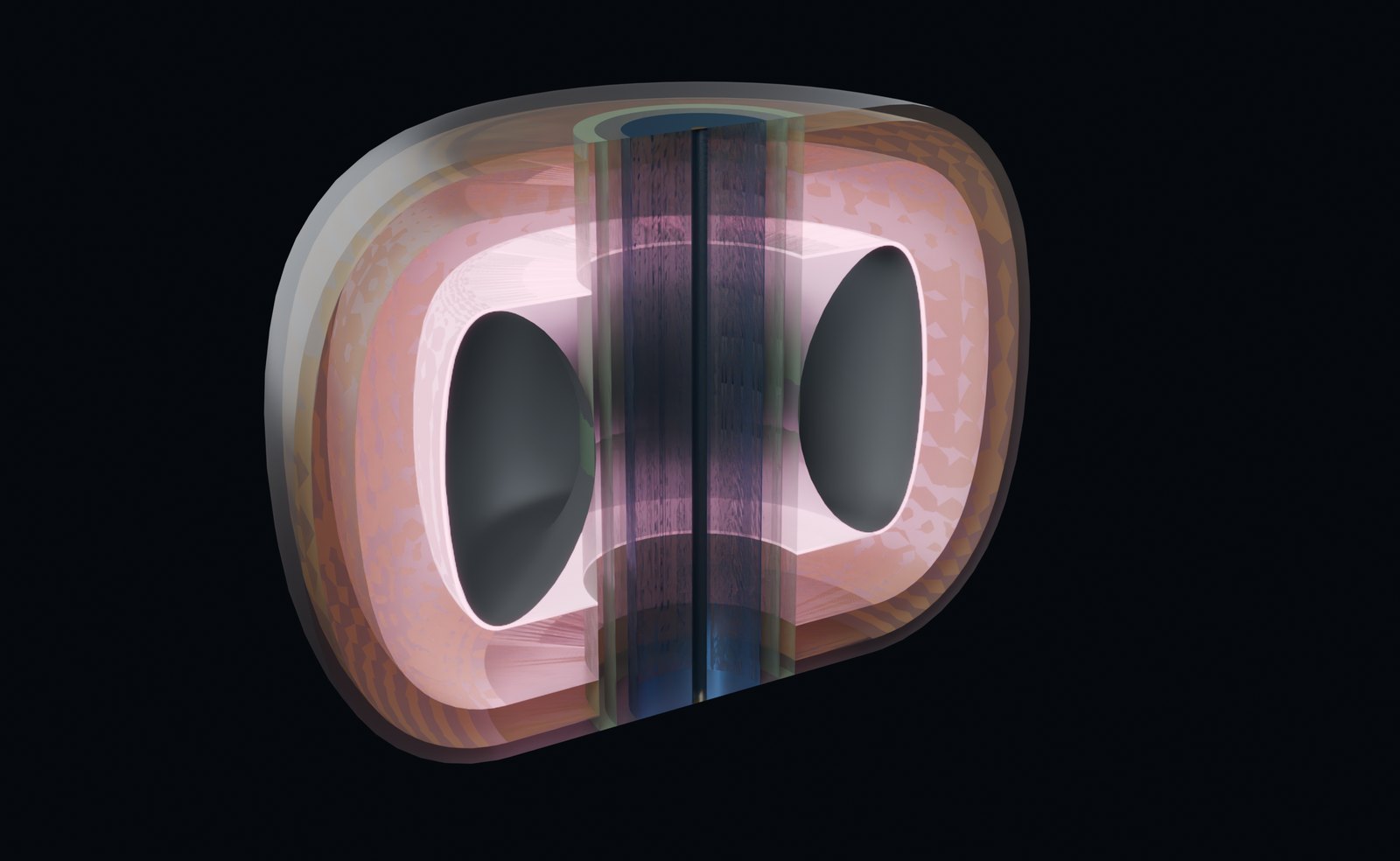
The two-machine architecture.
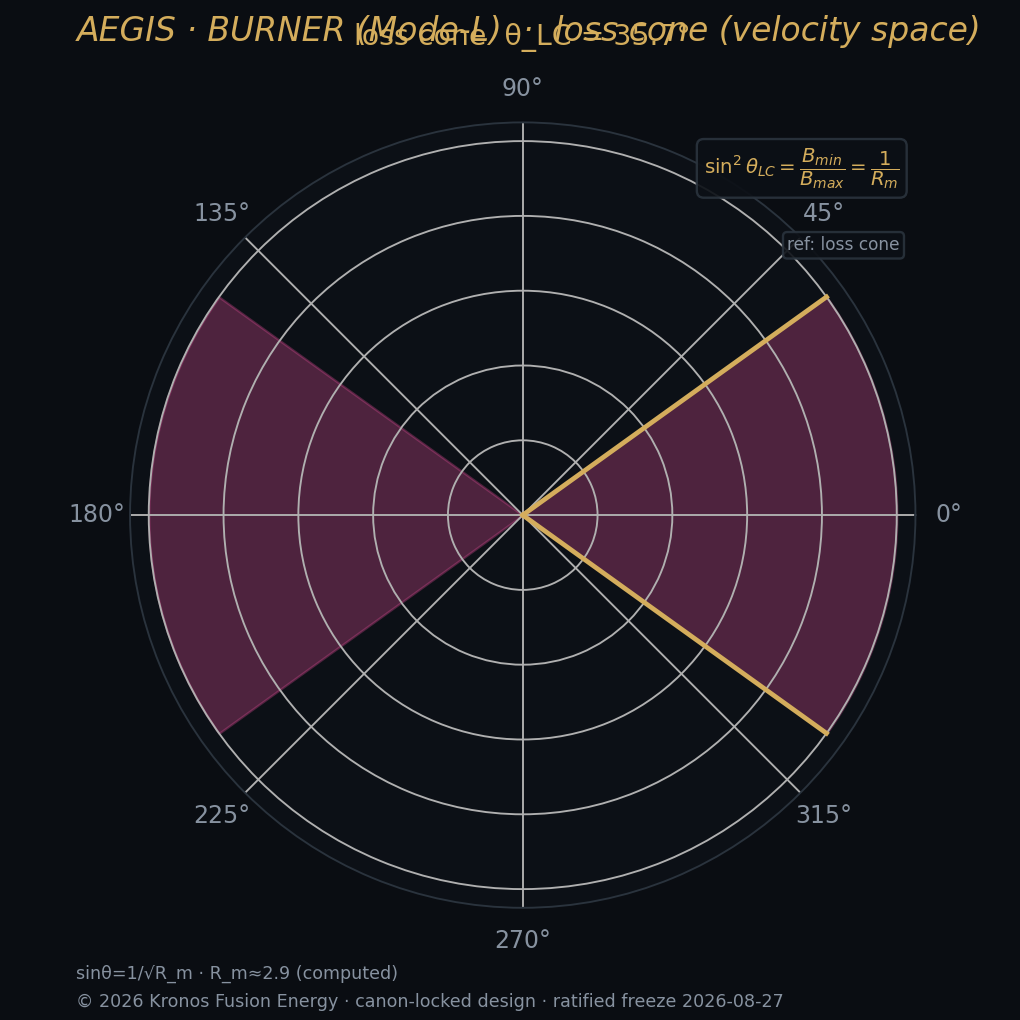
Kronos is not one reactor doing everything. It is two machines, each matched to its job and its fuel: one breeds the fuel, the other burns it.
- Machine one
- HYPERION — spherical-tokamak D–T breeder
- Machine two
- The D–³He tandem-mirror burner
- Burner housings
- Aegis (440 m) · MetroVolt (1400 m)
- Governing rule
- Fuel follows purpose, not platform
Kronos's design used to be described by a single-architecture acronym. That framing is superseded. The company's current, frozen structure is cleaner to state: two machines, two jobs.
- The breeder
- HYPERION — a compact spherical tokamak that burns D–T to reach gain (Q 3.076) and to breed the fuel: ~4 kg/yr tritium, decaying to helium-3.
- The burner
- a tandem mirror that burns low-neutron D–³He and converts the charged products directly to electricity. Built in two lengths: Aegis for fixed installations and MetroVolt for cities and data centers.
The reason there are two machines and not one is the fuels want different geometries: D–T reaches gain in a closed torus; D–³He pays back in charged power best collected on the open ends of a mirror. Forcing both onto one platform would compromise both — so Kronos matches the machine to the fuel and the job.
Correction noteThis page previously described the 'S.M.A.R.T.' single-architecture concept, which belonged to the earlier tokamak-era design and is no longer used.