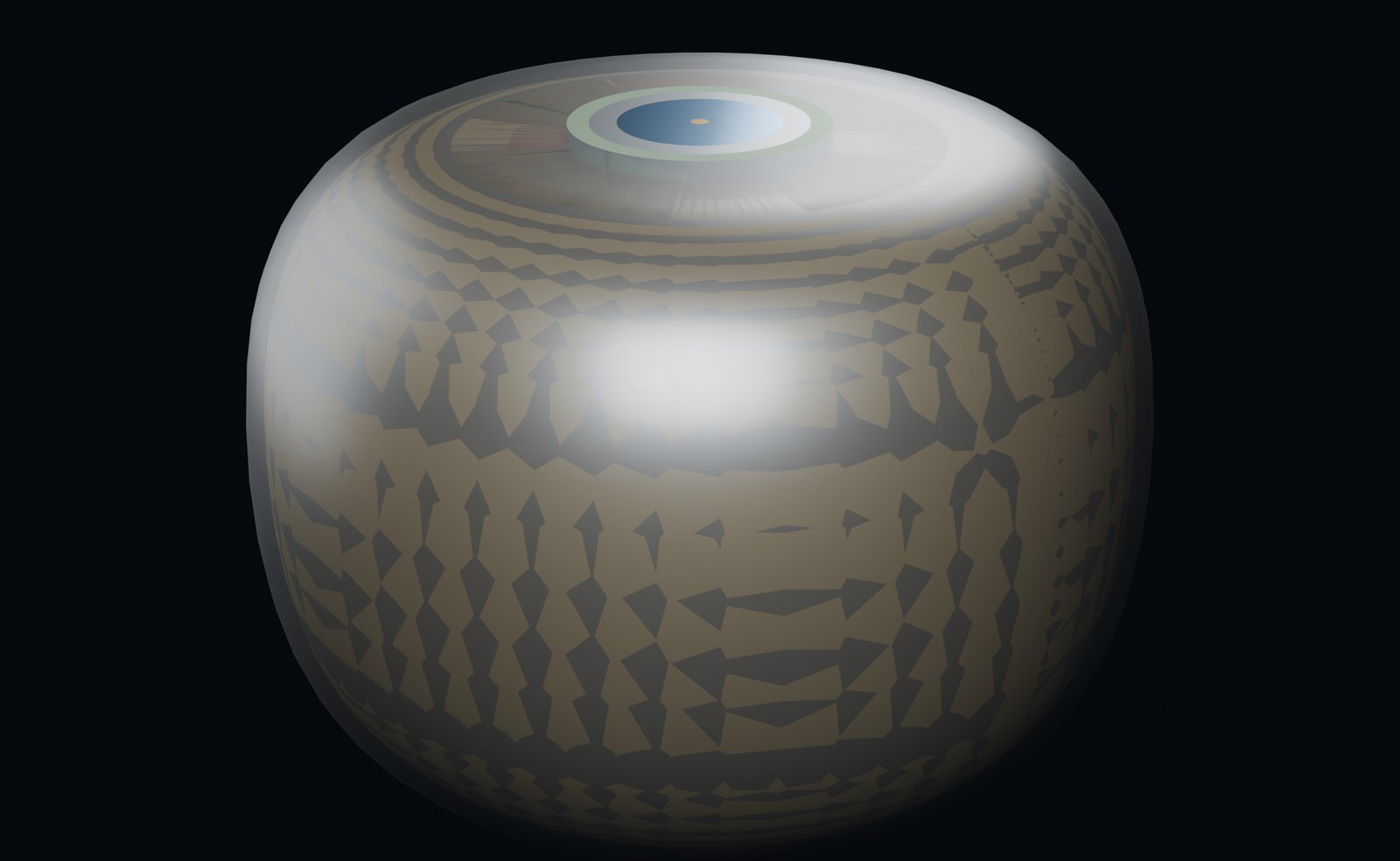
Safety factor (q₉₅).
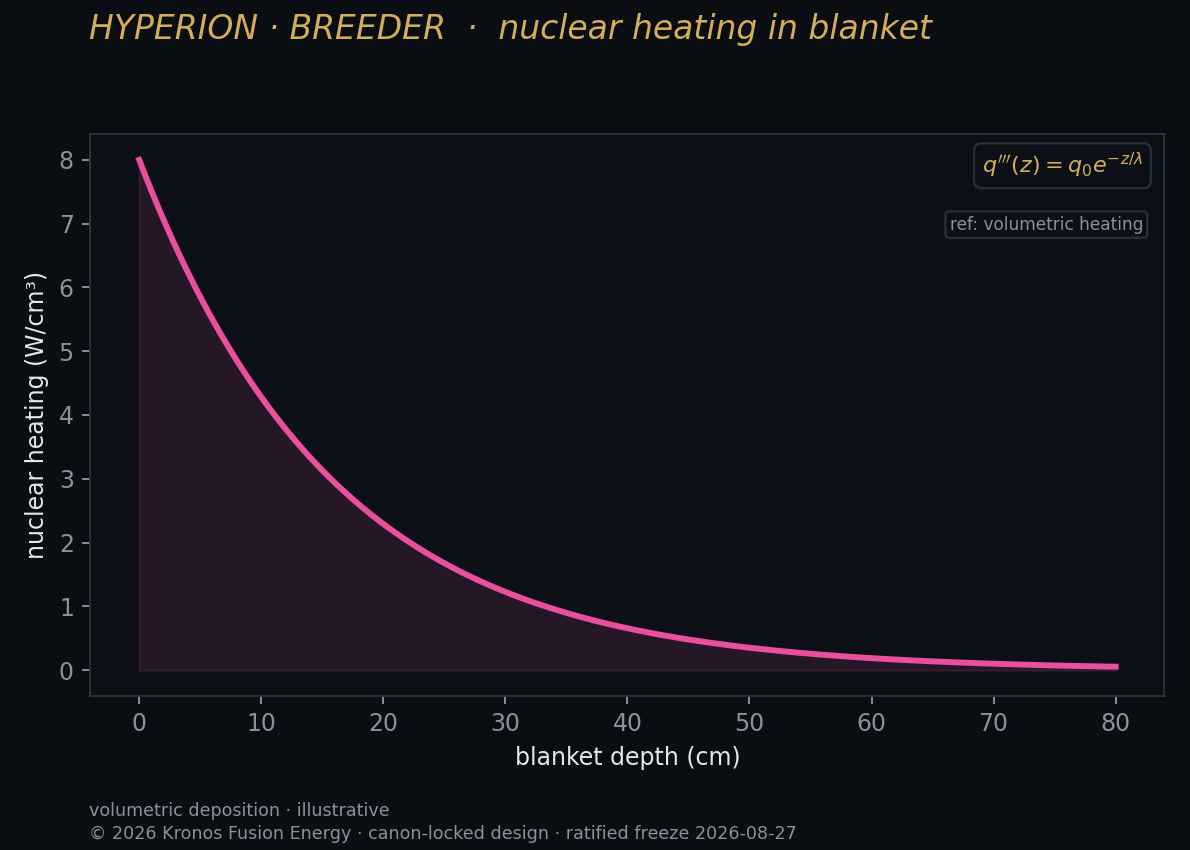
The safety factor q₉₅ tells you how tightly the magnetic field lines spiral around a tokamak — a primary stability margin. Kronos holds it comfortably high in the breeder; the burner doesn't have one.
- Symbol
- q₉₅ (safety factor at the 95% flux surface)
- Higher q₉₅
- More stable against current-driven modes
- Breeder
- Equilibrium-computed q₉₅ ≥ ~5 floor at 9.66 MA
- Burner
- No q₉₅ — open field lines
In a tokamak, magnetic field lines wind helically around the torus; q₉₅ counts how many times they go the long way around for each time the short way, evaluated near the edge. Low q₉₅ invites current-driven instabilities, so a comfortable margin is a stability asset. The Kronos breeder holds an equilibrium-computed q₉₅ above a floor of about 5 at its 9.66 MA operating point — a conservative choice.
The burner has no safety factor at all: its field lines are open and straight, so the whole family of current- and winding-driven tokamak instabilities does not exist there. Different geometry, different — and in this respect simpler — stability picture.