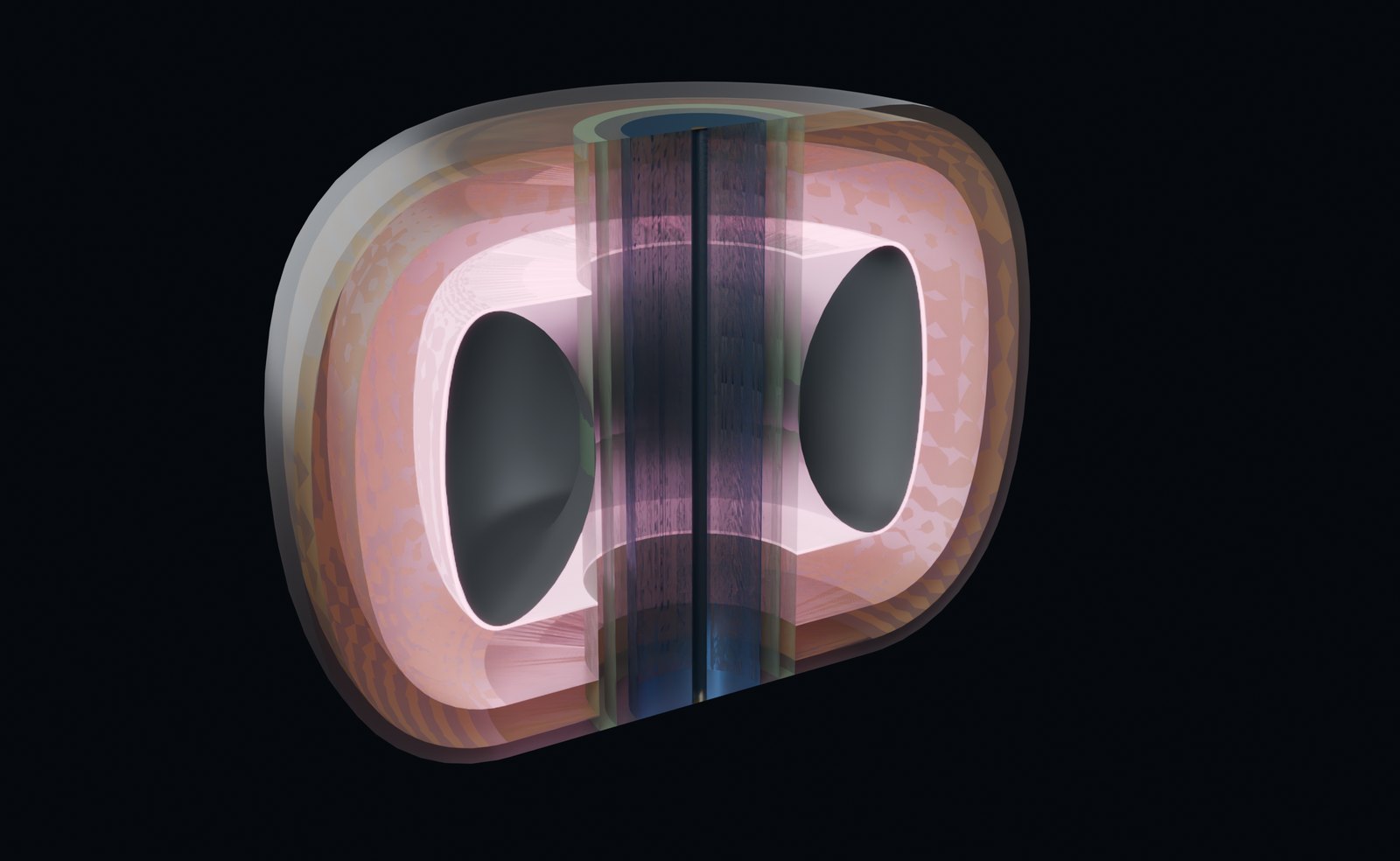
Neutron Activation
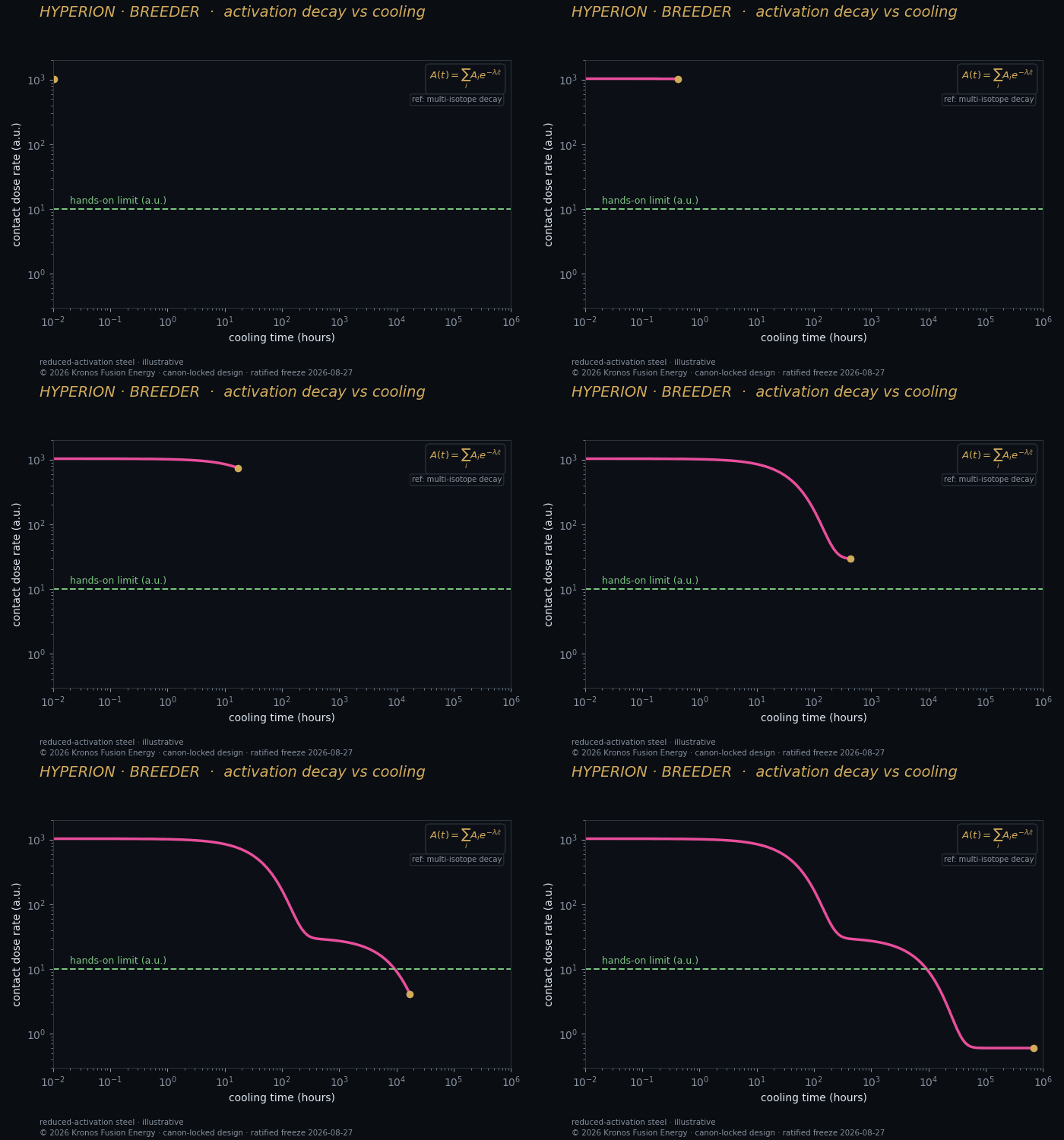
Neutron activation is how fusion neutrons make structures mildly radioactive. A low-neutron design minimizes it — Kronos's central materials advantage.
- What
- Neutrons transmuting structure into radioisotopes
- Fusion vs fission
- No long-lived spent fuel; far less waste
- Kronos lever
- Low neutron fraction (7.70% operating; ≈5.44% at the frozen design point)
- Benefit
- Smaller shield, less damage, shorter-lived waste
Neutron activation is the process by which neutrons striking a reactor's structure convert some atoms into radioactive isotopes. It is the main source of radioactive material in a fusion plant — not spent fuel, as in fission, but activated steel and components. The amount scales directly with the neutron flux the structure sees.
This is exactly where the Kronos low-neutron D–³He choice pays off. With a neutron fraction of 7.70% at the operating baseline (≈5.44% at the frozen design point) — roughly an order of magnitude below deuterium–tritium — activation, shielding mass, and material damage are all dramatically reduced, and the waste that does form is shorter-lived. The design still carries an explicit neutron-fluence budget for the shielded center stack, because even a low flux, over 30 full-power-years, must be accounted for.