Learn › Comparisons & deep-dives
Comparison
High vs Low Aspect Ratio
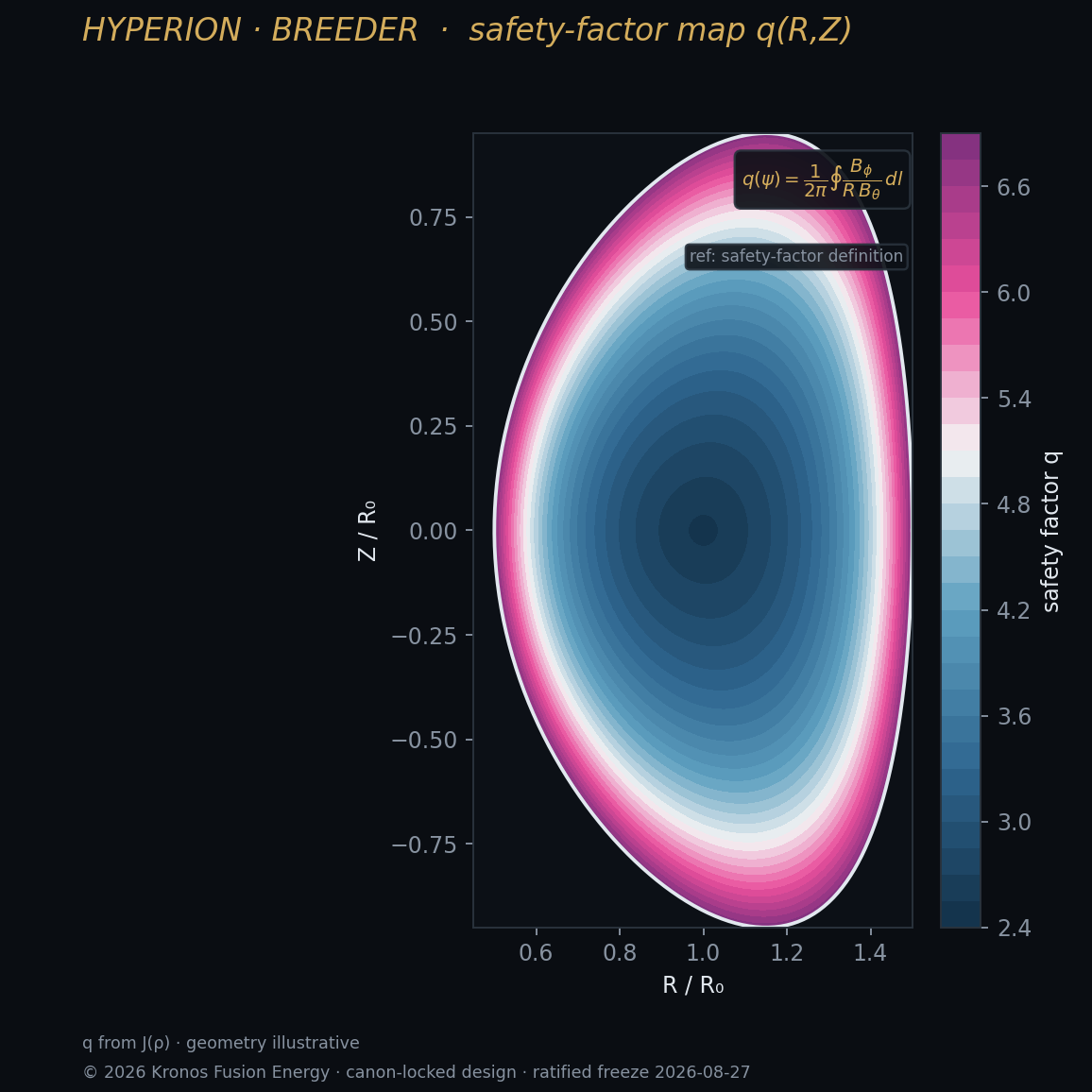
Low aspect ratio (spherical) raises beta and stability but crowds the center stack; high aspect ratio is roomier but lower-performance. Kronos runs a low A = 2.0.
- High A (3–4)
- Roomy center column; lower beta
- Low A (~2)
- Higher beta and stability; crowded center stack
- Kronos
- A = 2.0 (spherical)
- Trade
- Performance vs inboard space
Aspect ratio — major radius over minor radius — is the shape decision that most defines a tokamak. It's a genuine trade-off, not a clear win either way.
| Dimension | Low A (Kronos, 2.0) / High A (3–4) |
|---|---|
| Plasma pressure (beta) | Higher for a given field / lower |
| Stability | Improved / conventional |
| Center stack | Crowded — magnet + shield in little space / roomy |
Kronos chose low aspect ratio (A = 2.0, spherical) for the higher beta and better stability, accepting the crowded center stack as the cost. That inboard squeeze is exactly where being low-neutron pays off — a thinner shield fits, freeing room for the magnet. See spherical vs conventional tokamak.