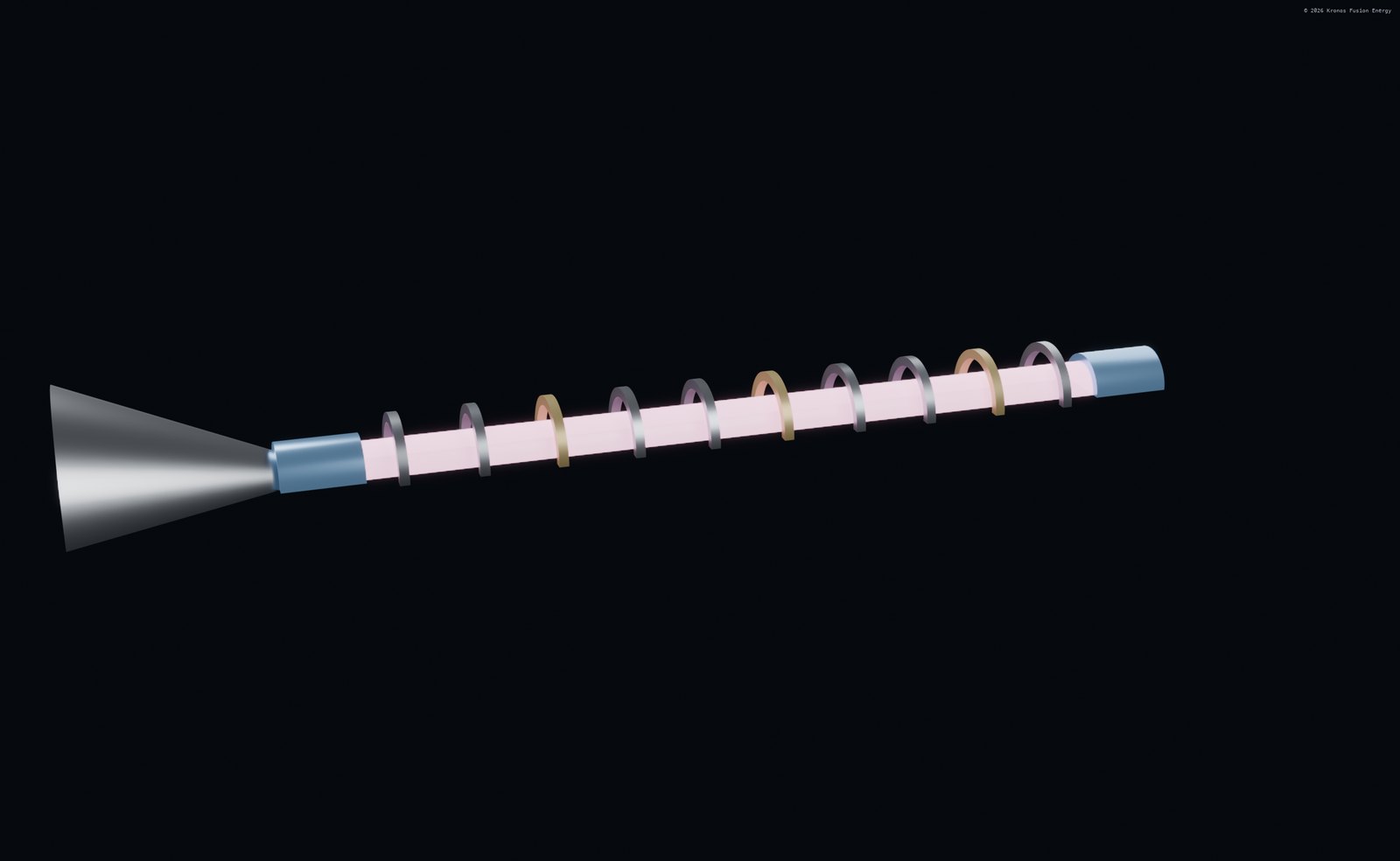
Disruptions & safety, in depth.
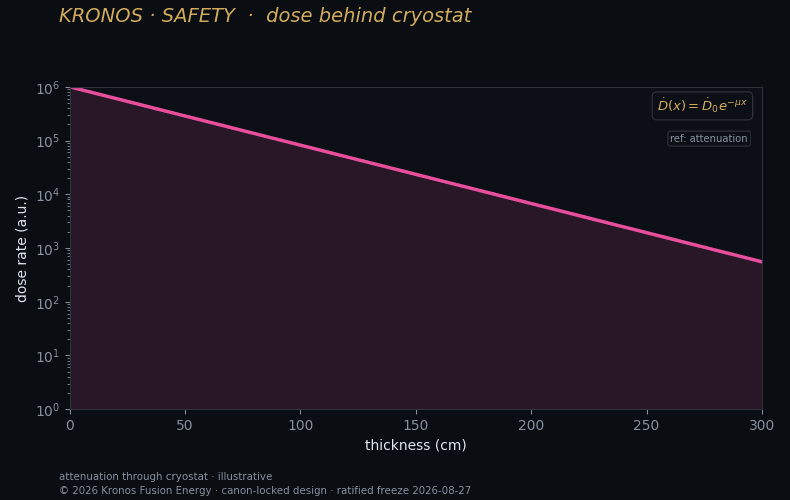
Fusion is inherently walk-away safe — no chain reaction, no meltdown. Where the two Kronos machines differ is disruptions: the breeder manages them; the burner cannot have them.
- Inherent safety
- Seconds of fuel; no runaway, no decay-heat meltdown
- Breeder hazard
- Tokamak disruptions — managed
- Burner hazard
- None of that class — open field lines
- Burner's real limit
- The plug-density requirement
All magnetic fusion shares a baseline safety case: only seconds of fuel are in the chamber, so there is no chain reaction to run away and no decay-heat path to a meltdown. Lose control and the plasma simply cools and stops. The interesting differences are in the specific hazards each geometry carries.
The breeder stores energy in a plasma current, so it must manage disruptions and runaway electrons — with a conservative margin, detection, and mitigation. The burner has no plasma current, so that entire class of events cannot occur; its open field lines exhaust axially onto collectors. The burner's real limit is not safety but performance — the plug-density requirement.