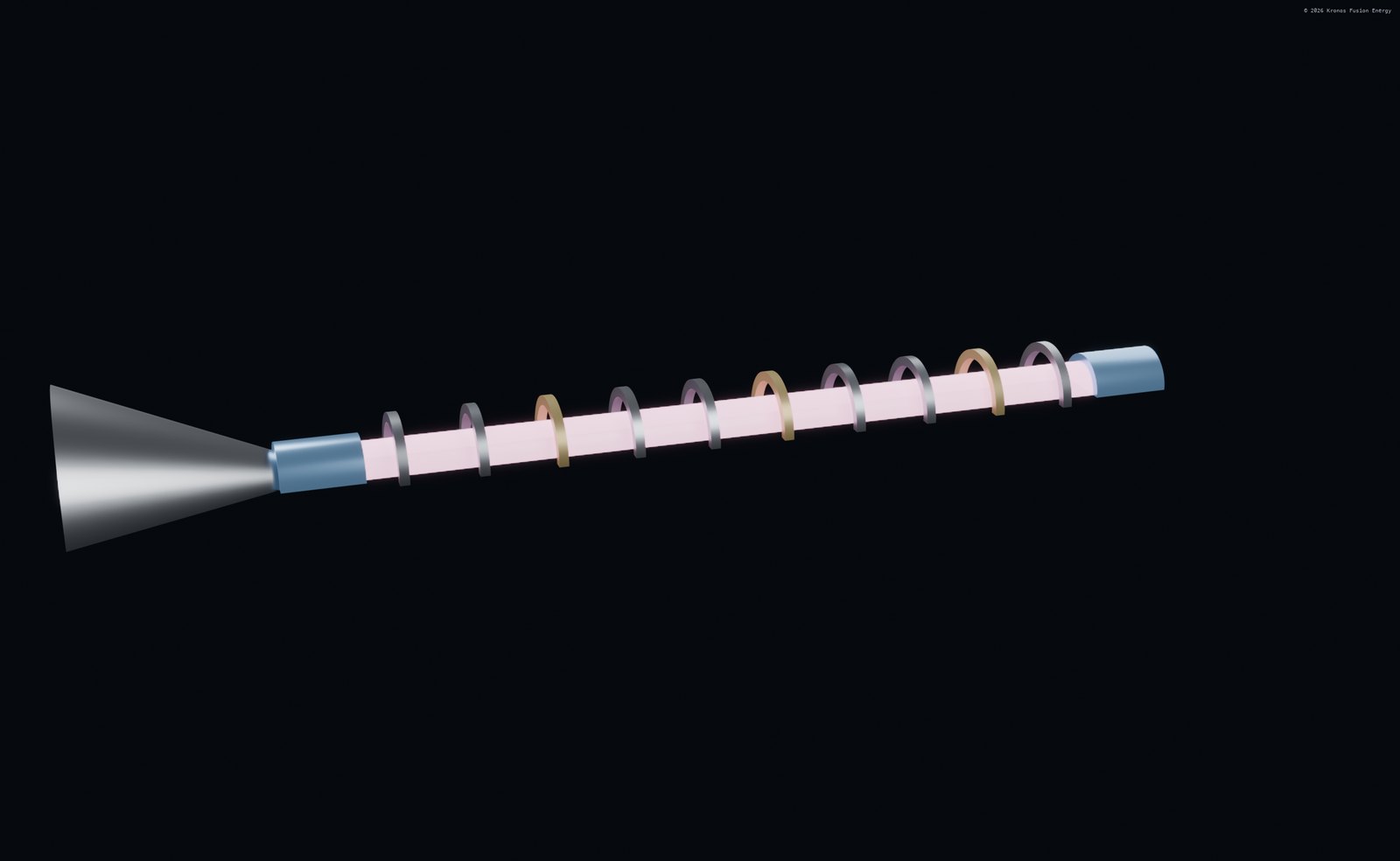
Can fusion provide firm, baseload power?
Yes — and it is the point. Both Kronos machines run steady-state, delivering continuous, dispatchable power of the kind a grid needs underneath everything else.
- Operation
- Steady-state, continuous
- Breeder availability
- Damage-life-limited, CF ~0.69 central
- Burner availability
- Plug-reliability-limited (low-neutron)
- Role
- Firm baseload / dispatchable
Firm power is power you can count on around the clock. The Kronos machines are steady-state, so unlike intermittent renewables they deliver continuous output. The breeder's availability is limited by neutron damage life (a capacity factor around 0.69 central estimate); the burner, running low-neutron fuel, is instead limited by plug reliability — a genuinely different, and potentially higher, availability regime.
That firm profile is why the burner targets data centers, cities, and defense installations — loads that need power underneath them at all hours, not just when the weather cooperates.