Burner KPIs: Confinement, DEC Stability, and Net-Power Context
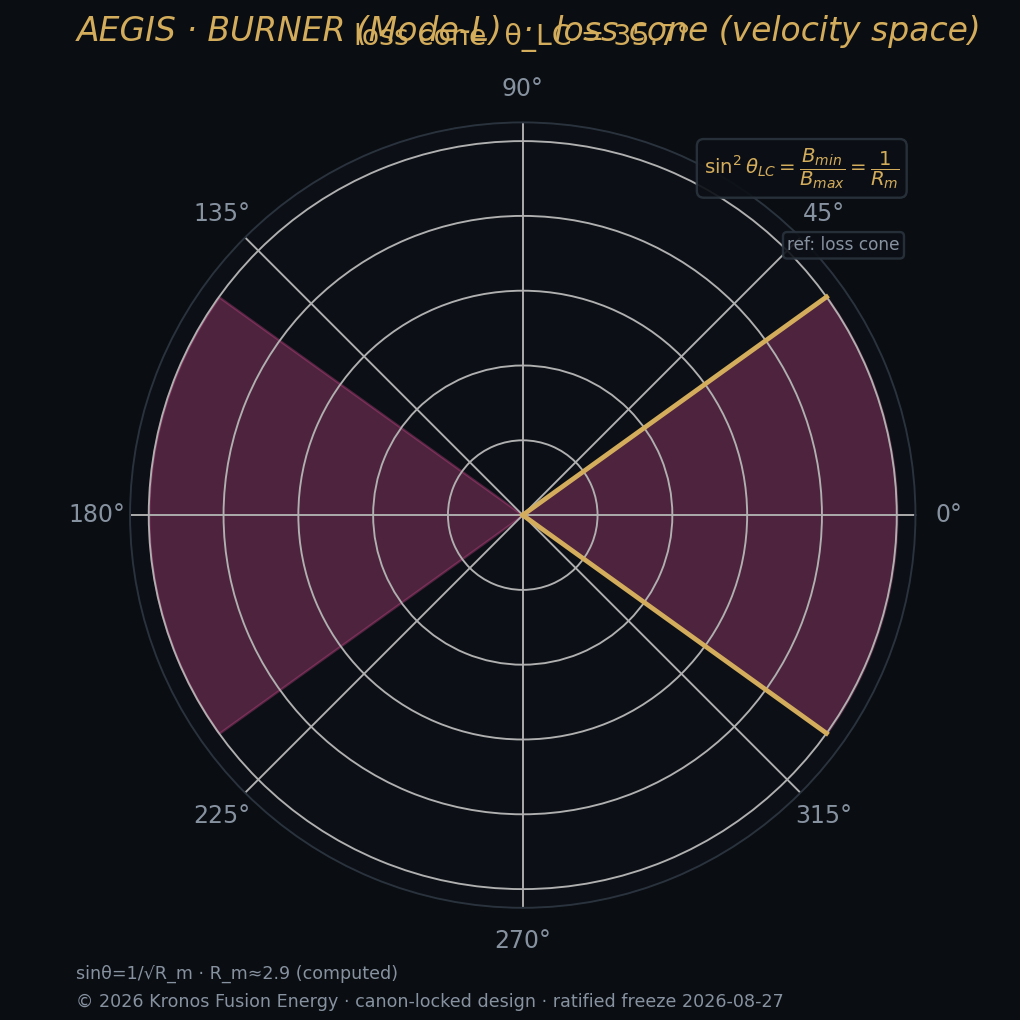
The operational indicators for the tandem mirror — plug density, potential-well depth, DEC grid stability — shown against design references, without economics.
What 'good operation' means for the burner
The burner (Aegis / MetroVolt) is a D-3He tandem mirror, and its KPIs track the physics that keeps it confining and converting: end-plug density, the ambipolar potential well, field margins at the 26.49 T plug and 17 T throat, and the stability of direct energy conversion. As with the breeder, every KPI is physical and operational — there is no cost, price, or financial indicator anywhere on the surface.
Core burner KPIs
- End-plug density vs setpoint and end-to-end balance
- Ambipolar potential well depth vs the depth required for confinement
- Field margins: plug 26.49 T, throat 17 T
- Mirror ratio and central-cell confinement quality
- DEC grid-voltage stability and fault-ride-through readiness
- Neutron-fraction (5.44%) blanket load within design limits
Net-power context, framed honestly
Direct energy conversion is the burner's power path, so a net-power context indicator compares recovered electrical output against the recirculating power needed to sustain the plugs and fields — shown as a physics ratio against the design reference, with its confidence band. This is presented explicitly as a design and validation figure: the machines are not yet built, and no hardware net-gain is claimed before the breeder FOAK (~2030). The KPI's job is to show margin trends and confidence, not to assert a result.
Because Aegis (fixed defense installations) and MetroVolt (data centers) are two housings of the same machine, they share this KPI set; the difference is in deployment context, not physics. The most actionable day-to-day KPIs are plug-density balance and DEC stability, since a plug excursion is the burner's fast-developing fault. See the burner control view and the breeder counterpart.