Breeder Magnet FMEA
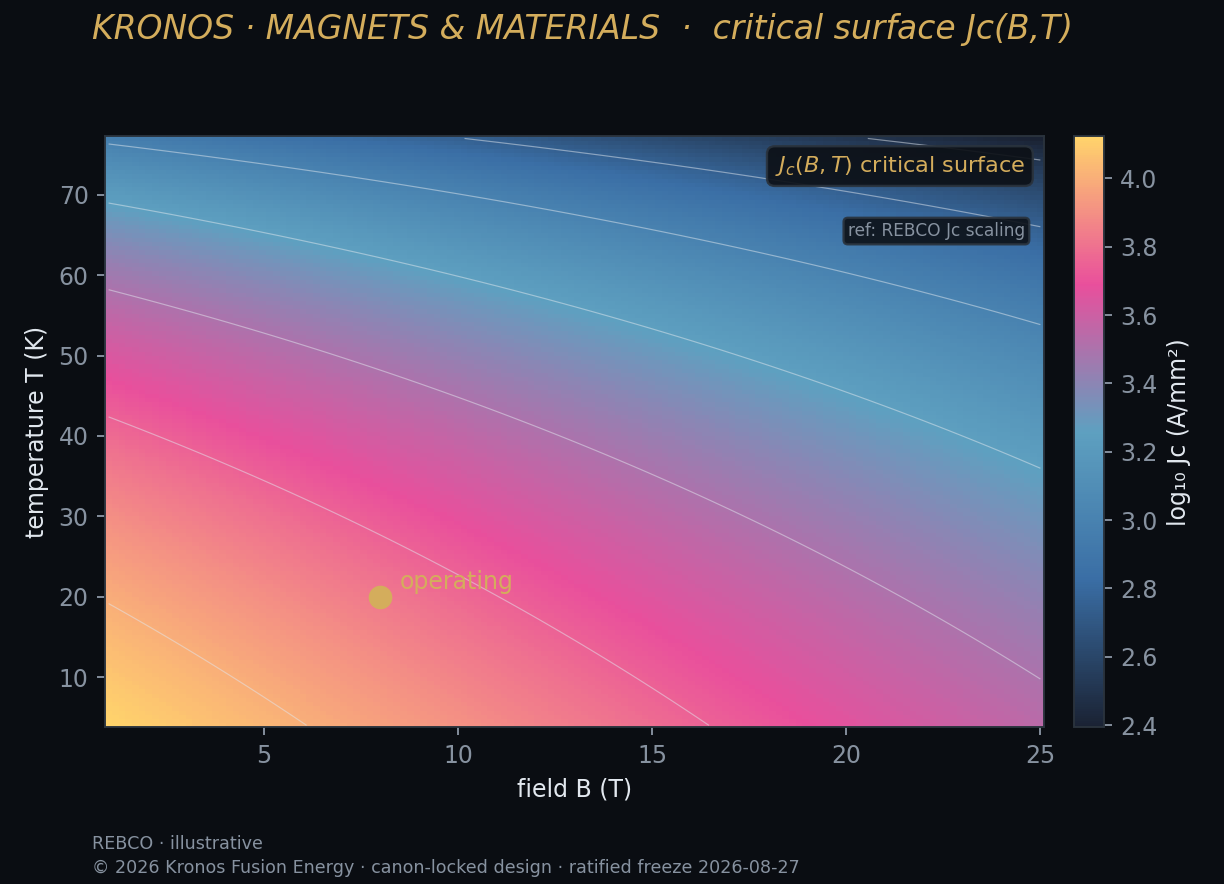
Failure modes of the Hyperion superconducting magnet set at 16.84 T peak field, and the detection and protection each demands.
Why magnets dominate
The breeder (Hyperion) stores large magnetic energy in its superconducting coil set to reach 16.84 T peak field (8 T on-axis) and confine a 9.66 MA plasma. Because that energy must go somewhere on any fault, magnet failure modes carry the highest severity in the breeder FMEA. The negative-triangularity delta -0.30 shape also puts specific structural loads on the shaping coils.
Quench is the anchor mode
A quench - a spreading normal (resistive) zone - can deposit stored energy locally and damage the coil if not caught within milliseconds. It is high severity, moderate occurrence, and moderately hard to detect early, giving it a high RPN. The response is a fast protective discharge; the dedicated logic is in Quench Detection and Protection.
# Co-wound tap detection: voltage not explained by inductance -> resistive
def quench_signature(V_meas, L, dIdt, R_lead, I, thresh):
    V_ind = L * dIdt + R_lead * I
    V_res = V_meas - V_ind          # resistive component
    return V_res > thresh           # true -> initiate protective discharge
Fatigue and the twin
Slower modes - structural fatigue, gradual cryogen degradation - are tracked by the twin as remaining-useful-life estimates so they become scheduled maintenance rather than campaign-ending faults. See Remaining Useful Life. Pre-FOAK these scores come from simulation and coil test data, not an operating reactor, and are stated as such.