First-Wall Thermal-Protection Interface
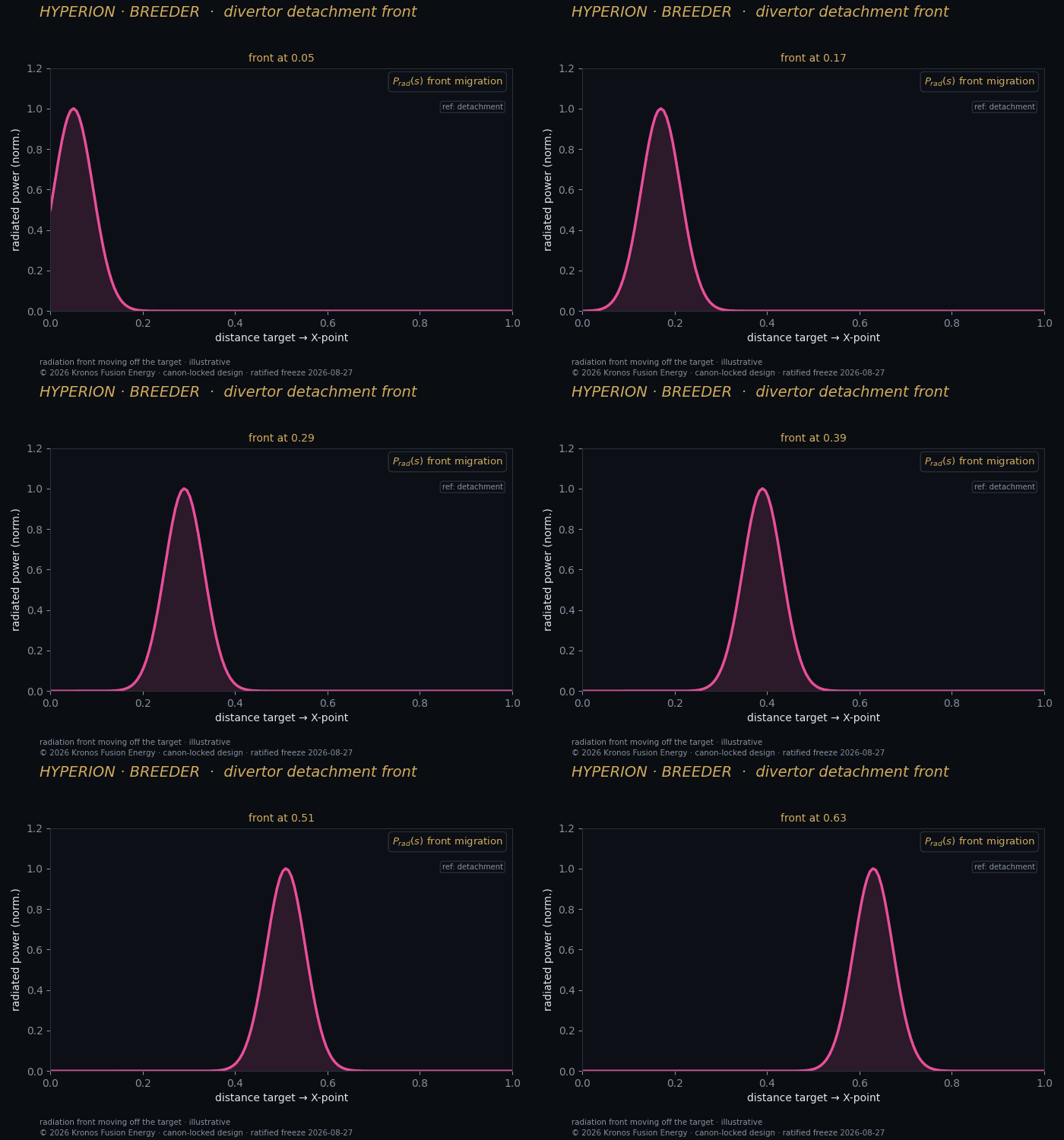
The plasma-facing thermal loop watches surface heat flux and can trigger fast fueling or power cuts before a first-wall component overheats.
Protecting the plasma-facing surface
The first wall and plasma-facing components absorb radiated and conducted power from the plasma. On the breeder, edge-localized transients and the negative-triangularity edge condition set the loads; on the burner, the central-cell and throat regions see intense flux. This interface senses surface heat flux and temperature and can act to protect the wall.
Sense-to-actuate chain
# first-wall protection (L1/L3)
q_surf = infer_heatflux(ir_thermography, thermocouples)
if q_surf > q_limit or dT_dt > ramp_limit:
    inject_radiator_gas()        # spread load radiatively (ms)
    derate_beam_power()          # reduce input power
    if q_surf > q_trip: abort_to_safe_state()
The protective actions escalate: seed a radiating impurity to spread the load, cut auxiliary power, and only then abort. The fast options (gas seeding, beam notch) live in L1 because they must act within milliseconds; the slow trend (surface erosion, hot-spot growth) is tracked by the twin.
Sensing
- Infrared thermography of the wall and divertor surface.
- Embedded thermocouples at component roots.
- Cross-link to divertor thermography and the expander interface.
Owner: L1 for the fast protection trigger, L3 for heat-flux inference and erosion trending. Calibration ties IR emissivity and thermocouple response to reference conditions. Design and Validation specification; the loop is validated against the twin before hardware commissioning and no operational net-gain is implied.