Divertor & Expander Telemetry
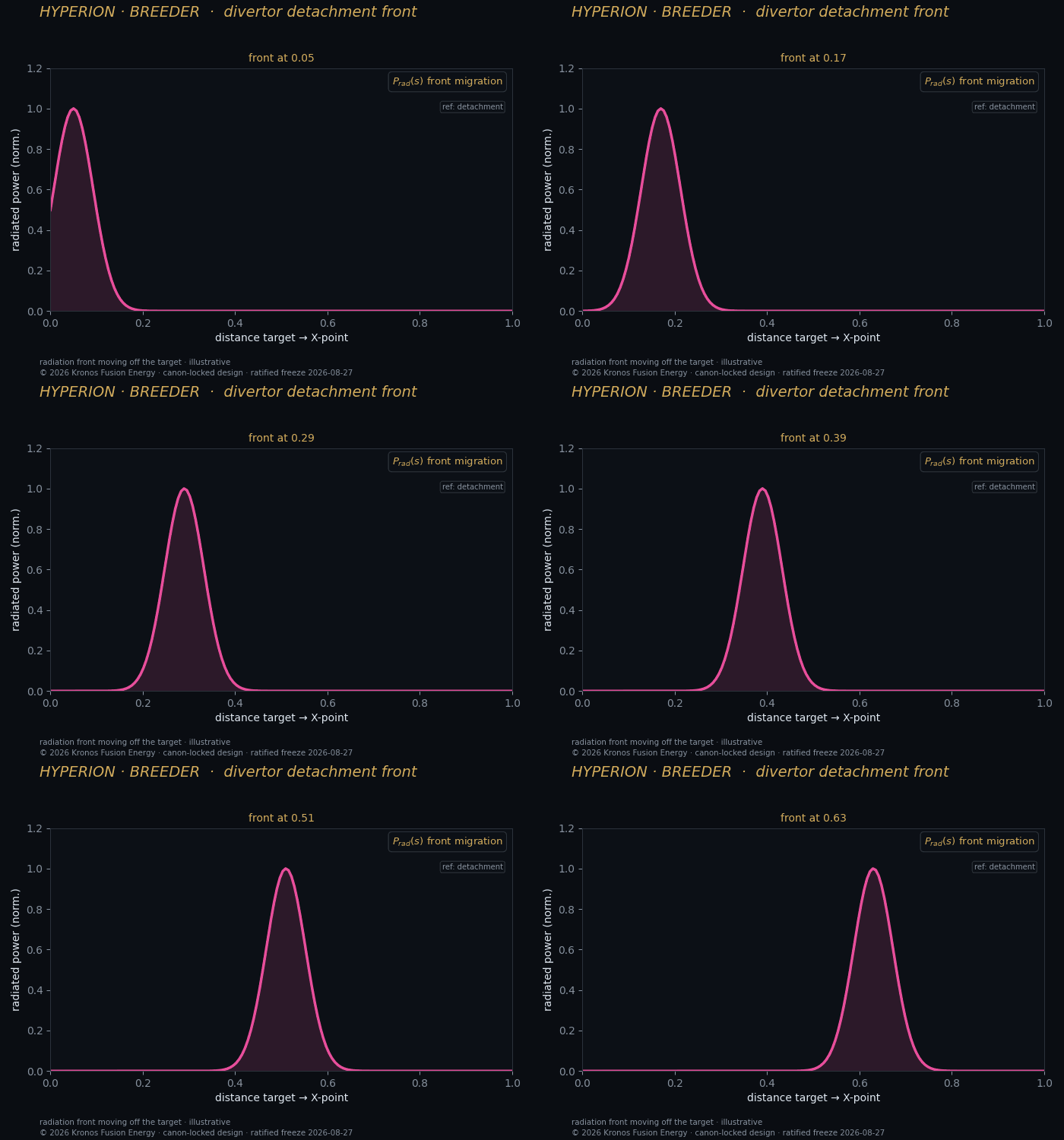
The divertor and expander handle the exhaust heat and particles of both machines; their telemetry guards the components that meet the plasma edge.
The exhaust boundary
Fusion machines must shed enormous power at the plasma edge. In the breeder, a divertor receives the scrape-off-layer power and particles; in the burner, an expander opens the field lines beyond the mirror so exhausted plasma spreads before it reaches surfaces and the DEC train. Both are heavily instrumented because they operate at the edge of material limits.
What is measured
- Surface and near-surface temperatures across the divertor targets or expander surfaces.
- Particle and heat flux to the plasma-facing components.
- Coolant flow, inlet/outlet temperature, and thermal balance.
- Erosion and impurity signatures that feed back into core impurity accounting.
Breeder specifics
The negative-triangularity, ELM-free regime is chosen partly to make the divertor's job tractable by avoiding large edge-localized-mode heat bursts. Divertor telemetry confirms the regime is holding: a rise in transient heat flux is a signal the ELM-free edge is degrading, a precursor the fabric surfaces.
Burner specifics
The expander conditions the flow feeding the DEC train, so its telemetry couples to DEC train telemetry: the spread and energy of the exhaust set what the converter receives. Thermal and flux telemetry from these components feeds the twin's Thermomechanics module and the structural-health monitoring that protects them. All specifications here are design and validation targets for machines under construction from Q2 2027.