Divertor and Expander Interface
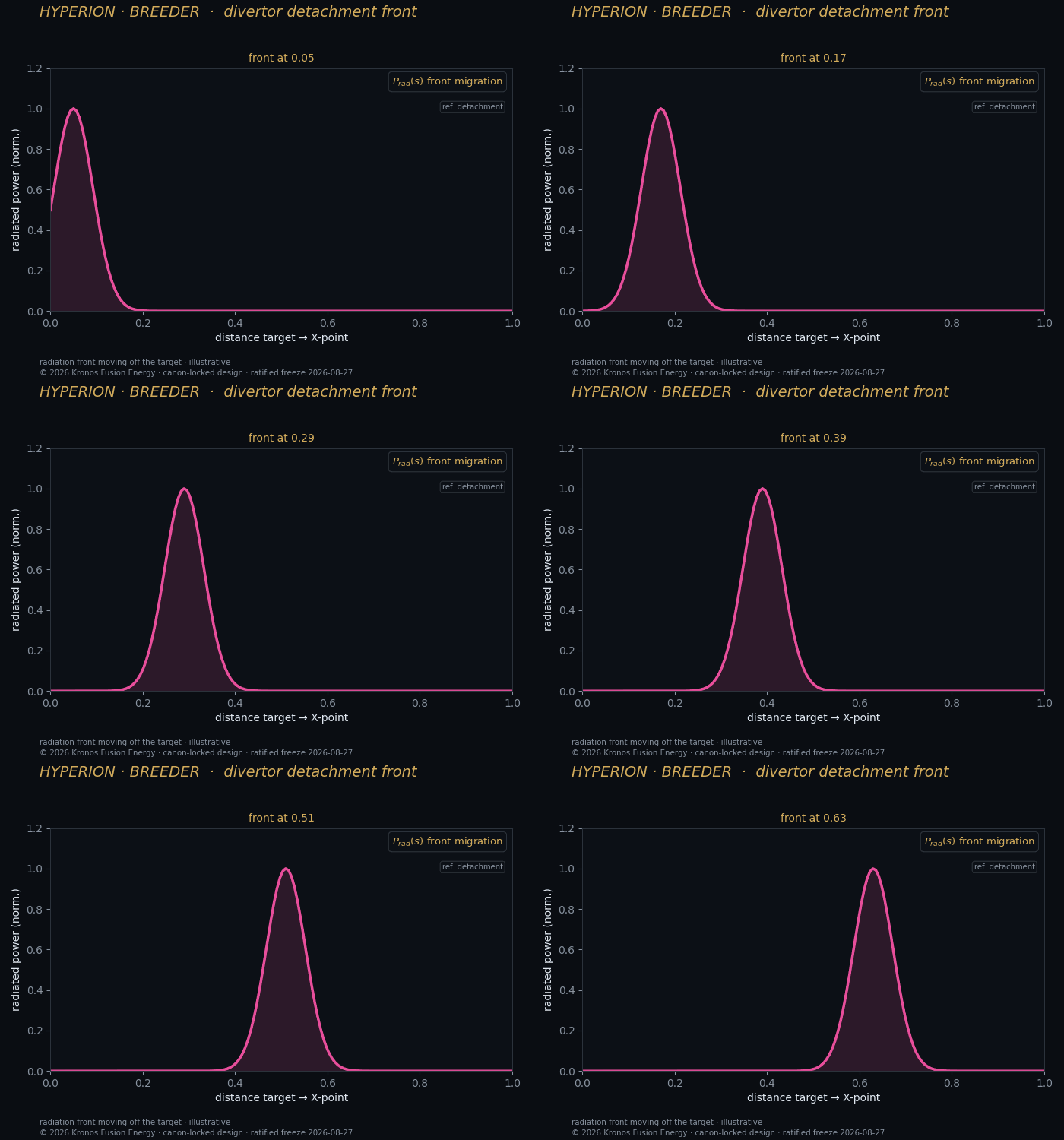
The divertor (breeder) and the burner's expander both handle exhaust flux; their interfaces control detachment and strike-point loading.
Two exhaust geometries
Exhaust power and particles must land somewhere survivable. On the breeder that is the divertor, whose strike points must be spread and, ideally, detached. On the burner the analog is the expander region where the escaping ion flux is spread before the direct-energy-conversion collectors. Both need active control of where and how the flux lands.
Divertor control (breeder)
# detachment control (breeder divertor)
rad_frac = infer_radiated_fraction(bolometer, langmuir)
if rad_frac < rad_ref:
    increase_divertor_seeding()      # push toward detachment
steer_strike_point(pf_coils, target)  # spread the load
Detachment — radiating the exhaust power before it reaches the target — is regulated by seeding an impurity and by steering strike points with the PF coils. The interface reads bolometry and Langmuir probes and adjusts seeding and strike-point position on a fast-but-not-protection timescale.
Expander control (burner)
On the burner the expander spreads the axial ion flux so that heat load on the DEC collectors is tolerable and the ion energies arrive sorted for direct conversion. The interface conditions the flux geometry the DEC train depends on.
- Owner: L3 for detachment/expansion setpoints; L1 for strike-point coil moves and seeding valves.
- Sense: bolometry, Langmuir probes, target thermocouples, IR thermography.
- Cross-link: shares actuators with the PF coil interface and gas seeding.
Calibration ties bolometer and probe signals to inferred power fractions. Design and Validation specification, validated against the twin.