Detecting Sub-Threshold Magnet-Quench Precursors
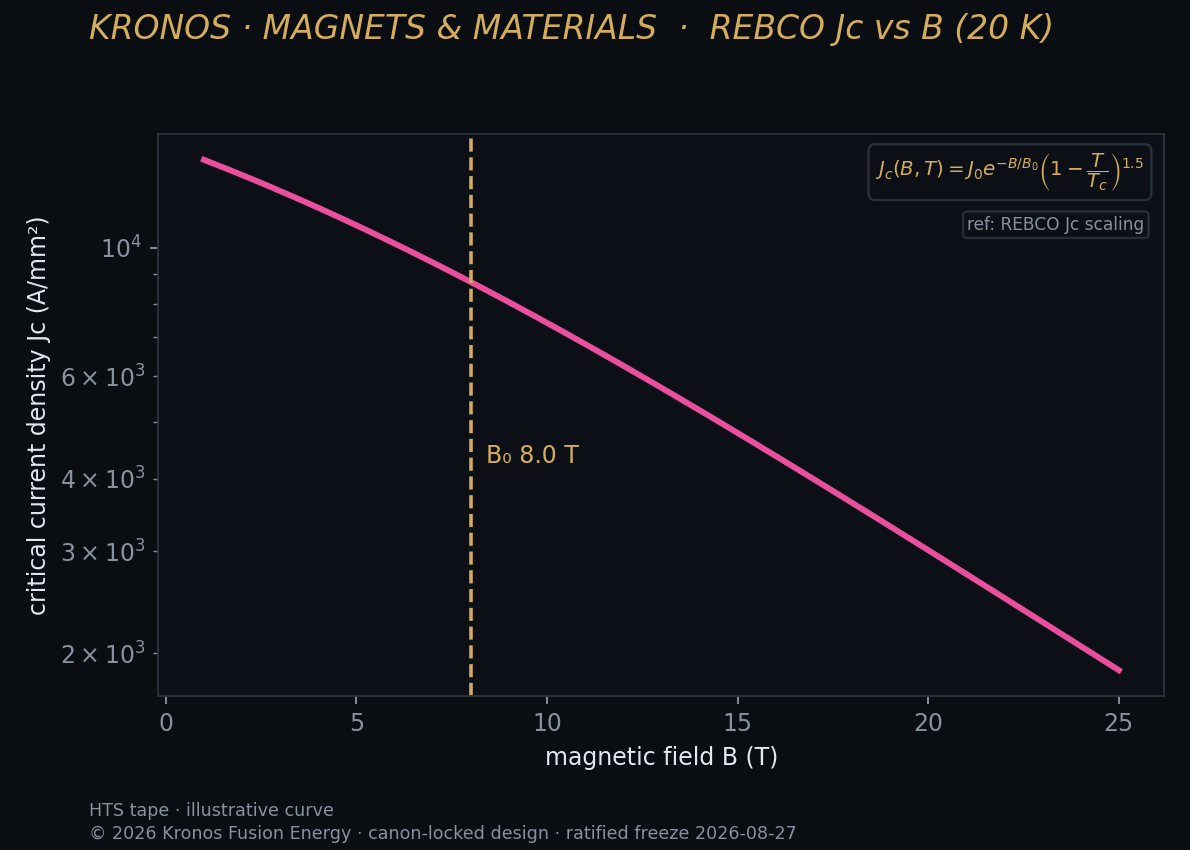
Kronos's anomaly ensemble catches the earliest signs of a REBCO magnet quench, below the threshold that would trip protection, so the twin can act before a trip is forced.
The quench problem
A quench is a local loss of superconductivity in a REBCO magnet that, if unchecked, dumps stored magnetic energy destructively. The breeder runs at 16.84 T peak field and the burner plug at 26.49 T, so the magnets store large energy and a quench is the most severe protection event. The L1 autonomous hardware failsafe will dump the magnet on a hard threshold with zero AI dependency; that is the last line and it must never be weakened.
Below the threshold
The anomaly ensemble works in the region below that hard threshold, where a quench is still only a precursor: a slowly rising local temperature, a small resistive voltage developing across a pancake, a REBCO strain-gauge signature of a hot spot, or a co-moving pattern across neighboring gauges that no single-channel alarm would catch. Detecting this early gives the twin and operators time to ramp down gently rather than take a forced dump.
- Inputs: REBCO strain gauges, section voltages, cryo temperatures, current
- Signatures: localized voltage rise, strain hot-spot, cooling-margin erosion
- Lead time: seconds to tens of seconds before a hard threshold would trip
- Action: advisory ramp-down request to MPC, never a substitute for the failsafe
The ensemble output is a precursor probability with a localization (which magnet section). It is advisory: it asks MPC to move toward a safer operating point and alerts operators, but the hardware failsafe remains the authority for an actual quench. The design principle is strict layering, AI buys lead time, hardware guarantees safety.
Because pre-FOAK there is no quench data from the real magnets, the ensemble is trained on high-fidelity quench simulations and REBCO test-coil data, then recalibrated once the machines operate. Its false-positive rate is tuned so advisory ramp-downs are rare enough to be actionable.